(gap: 2s) My childhood unfolded in the shadow of pebble-dashed council houses, their walls pockmarked and grey, stretching in a weary line along the edge of Surrey. The estate was a patchwork of mismatched curtains, patchy lawns, and chain-link fences that rattled in the wind. Ford Cortinas and Vauxhall Vivas, their paintwork dulled by years of drizzle, sat stubbornly on cracked concrete. The air always seemed tinged with the scent of damp earth, cut grass, and the faint tang of coal smoke drifting from chimneys. Kids in hand-me-down jumpers zipped past on battered Choppers, their laughter echoing off the walls, while mums gathered by the bins, voices rising and falling in a chorus of gossip and complaint. It was a world of small dramas and quiet routines, where every face was familiar and every secret seemed to travel faster than the milk float rattling down the road.
(short pause) Among all the characters on our estate, Linda—my much older cousin—stood out like a beacon. She was tall for a girl, with a sharp jaw and a voice that could cut through the thickest fog. Her hair was always scraped back in a tight ponytail, and she wore polyester skirts that crackled with static, plastic beads clacking at her throat. Linda had a way of moving—brisk, purposeful, never wasting a step. She was the self-appointed sergeant major of our little world, always ready to straighten a collar, tie a shoelace, or bark an order. “You’re not going out looking like that,” she’d snap, licking her thumb and scrubbing at a smudge on my cheek. She fussed over me with a kind of fierce pride, but there was no softness in it—only the certainty that she knew best, and that everyone else ought to fall in line.
(pause) One Sunday afternoon, the clouds finally broke, and sunlight spilled across the estate, turning puddles into mirrors and making the dandelions along the kerb glow gold. The air was thick with the smell of cut grass and the distant shouts of kids booting a football around the green. Linda appeared in the doorway, a shiny 50p piece glinting in her hand and a shopping list written in her neat, looping script: white sliced loaf, a tin of peaches, and a packet of Bird’s custard. She inspected me from head to toe—scuffed Clarks shoes, hair combed flat, jumper tucked in. “Don’t embarrass me in front of the neighbours,” she warned, her eyes narrowing. I felt a strange mix of pride and dread, like I was being sent on parade. The coins in my pocket felt heavy, jangling with every step as Linda strode ahead, glancing back to make sure I kept up.
(short pause) The estate was alive that day—mums in nylon scarves chatting by the off-licence, red trikes and rusty bikes propped against graffiti-tagged walls, the hum of a distant Bay City Rollers record drifting from an open window. As we passed the corner shop, my eyes were drawn to the window, crammed with jars of lemon sherbets, cola cubes, and striped humbugs. The glass was smudged with fingerprints, and the sweets inside seemed to glow with forbidden promise. My stomach twisted with longing, the sugary scent mingling with the musty air. Linda, meanwhile, was busy bossing another kid about their muddy knees, her voice sharp and commanding. In that moment, temptation crept in—sly and insistent. My fingers slipped into my pocket, and before I knew it, I’d pinched a few coins from the change and bought a paper bag of sweets. The crinkle of the bag in my hand sent a jolt of excitement through me, but as I sucked on a toffee, guilt settled in—cold and heavy, like a stone in my belly.
(pause) Linda, ever vigilant, soon noticed something was off. She counted the change with the precision of a bank clerk, her lips pursed in that way that meant trouble. “Where’s the rest?” she demanded, her eyes boring into mine. My heart thudded in my chest, and I stammered, cheeks burning. But Linda didn’t make a scene—not in front of the neighbours, not when there was an audience. She leaned in close, her voice a low hiss: “We’ll deal with this at home.” She made up the missing money from her own purse, her movements stiff with annoyance. As she grabbed my hand—her grip tight, almost bruising—I felt the sweets turn to ash in my mouth. We walked home in silence, the only sound the slap of our shoes on the pavement and the distant laughter of other children, free and unburdened.
(short pause) Back at our cramped little house, Linda wasted no time. “Upstairs. Now,” she ordered, her voice sharp as broken glass. The hallway was narrow, lined with swirly 1970s wallpaper and the faint smell of boiled cabbage. I trudged up the stairs, each step creaking beneath my weight, and sat on the edge of my bed, feet dangling above the threadbare carpet. The room was filled with weak afternoon light, dust motes swirling in the air. Linda stood over me, arms folded, her silhouette framed by the doorway. She launched into a lecture about stealing—her words clipped, her tone icy. “You’ve let me down,” she said, her eyes hard. “I won’t have anyone in this family making me look bad. You need to learn your lesson, and I’m the one to teach it.” Her words stung more than any smack could.
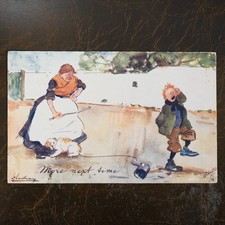
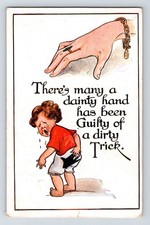
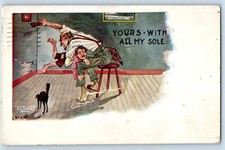
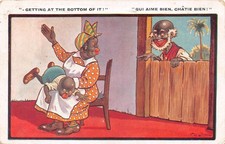
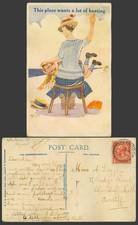
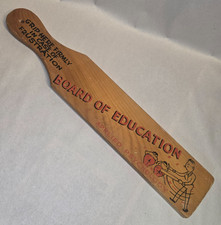
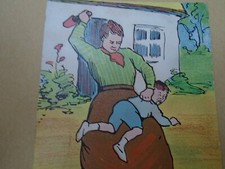
(pause) Then, with a businesslike efficiency, Linda sat on the bed and pulled me over her lap. My heart pounded in my ears, and I could smell the faint scent of her floral talc. She lifted my shorts and delivered six sharp smacks to my bare backside, each one landing with a sting that made my eyes water. I bit my lip, trying not to cry, but the humiliation was worse than the pain. I felt small, powerless, and exposed—just another kid being bossed about by someone who always had to be in charge. Linda didn’t shout; she didn’t need to. Her authority was absolute, and she made sure I knew it. “I hope you remember who set you straight,” she said, her voice low. “I expect better from you.”
(short pause) Afterwards, Linda gave me a quick, almost perfunctory hug, her arms stiff around my shoulders. She wiped away my tears with the edge of her sleeve and told me to wash my face and pull myself together. Downstairs, she made me a mug of sweet, milky tea—her way, of course, with two sugars and a splash of evaporated milk. We sat together in the lounge, the hum of the electric fire filling the silence, the faint strains of “On the Buses” drifting from the black-and-white telly. Outside, the estate was settling into evening—porch lights flickering on, the last of the kids called in for tea. I sipped my tea, feeling a strange mix of relief and resentment. Linda still cared for me, in her own prickly way, but I knew she’d never let me forget who was in charge.
(pause) That day, I learned never to steal again—not just because it was wrong, but because I never wanted to give Linda another excuse to boss me about. I was grateful, in a way, for the lesson, but I also tried my best to keep out of her line of fire after that. Even now, when I see a jar of lemon sherbets in a shop window, I’m transported back to that Sunday on the estate—the smell of cut grass, the weight of coins in my pocket, the sting of Linda’s hand, and the lesson that taught me about honesty, pride, and what it meant to grow up under the watchful eye of someone who always had to be in charge.