I was born in a bustling Spanish town, the kind where the scent of fresh bread and the sound of distant church bells fill the air each morning. Ours was a modest home, always alive with the laughter and squabbles of four siblings—myself, the middle of three brothers, and our older sister. My parents, both products of their time, believed in discipline as much as they believed in hard work. Their approach was strict, but not unusual for those days, and the shadow of corporal punishment—especially spanking—hung over our childhood like a silent guardian.
Both of our parents took on the role of disciplinarian, but it was my mother who truly ruled the roost. My father, a man of few words and many calluses, would come home each evening with exhaustion etched into his face, his hands stained with the day’s labor. He rarely raised his voice, let alone his hand, preferring to leave the daily skirmishes to my mother. Only when we crossed a serious line—like the time my brother tried to “fix” the television with a screwdriver—would Dad step in, his presence alone enough to make us tremble.
The punishments, when they came, were always delivered to our backsides. Sometimes, in the heat of the moment, a quick smack would land on a thigh, but never anywhere else. Our faces, my mother insisted, were for kisses and smiles, not for discipline.
My earliest memories of punishment are almost comical now—toddler me, barely able to walk, receiving a couple of swift slaps on my padded bottom for pulling the cat’s tail or spilling milk on the kitchen floor. Back then, the spankings were more symbolic than painful, rarely more than three or four quick taps, and always over our clothes. I remember the way my mother’s hands felt—warm, firm, and oddly reassuring, even in those moments.
But as we grew, so did the seriousness of our mischief—and the severity of Mother’s punishments. I still recall the first time I was truly spanked, draped awkwardly over her lap, my heart pounding in my chest. The correction was swift—maybe a dozen moderate slaps, each one punctuated by a stern word. I remember the sting, but also the strange sense of order it brought to our chaotic household.
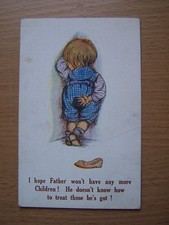
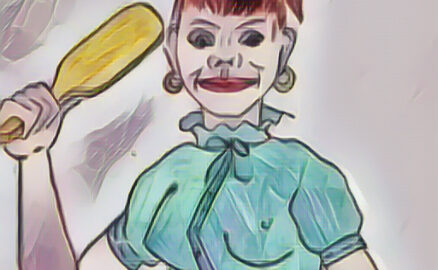
Yet nothing inspired more dread than the infamous ‘zapatilla’—the Spanish slipper. I’d heard its legend whispered among my siblings, and the sharp, echoing sound it made when applied to my sister’s bottom was unforgettable. These weren’t dainty slippers, but sturdy, leather-soled shoes that Mother wore around the house. They seemed to have a life of their own, always within arm’s reach, ready to restore peace at a moment’s notice.
My own initiation into the world of the slipper came at the tender age of five. My sister and I, partners in crime, had been fighting over a toy and managed to knock a glass jar off the table, shattering it into a thousand pieces. The memory is vivid: the sharp intake of Mother’s breath, the way she calmly removed her slipper, and the long, silent walk to her lap. The spanking that followed was thorough—her slipper rising and falling in a steady rhythm, leaving our bottoms red and throbbing for hours. We sat side by side afterward, sniffling and rubbing our sore behinds, united in our misery.
From that day on, I became intimately familiar with every slipper my mother owned. She seemed to choose them as much for their disciplinary potential as for their comfort. I remember her inspecting new pairs at the market, flexing the soles and giving me a knowing look. Each one had its own personality—the soft blue one was deceptively gentle, while the heavy brown slipper was the stuff of nightmares.
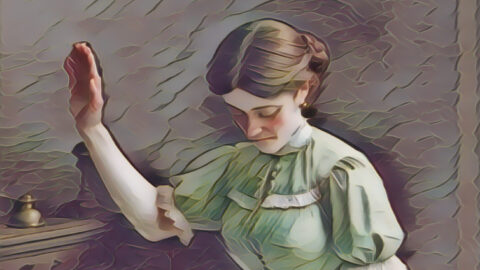
Mother’s ritual never changed. She would sit down, pat her lap, and I’d climb over, resigned to my fate. With a practiced motion, she’d slip off her right shoe and begin, alternating cheeks with each smack. The slipper would land with a sharp, echoing clap, and her scolding would fill the room: “What did I tell you about fighting? About lying?” The whole ordeal lasted maybe two minutes, but it felt like an eternity. I’d stare at the floor, counting the seconds, promising myself I’d never misbehave again.
Afterward, I was usually sent to the corner, my nose pressed against the wall, or banished to my bedroom—especially if it was after dinner. I’d sit on my bed, the heat still radiating from my bottom, listening to the muffled sounds of the television in the next room, forbidden to join in. Those moments alone were sometimes worse than the spanking itself.
I lost count of how many times I heard my mother’s warning: “¿Me quito la zapatilla y te dejo el culo como un tomate?”—her voice ringing out, sometimes in front of relatives or neighbors. The threat alone was usually enough to make us behave, but if not, she’d make a show of removing her slipper, her eyes never leaving mine. The embarrassment of being threatened in public was almost as bad as the punishment itself.
On the rare occasions when I truly crossed the line—like the time I snuck out to the park after dark—she didn’t hesitate to discipline me in public, right there on the spot, using whatever footwear she happened to be wearing. I remember the sting of a sandal in the middle of a crowded plaza, the shocked looks from passersby, and the burning in my cheeks that matched the one on my backside.
My last maternal slippering came when I was caught smoking and lying about it. By then, I was nearly grown, but the old rituals still held power. Even after that, whenever I tested her patience, Mother would remind me of the slipper’s effectiveness, her eyes