(gap: 2s) In the gentle town of South Tyneside, where rows of neat terraced houses stood shoulder to shoulder and children’s laughter echoed down the cobbled streets, there was a little shoe shop called Henderson’s. The air was often tinged with the scent of coal smoke and the distant briny tang of the sea, and the world seemed both vast and safe, as if nothing truly bad could ever happen within those familiar lanes. Henderson’s was a place of wonder, with polished windows that gleamed in the morning sun and shoes displayed like treasures on velvet stands. The bell above the door chimed a cheerful greeting to all who entered, and the wooden floorboards creaked with the memories of countless footsteps. Though Mrs. Henderson had long since gone to her rest, and the shop itself had closed its doors, the memories of those days remain bright and clear, like sunlight on a Sunday morning, forever etched in the hearts of those who once called that place home.
Once each year, Henderson’s would hold a grand sale, an event whispered about for weeks in advance. Miss May Henderson, who ran the shop, was a tall, dignified lady with a kind heart, though she wore her kindness quietly, like a brooch pinned to her lapel. Her hair was always perfectly set, and her voice, though gentle, carried the authority of someone who had seen much and judged little. She was a friend to my mother, and on the day of the sale, she would always invite Mother to choose a pair of the finest shoes at a special price, just for friends and family. For Mother, this was a day to look forward to, a day when she could have something lovely for herself—a rare treat in a life filled with duty and care for others.
Usually, Mother went to the sale alone, her steps brisk and purposeful, but one summer, the sale happened to fall on the very same day that Fenwick’s, the uniform shop, was measuring children for new school clothes. My younger brother Peter was to start at the big school after the holidays, and I, having grown taller, needed a new blazer and skirt as well. The prospect of new uniforms filled us with a mixture of dread and anticipation, for it meant the end of summer’s freedom and the beginning of another year of lessons and rules.
The uniform shop was not a place of joy for children. The queue stretched out the door, winding like a slow-moving snake along the pavement, and the air inside was warm and stuffy, thick with the scent of wool and starch. The ladies who worked there were brisk and businesslike, their tape measures snapping and their pencils poised, measuring us from head to toe and making comments about our size and shape, as if we were parcels to be posted. It was all rather embarrassing, especially for a girl of thirteen, who wished only to disappear into the wallpaper and escape the scrutiny of strangers.
After what felt like hours, we were finally finished. Peter and I, our arms laden with stiff new uniforms, begged Mother for a treat—a lemonade, perhaps, or a sticky bun from the bakery—but she was determined to make the most of her special day. “We are going to Henderson’s now,” she said, her voice firm but not unkind, “and I expect you both to behave yourselves. No nonsense, or there will be trouble.” There was a glint in her eye that told us she meant every word.
When we arrived at the shop, the bell above the door tinkled merrily, and Miss Henderson greeted Mother with a warm smile, her eyes crinkling at the corners. She led Mother to a comfortable chair near the window, where the sunlight danced on the polished floor. She invited Mother upstairs for a cup of tea and a slice of cake, leaving Peter and me by the door, our arms full of new uniforms and our minds already wandering. The shop was quiet, save for the soft murmur of voices and the occasional thump of a shoe being set down.
At first, we tried to be good, sitting side by side on a bench and swinging our legs. But soon enough, the heat and the long morning began to wear on us, and Peter and I began to quarrel. Perhaps it was the stuffiness of the shop, or the weight of the uniforms, or simply the way brothers and sisters sometimes are—quick to anger, quicker to forgive. Words were exchanged, sharp and childish, and before I knew it, Peter gave me a mighty shove. I stumbled backwards into a rack of shoes, and with a great clatter, the stands toppled one after another, like dominoes falling in a noisy, tumbling line. The sound seemed to echo forever, bouncing off the walls and up the narrow staircase.
The shop fell silent, as if the very air had been sucked away. Mother’s face turned pale, her lips pressed into a thin line, and I could see she was both embarrassed and cross. The other customers stared, some with disapproval, others with sympathy. But Miss Henderson, ever the lady, put her arm around Mother and said gently, “Come along, dear. Let us have that cup of tea. The girls downstairs will tidy up while we have a word upstairs.” Her voice was calm, but there was a firmness beneath it, like steel wrapped in velvet.
Miss Henderson called Peter and me over, her eyes kind but serious, and together with Mother, we climbed the narrow stairs to the staff room. The steps creaked beneath our feet, and the walls were lined with faded photographs of happier days. As we passed, Miss Henderson asked one of the assistants to bring up a slipper for Mother to try—size six or larger. I thought this strange, as Mother’s feet were quite small, but I dared not ask questions.
In the quiet of the staff room, with its worn armchairs and the faint scent of lavender polish, Miss Henderson invited Mother to sit. Peter and I stood before her, feeling very small indeed, our eyes fixed on the floor. Soon, the assistant arrived with the slipper, and Miss Henderson handed it to Mother with a knowing look. “Here you are, Jean. I think you may need this, after the commotion downstairs.” There was a gentle humour in her words, but also a sense of gravity.
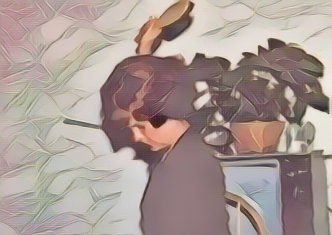
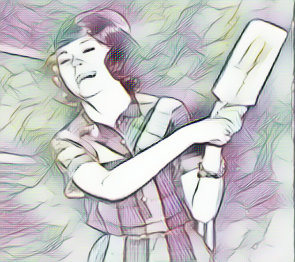
It was then that I realised what was to happen. Mother called Peter forward. He shuffled over, his head bowed, and Mother lifted his chin so he would look her in the eye. “Peter, I warned you to behave. Now you have embarrassed me and yourself. It is time you learned a lesson.” Her voice was steady, but I could see the sadness in her eyes—she took no pleasure in what she must do.