(gap: 2s) In the gentle village of Woolston, nestled amidst the rolling green hills of Shropshire, there lived a sensible mother and her two lively children, a boy named Peter and his elder sister, Susan. It was the late 1960s, and the air was always filled with the cheerful sound of children’s laughter, the distant melody of a wireless radio, and the occasional clatter of a milkman’s cart along the cobbled lane. The cottages, with their stone walls and neat gardens, seemed to watch over the village like kindly old friends.
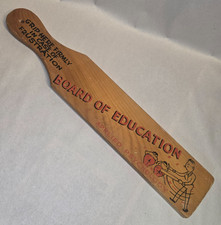
(short pause) Mother, a woman of firm principles and a heart as warm as her Sunday puddings, kept a polished wooden stick in the kitchen drawer, right beside the tin of custard powder and the box of matches. This stick, known in the household as the “discipline stick,” was always kept ready, for she believed that children must learn right from wrong, and that a lesson learned early was a lesson learned well. The stick was smooth and sturdy, about a foot and a half long, and it fit perfectly in Mother’s hand. Though it was not very wide, to Peter and Susan it seemed quite formidable, as if it held all the authority of the grown-up world.
(pause) No one quite remembered where the discipline stick had come from, but it was as much a part of the cottage as the radio or the patterned linoleum. It was a symbol of order and good behaviour, and its presence was enough to keep most mischief at bay. Mother did not use the stick every day. Most days, a gentle word or a stern look was enough to remind the children of their manners. But when the stick was brought out, the children knew that a lesson was to be learned, and the air in the cottage would grow very still, the ticking of the brass clock on the mantelpiece seeming to grow louder and more solemn.
(short pause) The ritual was always the same, and it was carried out with a sense of ceremony that made it feel almost grand. Mother would sit upon the old armchair, her skirt neatly arranged, and call the culprit to her side. The child—sometimes Peter, sometimes Susan—would approach, heart beating quickly, cheeks flushed with a mixture of dread and shame. Mother would explain, in her calm and measured voice, exactly what rule had been broken and why the lesson was necessary. Then, with gentle but firm hands, she would place the child across her knee, smoothing their hair and reminding them that this was for their own good.
(pause) The wallpaper, with its faded florals, and the scent of lavender polish would blur as the lesson began. Mother would raise the discipline stick and deliver a series of crisp, measured smacks to the seat of the child’s underpants. Each smack was firm but never cruel, and Mother always counted them aloud—one, two, three, four, five, six—so that the child would know exactly when the lesson would end. The sound of the stick meeting cloth and skin echoed in the quiet room, and the child would feel a sharp sting, followed by a warm tingling that lingered long after the last smack had fallen.
(short pause) On one particular summer’s day, the sun shone brightly and the bees hummed lazily in the garden. Peter, having committed a series of small mischiefs—pinching a biscuit before tea, teasing Susan until she squealed, and letting the chickens out of their pen—was summoned to the sitting room. Mother’s voice was gentle but firm as she explained that he must receive six firm smacks with the discipline stick, so that he might remember to behave properly in future. Peter’s heart thudded in his chest as he was placed across Mother’s knee, his underpants lowered just enough to expose the target of the lesson.
(pause) Mother raised the stick and brought it down with a sharp, even rhythm. “One,” she said, and Peter felt the sting. “Two,” and he squeezed his eyes shut. “Three,” and he gripped the arm of the chair. “Four—” but just then, the discipline stick broke with a loud crack, splintering in Mother’s hand. Both Mother and Peter were startled, and for a moment, there was silence in the room, broken only by the ticking of the clock and the distant call of a cuckoo outside.
(dramatic pause) But Mother was nothing if not resourceful. She set aside the broken stick and, with a firm but gentle hand, gave Peter two more smacks with her palm, so that the lesson would be complete. Her hand was broad and warm, and the smacks, though less sharp than the stick, were no less instructive. “Remain where you are,” she said, her voice calm and steady, and she went to find a suitable replacement, her footsteps echoing down the narrow stairs to the basement.
(pause) Peter waited, his underpants still around his knees, feeling the warmth and tingling on his skin. He listened as Mother searched in the basement, the sounds of tools clinking and clattering drifting up the stairs. He did not dare move, for he knew that obedience was part of the lesson, and that to disobey now would only make matters worse. The room seemed to hold its breath, and Peter’s mind raced with thoughts of what Mother might find to finish the punishment.
(short pause) Mother soon returned, carrying a small hand mirror whose glass had been broken in an earlier accident. With careful hands, she removed the remaining shards, leaving only the sturdy back of the mirror. She explained to Peter that, since the stick was broken, she would use the back of the mirror to finish the lesson, for it was important that he understand the seriousness of his actions. Peter nodded, his eyes wide and solemn, and allowed himself to be placed once more across Mother’s knee.
(pause) Mother delivered four firm smacks with the back of the mirror, each one echoing in the quiet room. The smacks were broader and heavier than those of the stick, and Peter felt the difference keenly. He counted them silently—one, two, three, four—determined to remember the lesson well. When it was over, Mother helped him to his feet and allowed him to pull up his underpants, smoothing his hair and wiping away a stray tear with her thumb.
(short pause) Mother looked at Peter with a mixture of sternness and affection, and reminded him that good children are always honest, obedient, and kind. “You must always remember, Peter,” she said, “that every action has its consequence, and that Mother’s lessons are given with love.” Peter, his eyes bright with tears but his heart lighter, nodded solemnly, for he knew that Mother’s words were true.
(pause) The day continued, and the children played quietly in the garden, their laughter mingling with the gentle breeze and the scent of honeysuckle. Susan, who had watched the proceedings from the doorway, was especially kind to Peter that afternoon, sharing her sweets and letting him choose the best skipping rope. The discipline stick, though broken, had served its purpose, and the lesson remained in Peter’s heart, as bright and clear as the summer sun.
(long pause) Even now, when Peter is grown and the village of Woolston has changed with the passing years, he remembers that summer’s day. He remembers the sound of the smacks, the scent of lavender and coal smoke, and the feeling of Mother’s steady hand. Most of all, he remembers the lesson: that good behaviour is always rewarded, and that every action has its consequence. And so, in the gentle way of the English countryside, the children of Woolston learned to grow up honest, kind, and true—guided always by the loving firmness of a mother’s hand.