(gap: 1s) There’s a certain nostalgia that clings to the memory of a 1970s suburban Texas childhood, like the scent of sun-warmed grass and the distant echo of a screen door slamming. Our neighborhood was a patchwork of modest homes, each with its own story, and families who knew each other’s business almost as well as their own. The air was thick with the hum of cicadas, the laughter of children, and, sometimes, the sharp crack of discipline echoing from an open window.
(short pause) Strangely enough, I was never spanked at home. It surprises even me, looking back, because in those days, a sore bottom was as much a part of growing up as scraped knees or grass stains. My friends would swap stories of their latest run-in with a wooden spoon or a father’s belt, but my parents—perhaps out of principle, or perhaps out of a quiet gentleness—never laid a hand on me.
(pause) Yet, even as a child, I was oddly fascinated by the ritual of corporal punishment. There was something about the solemnity of it, the way a misdeed was met with a swift, almost ceremonial response. I wondered if it was the intimacy of the moment, the vulnerability, or the sense of order it seemed to restore. Sometimes I thought, if I had known the sting of a real spanking, maybe I wouldn’t have spent so many hours daydreaming about it, weaving stories in my mind. In a way, I’m grateful for my parents’ restraint. They gave me the freedom to imagine, to wonder, and to learn in my own way.
(pause) But just because I was spared didn’t mean I was sheltered. Spankings were as common as lemonade stands, and I witnessed more than a few. The most vivid memory is of a family barbecue, the kind where the whole clan gathered in our backyard, the air thick with the smell of charcoal and the sound of cousins shrieking as they chased each other through the sprinklers.
(short pause) My sister-in-law, a woman with a quick temper and a fierce love for her children, was already on edge that day. The heat, the noise, and the endless demands of motherhood had worn her patience thin. I remember her warning her brood—my niece and her brothers—that any more nonsense would earn them a trip over her knee. One of the boys had already been spanked that morning, and the threat hung in the air like a summer storm.
(pause) The breaking point came when my brother, always the peacemaker, had to step away to take a work call. No sooner had he disappeared than my niece, a stubborn little thing with a wild mop of hair, began to wail for her daddy. My sister-in-law tried to soothe her, but the child’s frustration boiled over into a torrent of words no child should know. The air seemed to crackle with tension.
(short pause) In our family, cussing was the cardinal sin. My mother, who could forgive almost anything, would purse her lips and shake her head at the slightest slip. My sister-in-law, already frayed, wasn’t about to let this pass. She seized her daughter by the hand, her voice low and firm. “That’s enough, young lady. We do not speak that way in this family.” The rest of us fell silent, the clatter of plates and laughter fading as she marched her daughter to the picnic bench beneath the old oak tree.
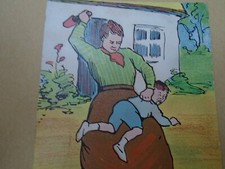
(pause) My niece kicked and screamed, but her mother was resolute. She pinned her gently but firmly over the bench, one hand holding her in place, the other delivering a series of sharp, decisive smacks. The sound was startling, but what struck me most was the look on my sister-in-law’s face—a mixture of frustration, love, and a kind of weary determination. She wasn’t angry, not really. She was teaching, in the only way she knew how, that words have weight and actions have consequences.
(pause) The adults, for the most part, barely glanced up. In those days, a public spanking was hardly cause for comment. Only my mother, ever the peacemaker, leaned over to my father and murmured, “Well, maybe now we can all enjoy our hot dogs in peace.” There was a gentle humor in her voice, a recognition that sometimes, discipline was as much about restoring harmony as correcting behavior.
(short pause) I watched, unable to look away, my heart pounding with a strange mix of empathy and curiosity. I wondered what it felt like—to be on the receiving end, to feel the sting and the shame, but also the relief when it was over and forgiveness was offered. I saw my niece’s tears, her mother’s softening expression as she gathered her into her arms, and I understood, in a way I never had before, that discipline, at its best, was an act of love.
(pause) That afternoon, as the sun dipped low and the laughter returned, I realized that every family has its own way of teaching right from wrong. Some lessons are learned at the end of a scolding, others in the quiet comfort of a parent’s embrace after the storm has passed. The memory lingers, not as a tale of punishment, but as a reminder that childhood is shaped as much by our mistakes as by the forgiveness that follows.
(long pause) Looking back, I see now that the true lesson wasn’t about spanking at all. It was about boundaries, about love expressed in a thousand imperfect ways, and about the quiet strength it takes to guide a child through the tangled thicket of growing up. In the end, perhaps that’s what we all remember most: not the sting, but the arms that held us after, and the knowledge that, no matter what, we were loved.














































































![[New] Wood Spanking Paddle Unfinished With Holes 18 Inch long,](https://i.ebayimg.com/images/g/JfIAAOSwusBnrZqx/s-l225.jpg)