(gap: 2s) Once upon a time, in the gentle hush of a Sunday morning, when the world seemed to move a little slower and the air was thick with the scent of toast and tea, there lived a boy named Tommy. Tommy’s world was a patchwork of pebble-dashed council flats, narrow roads lined with chain-link fences, and the ever-present hum of distant milk floats. The Willowbrook Estate, with its patchy grass verges and rows of battered Chopper bikes, was a place where everyone knew your name, and every mother kept a watchful eye from behind crocheted curtains.
In those days, children like Tommy grew up with a sense of belonging and a clear understanding of right and wrong. The rules of the estate were unwritten but well known: respect your elders, mind your manners, and always come home when the streetlights flickered on. Discipline was not just a word, but a way of life—woven into the very fabric of each day, as familiar as the taste of beans on toast or the sound of “Blue Peter” on the telly.
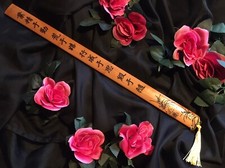
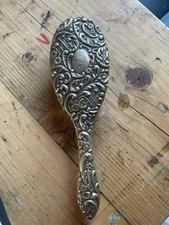
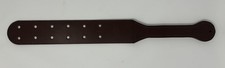
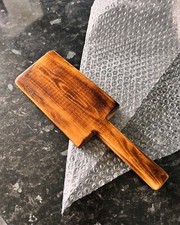
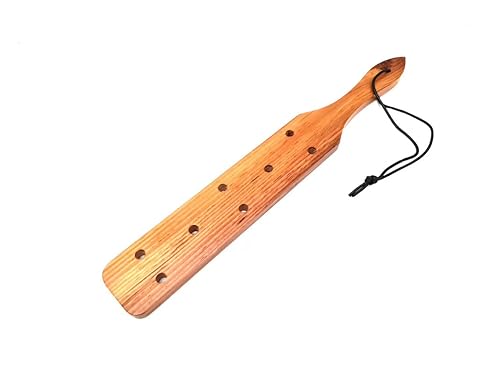
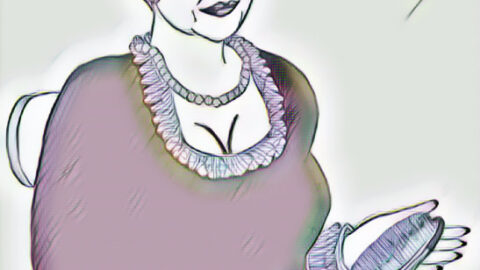
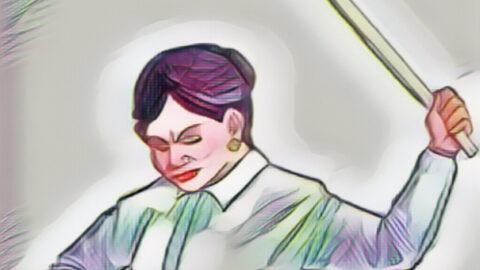
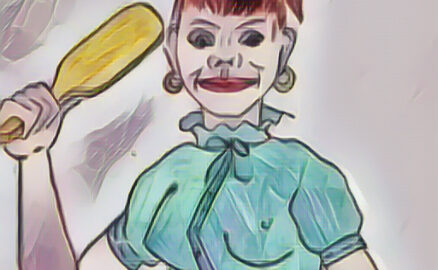
Tommy’s home was modest but warm, filled with the gentle clatter of teacups and the soft hum of an electric fire. His mother, a sturdy woman in a nylon housecoat and chunky plastic jewellery, ruled the flat with a firm but loving hand. On the sideboard, a wooden spoon rested beside a faded postcard from Brighton Pier—a silent reminder that every action had its consequence. The paddle or the belt, though rarely used, hung quietly in the hallway, a symbol of order and care.
When mischief found its way into the flat, as it often did with a house full of lively children, discipline was a private affair. Mother would call each child, one by one, behind closed doors. Tommy would sit on the stairs, his heart pounding in his chest, listening to the muffled voices and the occasional sniffle of a sibling who had just learned a hard lesson. The wallpaper, patterned with faded 1970s swirls, seemed to close in around him as he waited for his name to be called, knowing that soon it would be his turn to face the music.
Sundays were sacred in Tommy’s world. After church, the estate would come alive with laughter and chatter. Mothers gathered by the corner shop, their voices mingling with the distant strains of glam rock from a neighbour’s radio. Children, dressed in flared jeans and hand-me-down jumpers, played football on the cracked tarmac, their shouts echoing between the blocks. The air was filled with the promise of roast dinners and the comfort of family.
On one such Sunday, the sun shone bright and the sky was a rare, cloudless blue. Tommy and his best friend Eddie, cheeks flushed with excitement, decided to play basketball in Eddie’s backyard. The court was nothing more than a patch of dirt, the hoop a rusty ring nailed to the shed, but to the boys it was a grand arena. Their laughter rang out, mingling with the distant clatter of a milk float and the gentle hum of bees in the dandelions.
Like all boys, Tommy and Eddie were full of energy and mischief. Their games were fierce, their tempers quick to flare. On this particular afternoon, a small quarrel over a missed shot grew into a storm. In a moment of anger, Tommy hurled the ball with all his might. It struck Eddie square on the nose, sending him tumbling to the ground, and then ricocheted into the shed window, shattering the glass with a sharp, ringing crash. Eddie’s nose began to bleed, bright red against his pale skin, and the broken window glittered in the sunlight like a thousand tiny diamonds.
The commotion brought the mothers running, their faces etched with worry and disappointment. Eddie’s mother knelt beside her son, dabbing at his nose with a handkerchief, while Tommy’s mother fixed him with a look that spoke volumes. Her eyes, usually so warm, were now cool and steady. “Go to Eddie’s room and wait until you are called,” she said, her voice calm but unyielding.
Tommy trudged through the kitchen, the linoleum cool beneath his feet, his head bowed in shame. The familiar smells of Sunday roast and strong tea seemed distant now, replaced by the heavy weight of guilt. Eddie’s mother glanced at him, her lips pressed into a thin line, and Tommy felt a pang of regret so sharp it made his eyes sting. He sat on Eddie’s bed, surrounded by the comforting clutter of childhood—a threadbare Action Man, a Chelsea football scarf, a “See Surrey!” poster on the wall—and listened to the low voices of the mothers as they discussed his fate.
Time seemed to stretch and bend in that small, sunlit room. Tommy’s thoughts raced, replaying the moment again and again. He wished he could take it all back, wished he could make Eddie’s nose stop bleeding and the window whole again. The sounds of the house drifted in—clinking teacups, the distant whir of a vacuum, the soft murmur of the telly—but Tommy heard only the thudding of his own heart.
At last, the door creaked open. Eddie, his nose patched with a bit of tissue, was sent outside to play. Tommy’s mother called him to the living room, her voice gentle but firm. The room was bathed in the golden light of late afternoon, dust motes dancing in the air. In the centre stood a sturdy kitchen chair, and draped across it was the leather belt—a symbol of justice and care.
Tommy’s heart hammered in his chest as he approached the chair. The rough fabric of his trousers scratched against his palms as he gripped the back, knuckles white. The air was thick with anticipation, the only sound the steady ticking of the clock on the mantel. The mothers stood nearby, their faces grave but not unkind, as if they too felt the weight of what was to come.
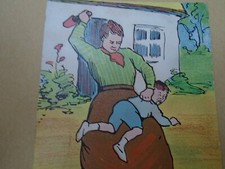
“Bend over the back of that chair and hold on tight, Tommy,” his mother said, her voice steady as a rock. “This is for your own good. Remember, actions have consequences.” Tommy squeezed his eyes shut, bracing himself. The first stroke landed with a sharp snap, a sting that bloomed across his backside. He gasped, the pain bright and sudden, but he held tight, determined to be brave.
The belt came down again and again, each swish through the air followed by a crisp smack and a growing warmth that spread across his skin. Tommy’s breath hitched with each stroke, and soon his eyes filled with tears. He could hear the soft, steady voice of Eddie’s mother counting out the strokes, and the quiet, reassuring murmur of his own mother nearby. The room was filled with the sounds of discipline: the swish of the belt, the thud of leather, the quiet sniffles, and the gentle encouragement to be brave.
When Eddie’s mother finished, Tommy’s own mother took the belt. Her strokes were no less firm, but there was a tenderness in her voice as she spoke to him between each one. “You must learn, Tommy. We love you, and we want you to grow up strong and good.” By the fifth stroke, Tommy was crying openly, his tears hot on his cheeks, but he did not let go of the chair. He felt the sting of each lesson, but also the love behind it.
At last, it was over. Tommy’s mother set the belt aside and gently took him by the ear, leading him to the corner. His bottom ached, and his legs trembled, but his heart felt lighter, as if a great weight had been lifted. “Stand here and think about what you have learned,” she said kindly, smoothing his hair with a gentle hand.
As Tommy stood in the quiet corner, the sounds of the house returning—distant voices, the clatter of teacups, the hum of the electric fire—he thought about the lesson he had learned. He remembered the sting of the belt, the firmness of his mother’s voice, and the look of concern in both mothers’ eyes. He understood now that discipline, though it sometimes hurt, was given with love to help him grow into a good and respectful boy.
The day wore on, and soon the estate was bathed in the soft glow of dusk. Tommy watched from the window as the streetlights flickered on, casting long shadows across the patchy grass. The laughter of children drifted up from the square, mingling with the distant rumble