(gap: 2s) On our estate in Surrey in the 1970s, life was a patchwork of sameness and struggle, stitched together by the quiet pride of working-class families. The rows of pebble-dashed terraces stood shoulder to shoulder, their windows reflecting the grey sky, each one hiding its own stories behind net curtains tinged with cigarette smoke. Even though money was always tight, there was an unspoken competition—an endless, exhausting effort to keep up appearances. (short pause) You could feel it in the way mothers scrubbed the front steps until their knuckles were raw, or how children’s shoes were polished until they shone, even if the soles were worn thin. There was a kind of dignity in it, a refusal to let hardship show, as if clean curtains and well-behaved children could hold the world at bay.
My mother rarely smacked me or my big sister—she was never quick to anger—but we still knew the sting of discipline. It was woven into the fabric of daily life, a ritual as familiar as the Sunday roast or the sound of church bells drifting through the estate. Discipline wasn’t just about keeping us in line; it was about showing the neighbours that you were raising your children right, that you belonged, that you weren’t letting the side down. I remember the way my mother’s voice would tighten when she spoke to us in public, her eyes flicking to the windows across the way, always aware of who might be watching.
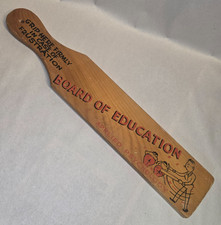
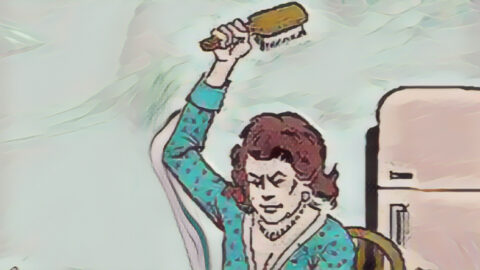
The hairbrush—an old, heavy thing that had belonged to Gran—was kept in a drawer in my mother’s room, reserved for moments when we’d truly crossed the line. But even then, she never lost her temper straight away. Instead, she’d send us up to our bedroom to wait, her footsteps slow and deliberate on the stairs. I think now she needed that time as much as we did—to gather herself, to make sure she didn’t let anger get the better of her, and perhaps, to keep the neighbours from hearing any shouting through the thin, papered walls. (pause)
My mother was a smoker, like nearly every adult on the estate. The smell of tobacco was everywhere—clinging to coats, drifting through open windows, curling in the air at the bus stop and outside the school gates. I can still picture her standing by the kitchen window, a cigarette balanced between her fingers, the smoke rising in lazy spirals as she stared out at the rain. It was as much a part of her as her housecoat or her tired smile. (short pause) Sometimes, when I close my eyes, I can almost taste the tang of tobacco on the air, mixed with the scent of damp earth and the faint sweetness of custard creams from the corner shop.
Smoking wasn’t just a habit—it was a rite of passage, a badge of adulthood. I remember watching the older boys on the estate, trying to look tough with a ‘cancer stick’ dangling from their lips, their eyes darting to see if anyone was impressed. Lighting up was as ordinary as making a cup of tea. If you didn’t smoke, you were an outsider, someone who hadn’t quite grown up. I used to wonder what it would feel like, to be part of that world, to share in the secret language of matches and ashtrays and whispered conversations over mugs of strong tea.
Years later, my mother told us that the cigarette she smoked before coming upstairs was her way of settling her nerves. She needed that moment to think things through, to make sure she didn’t go too far. It was a small act of control in a world that often felt out of control—a way to draw a line between anger and action, between discipline and cruelty. I think now of all the mothers on the estate, standing at their kitchen sinks, staring out at the rain with a cigarette in hand, each one carrying her own burdens, each one trying to do her best.
For the one in trouble, the wait was agony. The other sibling would go quiet, tiptoeing around the house, afraid to draw attention. The whole place would fall into a tense hush, every sound magnified—the rattle of the kettle, the distant chatter of neighbours, the scrape of a chair on the lino. I remember sitting on my bed, knees drawn up to my chest, heart pounding so hard I thought it might burst. The smell of polish and damp hung in the air, mingling with the sharp tang of tobacco that drifted up the stairs. (short pause) Sometimes, I’d press my ear to the door, listening for the creak of the stairs, the soft thud of my mother’s slippers on the landing. Each second stretched out, heavy with dread and anticipation.
The moments before she entered were the worst. I’d stare at the faded wallpaper, tracing the cracks with my eyes, trying to distract myself from what was coming. My hands would twist the edge of the blanket, the rough weave biting into my palms. I could hear the faint tick of the clock on the mantelpiece, the hiss of the gas fire, the distant laughter of children still playing outside, oblivious to the storm brewing in our little house. (pause) When the door finally opened, it was like the world held its breath.
Mother never rushed. She’d pause in her own room, open the drawer with a soft clatter, and take out the hairbrush. I can still see it in my mind—big, solid, the wood worn smooth by years of use. She’d come into our room, her face set, her eyes tired but determined. “Stand up,” she’d say, and I would, legs trembling, eyes fixed on the brush. There was no point arguing. You just did as you were told.
She’d sit on the bed and pull me gently towards her. Then came the lecture—a quiet, steady stream of words, her voice low and close to my ear. She’d remind me that I had to behave, that people were watching, that we couldn’t afford to bring shame on the family. The smell of smoke clung to her dressing gown, mingling with the scent of polish and the faint tang of tears. Sometimes, I’d catch a glimpse of her reflection in the window, her face lined with worry, her hands shaking just a little.
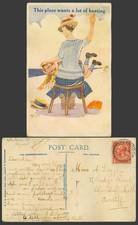
“Very well then, let’s get this over with,” she’d say at last. That was my cue to bend over her knee—no hesitation, no fuss. She’d shift me into place, making sure I was just right for what was coming. The anticipation was almost unbearable. My face would burn with embarrassment, my hands gripping the bedspread so tightly my knuckles turned white. I could feel the cold air on the backs of my legs as my pyjama bottoms were tugged down, the room seeming to shrink around me, every sound amplified. (pause)
The first smack always came as a shock—a sharp, stinging jolt that made me gasp. The hairbrush was heavy and unyielding, each swat sending a hot, prickling pain through my skin that built and built, until my whole world narrowed to the rhythm of the blows and the ache in my backside. I’d try to hold back the tears at first, biting my lip, but it never lasted long. The sting would grow, spreading in waves, and soon I’d be sobbing, my breath hitching, the shame and the pain tangled together. (short pause) I remember the sound most of all—the crisp crack of the brush, my own muffled cries, Mother’s steady breathing, and the low, comforting murmur of her voice as she told me why this had to happen. The smell of her cigarette clung to her dressing gown, mixing with the scent of polish and the faint tang of tears.
When it was finally over, my bottom would throb and burn, hot to the touch, and I’d be left blinking through tears, my face pressed into the bedspread. Mother would pull me up, her hands gentle now, and gather me into a hug. The pain would linger, but so would the relief—the ordeal was done, and I’d been forgiven. There was a strange comfort in that, even as I sniffled and wiped my eyes, the warmth of her arms around me and the quiet promise that things would be better tomorrow. (pause) Sometimes, after it was all over, she’d sit with me for a while, stroking my hair, humming softly to herself. The world outside would go on—children laughing, mothers gossiping, the distant ring of the rag-and-bone man’s bell—but inside our little house, there was a fragile peace, a sense that we’d survived another day.
I never took up smoking myself, though I was tempted more than once, standing outside the corner shop with a pocketful of change and a head full of worries. But even now, the smell of tobacco brings it all back—the council estate, the pressure to keep up, the ache of growing up in a world that was both harsh and loving. I remember what it felt like to be small, to wait for Mother to come up the stairs, to hope that tomorrow would be gentler, that I’d find a way to make her proud. And sometimes, when the world feels heavy, I close my eyes and breathe in the memory—the smoke, the polish, the faint sweetness of custard creams—and I remember that even in the hardest moments, there was love, fierce and stubborn, holding us all together.