(gap: 2s) Our council-run primary school sat on the scruffier edge of Surrey, a squat brick building with peeling paint and windows that rattled in the wind. The playground was a patchwork of cracked tarmac and muddy grass, ringed by a sagging wire fence that separated us from the rest of the world. In the 1960s, everything was about keeping up appearances—every mum on the estate ironed shirts until the creases could cut, and even the teachers seemed to carry themselves with a brittle pride, as if they were just a step away from something better. (short pause) The air was thick with the unspoken rule that you must always look respectable, no matter what happened behind closed doors. Every day was a performance, and the audience was everyone you knew.
(pause) Winter pressed in with a damp chill, and in my second year, the playground was declared off-limits. Instead, we were herded into the echoing gym, its high windows fogged with condensation, the air sharp with the smell of old plimsolls and floor polish. Miss Duff, our duty teacher, stood sentinel by the door, her arms folded, lips pursed in perpetual disapproval. She was tall and angular, her hair scraped back so tightly it seemed to pull her features into a permanent scowl. “Children from this estate must behave better than most,” she’d remind us, her voice slicing through the chatter. Her words were a warning and a challenge, a reminder that we were always being judged. No one dared ask to leave the gym while she was on watch—unless you wanted to risk the neighbours’ whispers, or worse, your mother’s disappointment.
(pause) That day, I felt the urgent need to use the loo. My heart thudded as I approached Miss Duff, rehearsing my request in my head. She fixed me with a stare that made me shrink inside my too-big jumper. “Alright, but don’t you dare set foot in the classroom. I don’t want any trouble, understood?” Her words were clipped, heavy with suspicion. Even a simple request felt like a test, a chance to prove I wasn’t the sort of child people gossiped about. I nodded, cheeks burning, and hurried away, feeling the weight of her gaze on my back.
(pause) On my way back, the corridor seemed longer than usual, the linoleum cold beneath my feet. As I passed the classroom, I caught sight of three figures inside—two girls and a boy, their faces lit with the thrill of mischief. One of the girls slipped out, her eyes darting, and whispered urgently, “We caught him in there. Tell Miss Duff, will you?” Her voice trembled with excitement and fear, as if reporting trouble was a sacred duty. On our estate, being the first to point a finger meant you were above suspicion, at least for a moment.
(pause) Dutifully, I hurried back to Miss Duff, my heart pounding with the hope that I was doing the right thing. But as soon as the words left my mouth, her face darkened, thunder gathering in her eyes. “Sit on that bench and don’t move!” she barked, her voice echoing off the gym walls. I froze, confusion and shame flooding through me. Hadn’t I done what was expected? But here, where every action was scrutinised, even good intentions could be twisted into something suspect. I sat, small and exposed, the cold bench biting through my trousers.
(pause) Miss Duff vanished for a moment, her footsteps sharp and purposeful. When she returned, she had the boy by the arm, his face pale but defiant. She sat him beside me, her glare flicking between us. “Neither of you move,” she warned, her tone making it clear that guilt was contagious. On this estate, it didn’t matter who started what—if you were nearby, you were part of it. I stared at my shoes, feeling the sting of injustice settle in my chest.
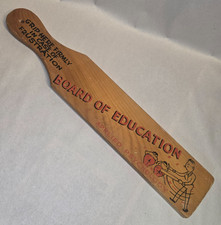
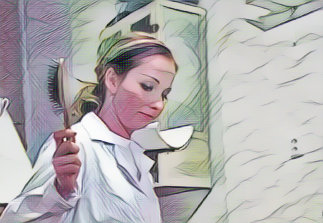
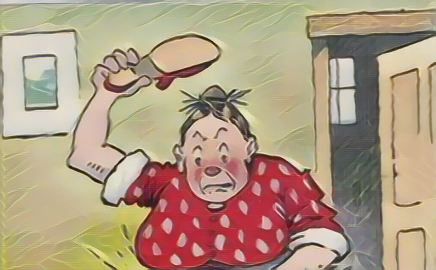
(pause) When break ended, Miss Duff marched us down the corridor, her grip iron on my shoulder. The third-year classroom was silent as we entered, the other teacher barely glancing up before handing over a battered old slipper—a relic of discipline, its rubber sole worn smooth. Miss Duff slapped it against her palm, the sound sharp and final. “Who’s first, then?” she demanded, her eyes narrowing. I tried to explain, my voice trembling, but she cut me off with a look. “You, boy. Bend over and grab your ankles!” (pause) There was no room for protest, not with the whole school watching, not when your reputation was at stake.
(pause) She fussed with my posture, tugging at my jumper and straightening my collar, as if neatness could somehow redeem me. Then came two sharp whacks, the pain blooming hot and sudden. “Off to class with you!” she snapped. I stumbled away, blinking back tears, my pride as bruised as my backside. The other boy followed, but to my astonishment, he swaggered back into the corridor, a crooked grin on his face. For some, punishment was a badge of honour—a way to show you weren’t soft, that you could take whatever the world threw at you.
(pause) The two girls stepped forward, their faces flushed with urgency. “He didn’t go in, Miss! He only did what we asked.” Their voices overlapped, desperate to set the record straight. They even mentioned the other boy’s grin, as if to distance themselves from any hint of commonness. On our estate, even in trouble, no one wanted to be thought of as ordinary.
(pause) Miss Duff’s expression shifted, a flicker of doubt crossing her face. She seized the boy by the arm and dragged him into the corridor. We all heard it—three sharp smacks, each one ringing out like a warning. When he returned, the bravado was gone, replaced by a sullen silence.
(pause) Miss Duff approached me, her voice softer now, but the damage was done. She offered an apology, but I was burning with anger and humiliation—punished for nothing, simply because appearances mattered more than truth. My bottom throbbed, and I sobbed quietly, the sound muffled by my sleeve. Miss Duff leaned in, her voice a harsh whisper: “Stop that noise, or I’ll give you something to cry about!” (dramatic pause) On our estate, even tears had to be hidden away—because in the end, what mattered most was what the neighbours might think.