(gap: 2s) My name is Peter. I entered the world in 1953, and the earliest chapters of my life unfolded in a succession of foster homes scattered across the rolling hills and hedgerows of Sussex. I remember the scent of privet and the distant sound of church bells on Sunday mornings, the world always seeming to turn just out of reach. Eventually, fortune smiled upon me, and I was adopted by a most respectable family in Chailey—a village of pebble-dashed maisonettes, where the air was thick with the mingled aromas of coal smoke and freshly cut grass. I considered myself exceedingly fortunate, for I was adopted at an age when most boys had resigned themselves to the notion that such a thing would never occur.
(short pause) If my recollection is accurate, I resided in no fewer than three foster homes before my adoption. Among these, the Turner family of Chailey stands out most vividly in my memory. Mr and Mrs Turner, who must have been in their forties—though their countenances suggested a far greater age—had a daughter named Sheila, five years my senior. My sojourn with the Turners lasted approximately eighteen months, and it was there that I learned, in the most vivid and unforgettable manner, the meaning of discipline and Christian duty.
(pause) The Turners were devout Christians, their faith woven into the very fabric of their daily lives. Each Sunday, without exception, they attended the little flint church at the end of the lane, and their home was adorned with religious tomes and framed verses from the Bible. The mantelpiece bore a sampler stitched with “As for me and my house, we will serve the Lord.” It was their unwavering belief in Christian charity and duty that compelled them to open their home to children less fortunate than themselves. They regarded fostering as a sacred calling, a practical manifestation of their faith, and they spoke often of the parable of the Good Samaritan.
(short pause) The Turners were not unkind, but they were, in every sense, peculiar. They appeared to hold the conviction that any boy who found himself in the foster care system must, by definition, be a thoroughly bad influence. They were certain that I required the most rigorous and frequent discipline. I must add, for the sake of accuracy, that I was not, by nature, a particularly unruly child. I was shy, bookish, and eager to please, but the Turners seemed to believe that the Devil found work for idle hands, and that only the strictest regime could keep a boy on the straight and narrow.
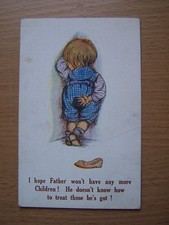
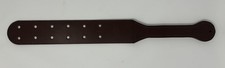
(pause) It did not take me long to discover that discipline in the Turner household was administered with a rubber-soled slipper. Yet, these were not the mild rebukes one might expect. No, the punishments were delivered with a severity that left no doubt as to their purpose. Each time I transgressed, I was summoned to the Turners’ bedroom, where the ritual unfolded with unwavering regularity.
(pause) The first time it happened, I had left a muddy footprint on the hall carpet. Mrs Turner’s eyes narrowed, and she said, “Peter, you know the rules. Upstairs, if you please.” My heart thudded in my chest as I climbed the narrow staircase, the wallpaper patterned with faded roses seeming to close in around me. In the bedroom, I was required to open the top drawer of the dresser and retrieve the dreaded slipper—a large, grey thing with a thick, flexible sole. I placed it solemnly upon the bed, as instructed, and then, with trembling hands, lay face down over the side of the bed, my heart pounding in anticipation.
(short pause) After a period of anxious waiting—five or ten minutes, though it felt an eternity—Mr and Mrs Turner would enter the room and close the door with a quiet finality. There was no discussion, no lecture, only the silent preparation for what was to come. I could hear the faint ticking of the clock on the mantelpiece, and the distant laughter of children playing outside, a world away from my predicament.
(pause) Mrs Turner would intone, with a grave air, “This is what happens to little boys who do not behave in this house.” Then, with a deliberate and measured hand, she would bring the slipper down upon my bare flesh. Each stroke was delivered with such force that the pain was immediate and intense, a burning sting that seemed to sear through to the bone. I would cry out, unable to contain my distress, as the blows continued—one after another—without respite. There was no set number; the punishment continued until my foster parents deemed that I had learned my lesson. When it was over, my skin was left a vivid, angry red, and the pain lingered long after I was sent away.
(pause) These harsh punishments occurred with alarming frequency—once every week or two, regardless of the gravity of my supposed offence. Even the most minor infractions, such as neglecting to remove my shoes upon entering the house, were deemed sufficient cause for such discipline. I recall one occasion when, having forgotten to say grace before tea, I was marched upstairs and subjected to a particularly severe chastisement, the echoes of the slipper ringing in my ears long after the ordeal had ended.
(pause) In addition to these punishments, the Turners instituted what they termed ‘reminder spankings’. These were administered every Sunday evening, intended to impress upon me the necessity of good behaviour at school and diligence in my studies. The ritual was as fixed and inevitable as the chiming of the church bells.
(pause) Each Sunday evening, after tea, I was sent upstairs to bathe and prepare for bed. The bathroom was chilly, the linoleum cold beneath my feet, and the soap always seemed to sting my eyes. Once I had washed and donned my pyjamas—striped, with a button missing—I was required to return downstairs and inform Mr and Mrs Turner that I was ready. Occasionally, if they were occupied with some household task, I would be instructed to proceed to their bedroom and prepare myself—once again lying face down over the bed, the slipper awaiting its grim duty.
(pause) More often, however, the Turners would accompany me upstairs. On these occasions, Mrs Turner would retrieve the slipper from the dresser, then guide me to the bed and position me over its edge. The ritual was always the same, and the anticipation only heightened my sense of dread. Sheila, their daughter, would sometimes peer round the door, her expression a mixture of curiosity and pity, before being shooed away by her mother.
(pause) Though my foster parents never announced or counted the number of strokes, I soon discerned that each Sunday evening brought with it a dozen sharp, unrelenting blows from the slipper upon my bare skin. The pain was excruciating, and the humiliation complete. I would bite my lip, determined not to cry, but the tears always came, hot and shameful.
(pause) As I have mentioned, I was a shy and modest boy, and the pain of these punishments was matched only by the acute embarrassment they caused me. During those first months with the Turners, I found myself dreading not only the physical agony but also the shame of my predicament. I would lie awake at night, listening to the distant barking of a dog and the occasional rumble of a lorry on the main road, wondering if I would ever escape the shadow of the slipper.
(pause) On certain Sundays, the Turners would entertain company. These occasions were, without question, the most mortifying of all. After my bath, I would be required to enter the lounge or dining room and announce, in the presence of their guests, that I was ready for my punishment. The humiliation was almost unbearable. I remember one evening when the vicar and his wife were visiting. Mrs Turner, with a look of solemnity, would say, “Excuse us, Reverend. We must attend to Peter’s discipline before bedtime.” My face would burn with shame, and as I was led upstairs, I was certain that everyone below could hear the sound of each blow, and my cries of pain, echoing through the house. The only consolation was that, after the punishment, I was sent directly to bed and spared the ordeal of facing the assembled company again.
(pause) There were times, too, when Mr Turner would take a hand in my discipline. His method was no less severe, though he was less given to ceremony. On one memorable occasion, having been caught climbing the garden fence, I was summoned to the bedroom and told, “Peter, you know what is expected.” Mr Turner’s grip was firm as he positioned me over the bed, and the slipper fell with a relentless rhythm, each stroke a lesson in obedience. Afterwards, I was left to compose myself, the muffled sounds of the wireless drifting up from the parlour below.
(pause) The Turners believed, with all the certainty of their faith, that they were saving my soul from the snares of wickedness. They would read to me from the Bible each evening, their voices solemn as they recited the story of the Prodigal Son or the parable of the Lost Sheep. “Spare the rod and spoil the child,” Mrs Turner would say, her eyes shining with conviction. I would nod, though I scarcely understood, and try to hide the marks left by the slipper beneath my pyjamas.
(pause) Yet, for all the harshness of their discipline, there were moments of kindness, too. On Sunday afternoons, after church, Mrs Turner would bake scones and serve them with strawberry jam, and Mr Turner would take me for walks across the fields, pointing out the names of wildflowers and birds. It was as if, in those brief interludes, the sternness of their Christian duty gave way to something gentler, and I glimpsed the possibility of belonging.
(pause) Still, the memory of those Sunday evening spankings remains with me, as vivid as the scent of lavender in the garden or the sound of the church bells at dusk. The Turners’ sense of duty was unyielding, their faith a shield against doubt, and I, a small boy in striped pyjamas, learned to endure both pain and shame in the hope of earning their approval.
(pause) Looking back, I see now that the Turners were, in their way, as much prisoners of their beliefs as I was of their discipline. They meant to do good, and perhaps, in some measure, they succeeded. But the lessons I learned in that pebble-dashed maisonette were written not only in the pages of the Bible, but also in the red, stinging marks left by the slipper—a testament to the peculiar, sometimes painful, ways in which love and duty can entwine.