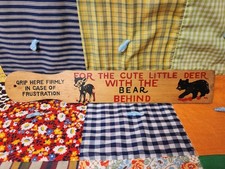
My mother was a sixth grade teacher from the time she graduated in the 1960s until she retired five or six years ago. Her classroom was her kingdom, a place where the scent of chalk dust mingled with the hum of restless children, and where her voice—firm, clear, and unwavering—commanded respect. In those days, the world felt different, and so did the rules. Corporal punishment was not just permitted, it was expected, and the teacher was the enforcer. The paddle, a heavy, polished slab of wood with her name and room number etched in black marker, hung on the wall like a silent warning. It was both a symbol of her authority and a tool she wielded with a sense of duty, never cruelty.
My mother’s reputation preceded her. She was known as a teacher who could make learning fun, who laughed easily and told stories that made history come alive. But she was also known for her no-nonsense approach. The paddle was not a threat, but a promise: if you crossed the line, there would be consequences. I remember the way her students would glance at it, eyes wide, as if it were a mythical object. At home, we heard stories of her classroom, of the time she had to use the paddle, and how even the rowdiest kids straightened up after a single warning.
Everything changed in 1976, when the district announced a new policy. The paddle was no longer the teacher’s to wield; only the principal could administer corporal punishment now. My mother, ever practical, brought the paddle home, its purpose shifting from classroom order to household discipline. I remember the day she set it on the kitchen counter, the afternoon sun glinting off its smooth surface. She told us, her voice calm but resolute, that as we grew older, we needed a more serious consequence for serious misbehavior. The paddle, she said, would serve that purpose. My brother, being older, was the first to experience its sting. I watched, wide-eyed, as the rules of our home changed before my eyes.
Spanking was not new in our house. My earliest memories are tinged with the sharp sound of a hand meeting flesh, the sting of a wooden spoon, the ritual of being turned over her knee. There was a strange comfort in the routine of it, the way it marked the boundaries of right and wrong. But the paddle was different. It was heavier, more serious, and it carried with it the weight of my mother’s authority as a teacher and a parent.
When she brought the paddle home, it felt as if a new era had begun. She explained that it would only be used for the gravest offenses, and at first, it was reserved for my brother. I watched him, trying to gauge his reaction, wondering if he felt the same mix of fear and curiosity that I did. Within a year, I would learn firsthand what it meant to be “old enough” for the paddle. The anticipation was almost worse than the act itself—a slow, creeping dread that settled in my stomach whenever I saw the paddle resting on the shelf.
One summer day, the air thick with the scent of cut grass and the distant drone of cicadas, my brother and I set out on our bikes. The world felt endless, the sun warm on our backs as we pedaled farther than we ever had before. We lost track of time, the thrill of freedom intoxicating, until hunger and guilt pulled us home—nearly an hour late for lunch. The kitchen was cool and dim, the linoleum cold beneath my bare feet as we stood before my mother. Her face was a mask of worry and anger, her eyes searching ours for the truth. The questioning was gentle at first, but soon tears welled up as we confessed, the weight of our disobedience settling over us like a heavy blanket.
We tried to reason with her, our voices trembling with a mix of defiance and desperation. “We’re old enough,” we insisted. “All our friends’ parents let them go farther.” But our words bounced off her like pebbles against a stone wall. Her anger was not just about the rules we’d broken, but the fear she’d felt when we didn’t come home. I saw it in the tightness of her jaw, the way her hands shook as she pointed us to the kitchen. There was no room for negotiation—her decision was final.
She left us waiting in the kitchen, the silence stretching out, thick and suffocating. I could hear her footsteps on the stairs, the creak of the floorboards above. When she returned, paddle in hand, the room seemed to shrink around us. My brother’s face went pale, his bravado slipping away. I had never seen the paddle used, only heard the stories, and now it was real—solid, heavy, and inescapable. My mother believed in privacy, but when there was more than one culprit, the punishment was shared.
Mother always started with the oldest. Jake was first. She told him to bend over and grab his ankles—a new position, one that felt more humiliating, more exposed. I watched, heart pounding, as he complied, his back tense, his hands gripping his ankles so tightly his knuckles turned white. The room was silent except for the sound of our breathing and the faint ticking of the kitchen clock.
She tapped his bottom with the paddle, lining up her aim, and then—crack!—the sound echoed off the walls, sharp and final. Jake yelped, jerking out of position, a bright red mark already blooming on his skin. She told him to get back in place, her voice steady but not unkind. Another swing, another cry, and this time the tears came. I had never seen my brother cry like that, not even with the wooden spoon. The paddle was different. It broke through his defenses, left him raw and vulnerable.
My own fear grew with every blow. Jake was my protector, my role model, the one who never flinched. Now he was sobbing, his body shaking with each strike. I felt a cold sweat break out on my forehead, my stomach twisting into knots. I wanted to run, to hide, but there was nowhere to go. The inevitability of my own turn loomed over me, heavy and suffocating.
I was terrified—more afraid than I had ever been in my life. My mind raced with questions: Would it hurt as much as it looked? Would I cry, too? Would I be able to stand it? The butterflies in my stomach felt more like angry hornets, buzzing and stinging with every passing second.
My mother didn’t say a word to me. She just gave me The Look—the one that said everything, that told me she was disappointed, that she expected better. She turned back to Jake, delivering two more wallops, each one harder than the last. Five was the maximum allowed at school, and she never gave more at home. But these five were enough to leave you sore for days, the pain lingering as a reminder long after the punishment was over.
When it was over, Jake hopped around the kitchen, rubbing his bottom, tears streaming down his face. It was almost comical, the way he danced, but I was too anxious, too embarrassed to laugh. I could feel my own cheeks burning, my heart pounding so loudly I thought it might burst.
Then it was my turn. The world seemed to slow down, every detail etched into my memory—the coolness of the countertop, the faint smell of dish soap, the way the sunlight slanted through the window, casting long shadows on the floor.
I bent over, grabbing my ankles, feeling exposed and small. The paddle tapped against me, a warning, and then—crack! The pain was immediate, sharp and hot, radiating outwards. I jumped up, instinctively reaching back to rub the sting, tears springing to my eyes. My mother’s voice was gentle but firm as she told me to get back in position.
The second blow was even harder, the sound ringing in my ears. I tried to be brave, to hold still, but after each pop I leapt up, unable to help myself. By the fifth, I was sobbing, my dignity forgotten, my only thought the burning pain and the desperate need for it to be over. When it finally was, I danced around the kitchen just like Jake, clutching my bottom, not caring who saw.
When the paddling was done, my mother pointed us to the corner. We stood there, sniffling, faces hot with shame and eyes stinging with tears. The pain faded slowly, replaced by a deep, aching remorse. But even as I stood there, I understood—on some level—that this was about more than punishment. It was about boundaries, about love, about the impossible task of keeping children safe in a world that felt too big and too wild. And as the afternoon sun crept across the floor, I knew I would never forget that lesson.