My abiding interest in the subject of corporal punishment has, over the years, led me to explore a curious patchwork of opinions and recollections, much like the patchwork quilts that covered the beds in our modest guesthouse. Some corners of the world, and indeed the internet, are filled with those who look back on their own childhood discipline with a kind of fond nostalgia, as if recalling the taste of boiled sweets or the feel of a new conker in the pocket. Others, however, remember only the sting and the shame, and their voices are tinged with sorrow and indignation.
(pause) There are those—often older, their hair now silvered by time—who speak warmly of the days when a sharp word or a well-timed smack kept order in the home and classroom. “It never did me any harm,” they’ll say, with a twinkle in the eye and a knowing nod, recalling the days when the cane hung behind the headmaster’s desk like a silent sentinel. Yet, there are others, their memories shadowed by harsher hands, who flinch at the very mention of such things. Some, even now, cannot abide the thought of a single slap, believing it to be a trespass too far, a relic best left in the past.
(short pause) The debate, it seems, is as lively as the Skegness promenade on a summer’s day. Those who support corporal punishment in the home are often painted as villains by others, accused of advocating cruelty when, in truth, most simply wish for a measure of order and respect. “You’d have us whipping toddlers!” comes the cry, but such caricatures are as unfair as they are unkind.
(pause) In truth, the pendulum has swung from one extreme to the other over the past century. There was a time, not so long ago, when discipline was meted out with a firm but fair hand, and I cannot help but feel that, in my own schooldays, the balance was just about right. Not too harsh, nor too lax—a lesson in moderation, as my father would have said.
(short pause) Roald Dahl, that master of childhood tales, wrote with vivid clarity about the canings and slipperings of his youth. He was so opposed to the practice that, when offered the chance to become a prefect at Repton, he refused, declaring, “I shan’t cane the younger boys, sir.” The headmaster, unimpressed, passed him over. Dahl’s distaste for corporal punishment would later find its way into his stories, where cruel masters and stern matrons loomed large, and children’s voices rang out with protest and pluck.
(pause) My own father, a thoughtful and fair-minded man, attended a prep school where the headmaster once caned the entire class for a single failing. The memory, he told me, was less of pain and more of the injustice of it all—the swish of the cane, the hush that fell over the room, and the way the sunlight danced on the polished floorboards as each boy took his turn. Later, at boarding school, he was caned by prefects, and in time, he too was given the authority to punish. “Discipline must be kept,” he would say, “but never abused.” He believed, as many did, that the prefects’ firm hand allowed the masters to teach, and the school to run as smoothly as a well-oiled bicycle.
(short pause) I remember, as if it were yesterday, the day my sister was spanked by Mother with a light kitchen spatula. The kitchen was filled with the aroma of stewing apples and the gentle clatter of crockery. My sister, ever the defiant one, shouted, “It doesn’t hurt! It doesn’t hurt!”—her voice echoing down the narrow hallway. Perhaps it truly didn’t, but even as a child, I sensed that her words were a challenge, a dare that only made matters worse. Mother’s face, usually so gentle, was set in a mask of resolve, and I learned then that sometimes, words could sting as much as any smack.
(pause) My own brushes with corporal punishment were mostly confined to school. I attended a small private primary, where the headmistress—a formidable woman with a bun as tight as her rules—once rapped a boy’s knuckles with her ruler. The sharp crack startled us all, but it was the breaking of the ruler, not the pain, that brought tears to the boy’s eyes. “There now,” she said, her voice softening, “let that be a lesson in care and consequence.”
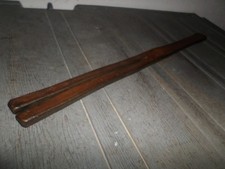
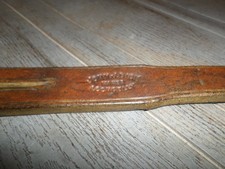
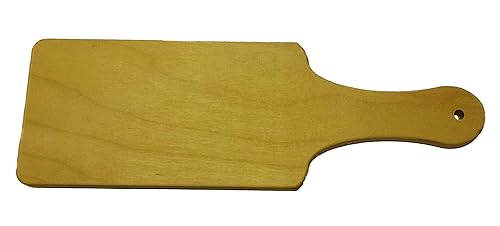
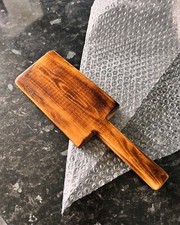
(short pause) The following year, I found myself at a private prep school, where discipline was a more theatrical affair. The headmaster, a man of booming voice and bristling moustache, reserved punishment for the most serious offences. Only boys, never girls, were summoned to his study, where the legendary ‘basting spoon’ awaited—a long-handled wooden implement, polished by years of use. “I shall bring up the basting spoon!” he would thunder, and a hush would fall over the school, as if the very walls were holding their breath.
(pause) I remember the tension in the air as he galloped down the stairs, the sound of his footsteps echoing like distant thunder. The miscreants—usually boys who had thrown paper balls, been cheeky to a mistress, or shouted out nonsense in class—were ordered to bend over and received three sharp whacks. Looking back, I wonder if one boy, who could not help but blurt out odd words, might have suffered from a condition we now understand better. But in those days, such things were simply labelled ‘naughtiness’ and dealt with accordingly.
(short pause) The punishment, though it stung, was brief—a “short, sharp shock,” as the headmaster called it. There were no lasting marks, only a smarting bottom and a lesson learned. We boys would whisper about it afterwards, our voices hushed with awe and a strange sort of respect. “Did it hurt?” someone would ask, and the answer was always the same: “A bit, but I deserved it.”
(pause) The greatest scandal of my time there came when four boys were caught eating sweets at the bus station, still in their school uniforms. The next morning, they were summoned to the headmaster’s study, and the basting spoon was applied to each in turn. Their crime seemed trivial, but the lesson was clear: rules were rules, and to break them was to invite swift retribution. “Let this be a warning to you all,” the headmaster intoned, and we nodded solemnly, the taste of forbidden sweets lingering in our minds.
(short pause) When Father changed jobs and we moved house, my sister and I attended a state primary for a short while. The school was a jumble of red-brick buildings and echoing corridors, filled with the scent of chalk dust and wet macintoshes. Here, discipline was more common, but somehow less fearsome. The form masters’ slippers—plimsolls, really—each had a name, and mine was ‘Archie’. When a boy’s behaviour crossed the line, he was called out, told to bend over, and given three quick whacks. The sting brought tears, but the atmosphere was almost jovial, as if we were all in on the joke.
(pause) I remember the first time I was called out. My heart thudded in my chest as I shuffled to the front of the class, the eyes of my classmates upon me. “Steady on, old chap,” whispered a friend, and I managed a weak smile. The slipper landed with a satisfying smack, and I returned to my seat, cheeks burning but pride intact. The lesson continued, and by lunchtime, the incident was already fading into the background hum of school life.
(short pause) Only once did I see a master truly angry—when two boys were caught using ‘naughty’ words in the corridor. “Wee-wee and poo-poo!” they had said, and the resulting slippering was more severe than most. We watched in silence, the gravity of the moment pressing down on us like a heavy blanket. Afterwards, the boys were subdued, but the lesson was clear: words, like actions, had consequences.
(pause) The girls, I noticed, were never spanked at school. Perhaps they were better behaved, or perhaps the rules were different for them. In any case, the threat of punishment hung over us boys like a summer storm—always present, but rarely unleashed without cause.
(short pause) After we moved again, I spent a year at another state primary, where corporal punishment was rare. I heard whispers of a boy being slippered for ‘back chat’, but I never saw it myself. The school was quieter, the rules less strictly enforced, and I found myself missing the sense of order that had once seemed so oppressive.
(pause) My final school was an old-fashioned boys’ public school, where tradition reigned and discipline was both feared and respected. In the Junior School, some housemasters were quick to slipper boys, usually in private, though now and then a severe whacking would be administered in class, reducing the recipient to tears. In the Senior School, canings were rare but memorable—news of them spread like wildfire, and we would gather in hushed groups to discuss the details.
(short pause) Smoking was the surest way to earn a caning, though some housemasters preferred lines or detentions. I must have chosen my friends poorly, for several of them found themselves on the receiving end of the cane. They would return, faces pale and eyes shining with a mixture of pain and pride, and we would listen to their stories with a mixture of horror and fascination.
(pause) Looking back, I believe the discipline of my schooldays was, on the whole, fair. There was little of the brattish behaviour that seems so common now, but neither were older boys given free rein to punish the younger ones. The rules were clear, the punishments measured, and the lessons—though sometimes painful—were always meant to guide, not to harm.