My parents never exactly moved with the modern times. When it came to raising their offspring, they seemed stuck in a timewarp, holding firmly to the standards and values of the 1940s and 1950s. This meant the fair use of corporal punishment and smacking was simply part of their parenting, after all, as they often said, it never did them any harm. Their approach to discipline was unwavering, and they believed that a firm hand was the only way to ensure children grew up respectful and well-mannered. I often wondered if they ever questioned these methods, but if they did, it was never spoken of.
I used to dread the smacked bottoms I would get from both my mother and father. No matter how hard I tried to behave, there always seemed to be a reason for a smacked bottom. Most of these punishments were given by my mother, as my father was at work all day. I especially feared those moments when my mother would remove one of her slippers—just the sight of it in her hand was enough to fill me with anxiety, knowing what was about to happen. Her slipper was a well-worn, sturdy house shoe, made of thick rubber with a faded floral pattern on the top and a slightly frayed edge from years of use. The sole was solid and flexible, making it perfect for delivering a sharp sting. I can still remember the way it would slap against her palm as she flexed it, the faint scent of polish and the creases where her foot had pressed down over time. It was both an ordinary household item and, in my eyes, a dreaded instrument of discipline.
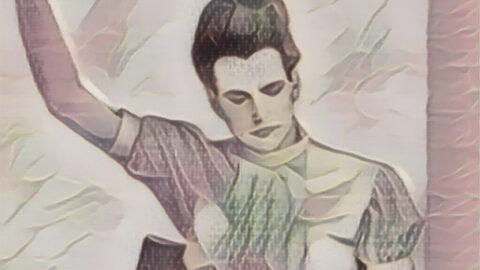
Back then, it was quite common for parents to believe in smacking until the culprit could not sit down comfortably for quite some time. Sometimes this was done in private and sometimes in front of others. I remember on one particular occasion in the mid-1970s, when I was in my formative years. I was misbehaving on the way home from our local council-run school. My mother, dressed in typical 1970s fashion, gave me a couple of hard smacks with her hand on bottom in the middle of the street. I remember sulking all the way home, walking slowly behind her as I rubbed my sore backside, feeling embarrassed in front of the neighbours.
When we got home , she told me to go upstairs, As I climbed the stairs, my mind raced with possibilities, a mixture of hope and nervousness. The anticipation was almost worse than the punishment itself, as I tried to convince myself that perhaps, just this once, I would be spared.
Once there, she told me to bend over my bed, which I dutifully did. It was only when she raised my skirt and smacked my bottom with her hand that I realised what was coming. I instinctively put my hand to my bottom, which she quickly and firmly pinned to my back, just as many parents did in the 1970s. The ritual was always the same—my heart pounding, my cheeks flushed with embarrassment, and the cold air on my skin as I waited for the inevitable. Each smack was a sharp reminder of my misbehaviour, but also of the strange comfort that came from such familiar routines.
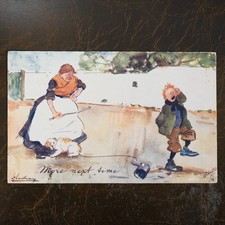
The next thing I knew, she produced a slipper, a common tool for discipline in the 1970s. She told me to bend over the end of my bed, my hands gripping the blanket tightly as I braced myself. I always had to bend right over, with my bottom sticking out, so she could get a clear aim. I would usually receive between six and twelve sharp smacks, each one landing squarely across the centre of my bottom. The sound of the rubber sole connecting with my skin echoed in the room, and I could feel the sting building with every smack. Sometimes she would pause between smacks to lecture me, making the anticipation even worse. No matter how much I kicked or pleaded, she would continue until she was satisfied I had learned my lesson. My mother, who had married into the middle class and sometimes had ideas above her station, believed in strict discipline, just like many parents of that era. Afterward, I would be left sniffling, rubbing my sore bottom, and reflecting on what I had done. The slipper, now resting on the dresser, seemed to watch over me as a silent warning for the future.
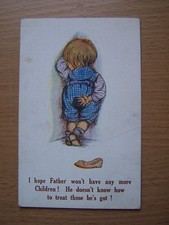
When she thought I had had enough, she took me downstairs and made me face the wall in the kitchen, decorated in classic 1970s style. For 30 minutes, I had to face the wall, hands on head and reflect. I knew from previous experience that it was not advisable to move before time was up! The kitchen clock ticked loudly, each second stretching out as I replayed the events in my mind. The patterned linoleum floor, the clatter of dishes, and the distant sound of the television all became part of my silent punishment. It was a time to think, to regret, and to promise myself I would do better next time.
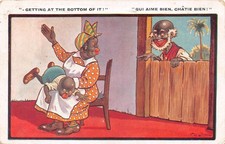
When my father came home, if he felt that the lesson had not yet been learned, he would put the culprit over his knee in the living room, and spank our recently-reddened bottoms with his large hand in front of whoever happened to be around at the time. The living room, with its heavy curtains and orange-brown furniture, became a stage for these lessons. The embarrassment of being punished in front of siblings or guests was sometimes worse than the spanking itself. Yet, in my father’s eyes, it was all part of raising children who would grow up to be respectful and well-behaved.
Thankfully, on this occasion my bottom was spared a second dose – I was simply sent to bed early with no bedtime story. As I lay there, the sting slowly faded, replaced by a sense of relief and a quiet determination to avoid trouble in the future. These experiences, though painful at the time, became part of the fabric of my childhood, shaping the person I would become.
The memory of those moments, the sting, the shame, and the lesson, have stayed with me ever since. Looking back, I realise how much those experiences shaped my understanding of authority, obedience, and the complicated love between parent and child.