(gap: 2s) Once upon a time, in the gentle years of the early 1970s, when the world seemed painted in soft pastels and the air was sweet with the scent of coal smoke and fresh-cut grass, there lived a little boy named Peter. Peter’s life, like many children’s, was filled with the simple joys and small sorrows of a Surrey council estate. But one summer, everything changed, and Peter learned a lesson he would never forget.
Peter’s parents, like so many in those days, parted ways. His father, a kindly man with twinkling eyes, soon met a lady named Mrs. Catherine. By the summer of 1974, Mrs. Catherine and her two daughters, Denise and Kristie, came to live with Peter and his father. The house, once quiet, now rang with laughter, the patter of feet, and the cheerful clatter of breakfast dishes.
Mrs. Catherine was the very picture of a proper lady—her hair always neat, her dresses pressed, and her smile as warm as a fire on a chilly evening. Denise, the elder, was clever and quick, while Kristie, the younger, was full of mischief and giggles. From the very first morning, Peter felt both nervous and excited, for everything was new.
On that first day, the sun shone kindly through the curtains. Mrs. Catherine greeted Peter with a gentle hug and a cup of milky tea. Denise and Kristie invited him to play, and soon the three children were tumbling about the garden, their laughter echoing down the narrow lanes. Peter watched Mrs. Catherine as she moved about the kitchen, her hands sure and gentle, and he felt a secret admiration for her, as innocent as the daisies by the fence.
The next morning, after a breakfast of lumpy porridge and toast soldiers, Mrs. Catherine announced, “Let us go to the playground!” The children cheered, and off they went, skipping down the lane. The swings creaked, the slide gleamed, and the world felt safe and bright.
Kristie, ever the imp, climbed the jungle gym, her pigtails flying. Denise and Peter took turns on the slide, their shoes kicking up little clouds of dust. All was well until Mrs. Catherine called, “Time to go home, children!” Denise and Peter obeyed, but Kristie, stubborn as ever, refused. “No, Mummy! I’m staying here!” she cried, her chin set in defiance.
Without a word, Mrs. Catherine strode across the playground, her steps brisk and purposeful. She lifted Kristie from the jungle gym, ignoring her kicks and wails, and carried her to a nearby bench. There, in the dappled sunlight, Mrs. Catherine sat down, placed Kristie over her knee, and delivered a firm, measured spanking to the seat of her jeans. Each smack rang out, clear and sharp, mingling with the distant hum of traffic and the soft cooing of pigeons. Kristie’s cries were loud, but Mrs. Catherine’s hand was steady, and her face was kind but resolute.
When it was over, Mrs. Catherine set Kristie on the bench and said, “You will sit here until you are ready to behave, young lady. There will be time in the corner when we return home.” Kristie sniffled, her cheeks red, but she nodded, for she knew her mother’s love was as steady as the North Star, even when it came with a lesson.
Peter watched, wide-eyed. He had known the sting of a spanking before, but always behind closed doors, never in the open air. It was both shocking and strangely comforting, for it showed him that the world had rules, and that mothers and fathers would always see them kept.
In the days that followed, Peter learned that Mrs. Catherine was a mother of the old school, a firm believer in the wisdom of a well-timed spanking. Denise and Kristie, though lively and loving, were no strangers to the consequences of mischief. A fib, a forgotten chore, a quarrel over toys—each could earn a swift trip over their mother’s knee.
Peter’s own mother, gentle and patient, reserved spanking for the gravest of offences. But Mrs. Catherine believed in swift justice, and her daughters accepted it as a fact of life, as ordinary as rain on the windowpane. Peter, who had only ever been spanked two or three times a year, was astonished to see Denise and Kristie receive their lessons two or three times a week.
What struck Peter most was Mrs. Catherine’s unwavering consistency. Whether at the grocer’s, the cinema, or the park, she never hesitated to correct her daughters if they strayed. If there was no bench or chair, she would deliver a few brisk smacks while standing, her face set in a look of loving determination. If a seat was available, the ritual was more formal: over the knee, a firm lecture, and a series of crisp spanks that left no doubt as to her intentions.
Peter watched these scenes unfold with a mixture of awe and curiosity. Denise and Kristie never seemed embarrassed, even when strangers looked on. They spoke of their spankings with a matter-of-fact air, as if discussing the weather or the price of sweets. It was simply the way things were, and they bore no grudge against their mother for it.
Yet for all her sternness, Mrs. Catherine was a fountain of affection. She hugged her daughters close, kissed their foreheads, and laughed with them over silly jokes. After a spanking, she would gather the punished child in her arms, whispering words of comfort and love. The lesson was always clear: discipline was not anger, but care; not cruelty, but guidance.
Mrs. Catherine’s warmth extended to Peter as well. She treated him as one of her own, offering gentle words and soft smiles. Peter’s childish admiration deepened, and he found himself daydreaming about what it would be like to be spanked by her—to be the object of her stern affection, to feel the sting of her hand and the balm of her embrace.
At night, as the house settled into quiet, Peter would lie in bed and replay the day’s events in his mind. He imagined himself in Denise or Kristie’s place, over Mrs. Catherine’s knee, learning his lesson and earning her forgiveness. Sometimes, he even considered misbehaving on purpose, just to see if she would treat him the same. But he knew, deep down, that his father would be the one to discipline him, and so his thoughts remained private dreams, spun from the threads of longing and curiosity.
The summer days drifted by, each one filled with the simple pleasures of childhood—games in the garden, trips to the sweet shop, evenings spent watching the telly with a plate of biscuits. Yet beneath the surface, Peter felt a growing sense of belonging, as if he were being gently woven into the fabric of this new family.
Then, in the final week of his visit, everything changed. Father was called away to work, leaving Mrs. Catherine in charge. She decided to take the children on a picnic, packing sandwiches and lemonade into a battered wicker basket. They spent the afternoon beneath the shade of an old oak tree, eating and laughing, the world around them drowsy with summer heat.
As the sun began to dip, they made their way back to the car. Suddenly, Mrs. Catherine realised she had left her purse at the picnic site and asked the children to wait while she retrieved it. The three children piled into the back seat, sticky with sun and laughter. Peter spotted his bottle of soda on the floor and took a sip, the cool fizz tickling his tongue. Denise asked for a taste, and he passed it to her. Kristie, not to be left out, snatched the bottle away, and soon they were all grabbing and tugging, their voices rising in playful protest.
In the scuffle, the bottle slipped from their hands and tumbled onto the seat, spilling its sticky contents everywhere. The children stared in horror as the dark liquid spread, leaving a stain that would not be easily hidden. Peter’s heart sank, and he felt a cold knot of dread in his stomach.
When Mrs. Catherine returned, her eyes flashed with disappointment. “Who did this?” she demanded, her voice sharp as a slap. Kristie, ever honest, spoke up: “We all did. We were fighting over it.” Mrs. Catherine’s face softened, but her resolve did not waver.
“Out of the car, all of you,” she ordered. “Go and sit on that bench, and do not move a muscle while I clean up this mess.” The children shuffled to the bench, their heads bowed, the weight of their mischief heavy on their shoulders. “She’s going to spank us,” Kristie whispered, her voice trembling. “Yup, definitely,” Denise replied, her eyes wide. Peter sat in silence, his heart pounding. He had longed for this moment, but now that it was upon him, he felt a strange mix of fear and anticipation.
Mrs. Catherine finished cleaning and approached them, her steps measured and calm. She pointed to Denise and Peter. “You two—stand over there.” They obeyed, moving to the spot she indicated. Mrs. Catherine sat beside Kristie, patted her lap, and Kristie climbed over without protest. The spanking was swift and firm, each smack echoing in the quiet park. Kristie’s tears were real, but so was her acceptance. Mrs. Catherine’s hand landed with a crisp sound, and Kristie’s bottom wriggled, but she did not resist. When it was over, Mrs. Catherine hugged her close and whispered, “You are forgiven, my dear.”
Denise was next, and she too took her punishment bravely, her face set in a look of stoic resolve. Over Mrs. Catherine’s knee she went, and the smacks fell in quick succession, each one a reminder of the importance of honesty and obedience. Denise’s eyes filled with tears, but she did not cry out. When it was done, Mrs. Catherine kissed her cheek and said, “You are a good girl, Denise, but you must learn to behave.”
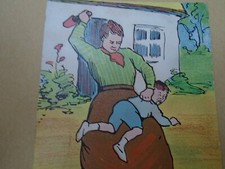
At last, it was Peter’s turn. Mrs. Catherine fixed him with a steady gaze. “Your turn, young man.” The walk to her side felt endless, his legs heavy as lead. He climbed over her knee, his cheeks burning with embarrassment and something else—pride, perhaps, or relief at finally being included. Mrs. Catherine’s hand was firm, her discipline unwavering. The sting was sharp, but it was not cruel. With each smack, Peter felt a strange sense of belonging, as if he were being welcomed into a secret club, one where love and discipline walked hand in hand.