When I was a little boy, not much taller than the garden gate, I lived in the sleepy village of Chilham, nestled deep in the Kentish countryside. It was the early 1970s, but in our corner of the world, time seemed to move at a gentler pace, as if the village itself was wrapped in a patchwork quilt of tradition and gentle routine. Our cottage, with its red-brick walls and climbing roses, stood at the edge of the green, where the air always smelled faintly of coal smoke, cut grass, and the sweet promise of adventure.
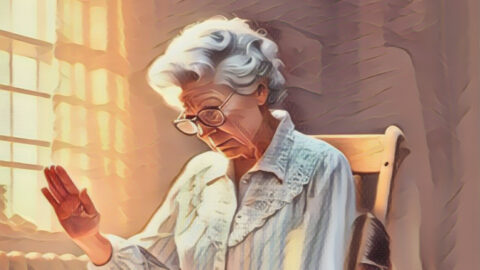
(short pause) My mother, who seemed to me as wise and unchanging as the old yew tree in the churchyard, was older than most of the other mothers in the village. She wore her hair in a neat bun and always had a faded apron tied around her waist, its pockets filled with pegs, handkerchiefs, and sometimes a peppermint or two. Her hands were gentle but strong, and her eyes, though often tired, sparkled with kindness and a quiet determination. She believed in doing what was right, and above all, she was a devout Christian. Her faith was the golden thread that stitched together the fabric of our family life, guiding every decision she made, every word she spoke, and every lesson she taught.
(pause) My mother’s greatest wish was that I should grow up to be a good and honest boy, quite unlike the rowdy children who sometimes tumbled and shouted on the village green. She would watch them from our window, her lips pursed in concern, and shake her head if their games grew too wild. Because of this, I was seldom allowed to join them, and if I did, it was only for a short while and always under her careful gaze. I remember the longing I felt, watching the other children chase after the battered leather football, their laughter ringing out like bells, while I stood by the gate, my wellington boots caked in mud, hoping for just a few minutes of freedom. But my mother believed the world outside our cottage could be full of mischief, and she wanted to keep me safe from harm, as if she could shield me from every scrape and sorrow with the strength of her love.
(short pause) Every Sunday, no matter if the sky was bright with sunshine or heavy with rain, my mother would see that I was washed and dressed in my best clothes. She would polish my shoes until they shone, brush my hair until it lay flat, and button my shirt right up to the collar. Then, hand in hand, we would walk together to the little church at the heart of the village, the bells ringing sweetly as we went, their music mingling with the scent of wildflowers and the distant bleating of sheep. Inside, the pews were hard and the air smelled of old hymn books and beeswax, but I always sat up straight, trying my best to please her. My mother believed that attending church would help me to grow up kind and true, and I clung to her every word, hoping to make her proud.
(pause) But, as all children do, I sometimes made mistakes. I was not a wicked child, but I was curious and quick-tempered, and sometimes my feelings got the better of me. Each time I was punished, my mother explained carefully why it was necessary, so that I might learn to be better in future. She never punished me in anger, and her voice, though firm, was always gentle, as if she wished she could spare me the lesson but knew it was her duty to teach it.
(pause) The first time I was spanked, I had done something very naughty indeed. It was a chilly morning, and the kitchen was filled with the comforting scent of toast and tea, the windows fogged with steam from the kettle. I remember the way the sunlight slanted through the lace curtains, making patterns on the quarry tiles. I became cross at breakfast because I wished for something more exciting than my usual bowl of cornflakes. My stomach rumbled with disappointment, and in a fit of temper, I picked up my bowl and flung it onto the cold, tiled kitchen floor. The cornflakes scattered everywhere, and the milk made a dreadful mess, seeping between the tiles and under the table. For a moment, the world seemed to stand still. My mother’s face fell, her eyes full of disappointment and hurt. She said nothing at first, but her silence was heavy, pressing down on me like a thick woolen blanket. I felt a prickle of shame creep up my neck.
(short pause) She sat down on a sturdy wooden chair, her apron dusted with flour, and beckoned me over with a finger that trembled just a little. My heart thudded in my chest as I shuffled forward, cheeks burning with shame. I could hear the clock ticking on the mantelpiece, the faint sound of The Seekers playing from a neighbor’s radio, and the distant laughter of children outside. She took me gently but firmly over her knee, my small hands clutching the faded fabric of her apron. Then, with her right hand, she delivered six sharp smacks to my bottom—each one crisp and stinging, the sound echoing in the quiet kitchen. The first smack startled me, the second made my eyes water, and by the third, I felt a hot prickling in my nose. Each smack was firm but not cruel, a brisk reminder that I had crossed a line. By the sixth, my bottom tingled and I could not help but sob quietly, more from guilt than pain. When it was over, my mother set me on my feet and knelt beside me, her hands warm on my shoulders. She explained, in her gentle but serious voice, that food should never be wasted, and that temper is never the answer. Her words sank into me like rain into thirsty earth. I was sent to my room to dress myself, my bottom still smarting, and I had no breakfast that morning. I lay on my bed, tears dampening my pillow, and learned that day that it is important to be grateful for what we are given, even if it is only a simple bowl of cornflakes.
(pause) The second time I was punished, it was because I had been silly at school. The school hall was bright with sunlight, the clatter of cutlery and chatter of children filling the air. I remember the smell of boiled cabbage and the squeak of shoes on the polished floor. During lunch, I made loud burping noises to make the other children laugh. Their giggles were like a secret reward, and for a moment, I felt clever and bold. But the headmistress, stern and upright, was not amused, and she telephoned my mother to tell her what I had done. The walk home that afternoon felt longer than usual, my satchel heavy on my back, my mind swirling with worry. When I arrived home, the cottage seemed unusually quiet. My mother closed the door behind me and looked at me very seriously, her lips pressed in a thin line. She sat down, her skirt brushing the floor, and called me to her side. My heart fluttered with dread as I was placed over her knee, my face pressed against her lap, the scent of lavender and coal smoke in my nose. She gave me eight firm smacks on my bottom, each one a little harder than the last. The first few were sharp and brisk, making me gasp, but as the smacks continued, the sting built up, and by the sixth, my bottom felt hot and sore. The seventh and eighth smacks made me cry out, and tears spilled down my cheeks. My legs kicked a little, but my mother held me steady, her hand never wavering. When it was done, she lifted me up and gathered me into her arms, letting me sob against her shoulder. She explained that good manners are very important, especially at school, and that making fun at the expense of others is never right. I promised to behave better in future, and I remembered that lesson for a long time, the warmth on my bottom a reminder of her care.
(short pause) The third time I was spanked, I had done something quite dangerous. Some friends and I, full of mischief and bravado, decided to climb onto the roof of the old post office, our hearts pounding with excitement and fear. The tiles were slippery beneath our shoes, and the wind tugged at our jumpers, making us feel as if we might be swept away at any moment. From up there, the village looked small and safe, the green dotted with mothers and prams, the distant fields shimmering in the afternoon sun. But our adventure was short-lived. Suddenly, the village policeman appeared below, his voice stern as he called us down. We scrambled down, cheeks flushed with shame, and were marched to the station, our heads bowed. Our parents were summoned, and I remember the look of worry and disappointment on my father’s face as he led me home. He said little, but his silence was heavy with meaning. He sent me upstairs to wait for my mother, and I sat on my bed, legs dangling, the room filled with the muffled sounds of the village outside—the distant chime of church bells, the hum of a tractor, the laughter of children on the green.
(pause) My mother entered, her face pale with worry, holding her old tartan slipper in her hand. She sat beside me and spoke softly, her voice trembling as she explained how frightened she had been. She told me that climbing on roofs was not only naughty, but also very unsafe, and that she could not bear the thought of anything happening to me. Then, she asked me to lie across her lap, and I did so, my heart thumping like a frightened rabbit. She gave me ten sound smacks with the slipper, each one landing with a sharp, unmistakable thwack. The slipper was soft but broad, and each smack sent a jolt through my thin pyjamas, making my bottom sting and burn. By the fifth, I was wriggling, and by the eighth, I was sobbing openly, the pain mingling with guilt and fear. The last two smacks were the hardest, and I buried my face in the bedspread, tears soaking the fabric. When it was over, my mother set the slipper aside and gathered me into her arms, holding me tightly as I cried. She told me she loved me, and that she only wanted me to be safe. I learned that day that safety and obedience are very important, and the memory of that slipper stayed with me for many years, a gentle warning whenever I was tempted by mischief.