(gap: 2s) In the gentle days of the late 1960s, nestled in the heart of Newcastle, there stood a proud row of red-brick council houses. Each house, with its neat patch of grass and battered Vauxhall Viva parked out front, was a world unto itself, yet together they formed a close-knit community, bound by laughter, kindness, and the simple joys of everyday life. The air was brisk and tinged with the scent of coal smoke, and the sky above was a shifting tapestry of grey and blue, promising rain one moment and sunshine the next.
On these streets, children tumbled out of their front doors each morning, their jumpers patched at the elbows and their shoes scuffed from countless adventures. The tarmac paths became our kingdom, where we played football with a ball stitched and restitched by loving hands, skipped rope until our cheeks glowed, and built secret dens from discarded doors and planks. Our imaginations soared higher than the chimney pots, and every day was a new chapter in the grand story of childhood.
Sundays were special, marked by a gentle hush that settled over the estate. The grown-ups, dressed in their best, would gather at one house or another, hymn books in hand, ready to share tea, biscuits, and the wisdom of the ages. The Book of Proverbs, its cover worn and its pages soft from years of turning, sat at the centre of every kitchen table, beside a brown teapot and a jumble of mismatched mugs. Its words, read aloud in voices both gentle and firm, shaped the rhythm of our days and the lessons we carried in our hearts.
Mothers, their aprons fluttering in the wind, hung washing on lines strung between the flats, the white sheets snapping like sails. Fathers, sleeves rolled up, tended to their cars or trimmed the grass with careful pride. The estate was alive with the sounds of laughter, the clatter of teacups, and the distant strains of a hymn drifting through an open window.
Yet, as in all good stories, there were moments when mischief tiptoed in on quiet feet. Sometimes, a child—perhaps emboldened by the thrill of a dare or the promise of a secret sweet—would forget their manners or ignore a parent’s gentle instruction. In those moments, the grown-ups believed it was their solemn duty to guide us back to the path of goodness, for they knew that a lesson learned early would last a lifetime.
I remember one such day with a clarity that has never faded. The sky was heavy with clouds, and the air hummed with the promise of rain. We children were playing near the end of the row, our laughter echoing off the brick walls, when Tommy, the boldest among us, decided to climb the neighbour’s apple tree. “Go on, Tommy!” we whispered, eyes wide with excitement. He grinned, his cheeks flushed with pride, and scrambled up the trunk, plucking a shiny red apple from the highest branch.
But just as he dropped to the ground, apple in hand, Mrs. Jenkins appeared at her gate, her eyes sharp as a hawk’s. “Tommy Brown!” she called, her voice ringing out across the estate. The game stopped at once. We froze, hearts thumping, as Tommy’s face turned the colour of the apple he held. “Come here, young man!” Mrs. Jenkins commanded, and Tommy, shoulders hunched, shuffled forward, the rest of us peering from behind hedges and fences, scarcely daring to breathe.
The telling-off was a solemn affair, as was the custom in those days. Mrs. Jenkins, her face stern but not unkind, explained why what Tommy had done was wrong. “We must respect what belongs to others, Tommy,” she said, her voice steady. “Mischief may seem sweet, but it leaves a bitter taste.” Tommy’s eyes filled with tears, and he nodded, the weight of his mistake settling on his small shoulders.
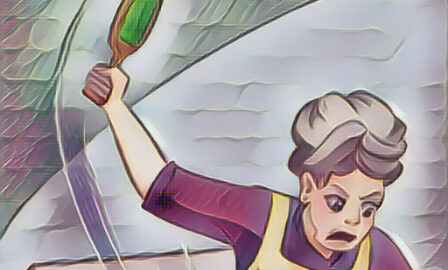
Then came the lesson—a lesson as old as time. Mrs. Jenkins fetched her slipper, the one kept by the door for just such occasions. She knelt beside Tommy, her hand gentle on his arm. “This is not done in anger, but in love,” she said softly, quoting the proverb, “Spare the rod and spoil the child.” With a swift, practiced motion, she delivered a firm smack to Tommy’s bottom. The sound echoed—a soft thud, not cruel, but enough to sting and to teach. Tommy gasped, a single tear tracing down his cheek, and the rest of us felt a shiver run down our spines, remembering our own brushes with mischief and the lessons that followed.
In that moment, time seemed to stand still. The grown-ups watched from their doorsteps, nodding in approval, while we children learned a lesson not just in right and wrong, but in the importance of honesty, respect, and the courage to face the consequences of our actions. Tommy’s thoughts, though unspoken, were plain on his face: regret for the apple, shame for the trouble, and a quiet resolve to do better next time.
After the punishment, Mrs. Jenkins knelt down and gathered Tommy into a warm embrace. “There, there,” she murmured, her voice gentle once more. “All is forgiven now. Remember, it is better to do right the first time.” Tommy sniffled, wiping his eyes, and managed a small, grateful smile. The other children crept closer, offering shy words of comfort, and soon the laughter returned, the lesson tucked away like a treasure in each of our hearts.
These moments, though sometimes stinging, were never cruel. The grown-ups punished not in anger, but with a sense of duty and care, always quick to forgive and eager to guide us back to the warmth of the family circle. The marks left by a slipper or a stern word faded quickly, but the wisdom remained, shaping us into honest, kind-hearted folk.
We learned that actions had consequences, and that it was braver to own up to our mistakes than to hide them. We learned to say sorry, to forgive, and to try again. The estate, with its winding paths and sturdy houses, became a place of friendship, laughter, and lessons well learned—a place where every child was watched over, every misstep gently corrected, and every triumph celebrated with a smile and a cup of tea.
As the seasons turned, the estate blossomed with the colours of childhood—muddy knees, sunburned noses, and the golden glow of summer evenings spent chasing dreams. We grew strong and kind, helping one another over life’s little hurdles, and carrying the lessons of those days with us wherever we went.
Looking back, I remember those days with a fondness that warms me still. The lessons of childhood, though sometimes sharp, shaped us into the people we would become. We learned that mischief may bring a moment’s thrill, but goodness brings a lifetime of happiness. The Book of Proverbs, ever present on the kitchen table, reminded us that wisdom is the greatest treasure of all.
And so, dear readers, remember always to listen, to be kind, and to do what is right. For every lesson, no matter how small, is a stepping stone on the path to becoming wise and good. The red-brick houses of Newcastle, the laughter of friends, and the gentle guidance of those who loved us—these are the memories that last a lifetime, and the lessons that light our way.