(gap: 1s) Once upon a gentle day, in the heart of Peachtree Gardens, where the magnolias stretched their leafy arms toward the sun and the air shimmered with the scent of honeysuckle and fresh-cut grass, there lived a little boy named Samuel. The neighborhood was a patchwork of brick duplexes, each porch brimming with stories and the laughter of children. On every stoop, mothers in bright house dresses fanned themselves and swapped tales, their voices weaving a warm, familiar music through the summer air. The sidewalks, cracked and sun-warmed, were alive with the slap of jump ropes and the chalky scrawl of hopscotch squares, while the distant hum of a lawnmower and the sweet trill of a mockingbird set the rhythm of the day.
On this particular day, the sky was a wide, cloudless blue, and Samuel, with his cheeks flushed and his hair tousled by the breeze, lost all sense of time in the company of his friends. The playground, with its patchy grass and creaking swings, was their kingdom—a place where the world felt as big as their dreams. The children’s laughter rang out, mingling with the clatter of a worn basketball and the distant jingle of an ice cream truck. Samuel’s mother, Mrs. Johnson, trusted her son to return home promptly, as all good boys were expected to do in Peachtree Gardens, where every neighbor kept a watchful eye and every child was known by name.
But as the golden afternoon stretched on, the sun casting long shadows across the lot, Samuel did not come home. The other mothers, gathered by the chain-link fence in their neat dresses and sensible shoes, began to murmur among themselves. “Where is Mrs. Johnson’s boy?” they wondered, their brows furrowed with concern, their voices soft but insistent. Samuel, caught up in the thrill of the game, fibbed to his friends and said his mother was on her way. Deep down, a flutter of guilt tickled his chest, but the games were too delightful to leave, and the world outside his mother’s call felt too tempting to resist.
Meanwhile, in the cozy living room with its faded curtains and humming box fan, Mrs. Johnson’s heart grew heavy with worry. She paced the worn rug, her hands twisting the hem of her apron, the sweet scent of Sunday’s roast lingering in the air. The clock on the wall ticked louder with each passing minute. “Where could my Samuel be?” she fretted, her voice trembling with both fear and hope. Her dear friend, Mrs. Ruby, ever practical and steady, suggested they look for him at the playground. Without delay, the two mothers set off, their faces set with determination and love, the sound of their sandals tapping a steady beat on the sidewalk.
At the playground’s edge, Samuel caught sight of his mother stepping from Mrs. Ruby’s car. Her face was pale, her eyes wide with a mixture of fear and relief that made Samuel’s heart thud with dread. The world seemed to shrink, the laughter of his friends fading into a hush. He thought to run, but his mother’s voice, firm and clear as a church bell, called him back. The other mothers watched, their children suddenly quiet, for they knew a lesson was about to unfold—a lesson as old as the neighborhood itself.
Samuel was gently but firmly brought to his mother’s side. Mrs. Johnson knelt before him, her hands trembling as she brushed the dust from his knees. Her voice, thick with both anger and love, quivered as she spoke: “Samuel, you know you must come home when you are called.” Her eyes, shining with unshed tears, searched his face for understanding. “You have worried me so, and you must be punished for your disobedience.” Samuel’s heart pounded, his mouth dry as cotton, but he nodded, knowing deep down that he had broken a rule that mattered.
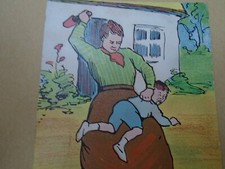
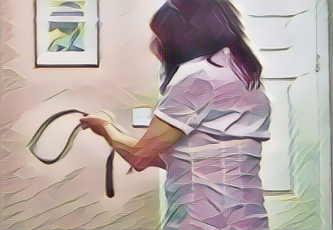
There, before the watchful eyes of the neighborhood, Mrs. Johnson sat on the low brick wall and drew Samuel across her lap. The leather belt, worn smooth from years of gentle reminders, hung by the door as a symbol of right and wrong. With measured firmness, she delivered several crisp spanks to Samuel’s backside. Each swat stung, sharp and hot, and Samuel’s eyes filled with tears that blurred the world around him. He bit his lip, determined not to cry out, for he knew he had done wrong and must accept his punishment bravely, as all good boys must. The air was thick with the scent of summer and the quiet sympathy of the mothers, who nodded in approval, their faces gentle but resolute.
The children watched in silence, some wide-eyed, others quietly grateful it was not their turn. When the spanking was done, Mrs. Johnson gathered Samuel into her arms and held him close, her embrace warm and trembling. “I love you, my son,” she whispered, her voice soft as a lullaby, “but you must always remember to obey and to tell the truth.” Samuel clung to her, the sting of the belt fading beneath the comfort of her love.
The walk home was quiet, the only sound the soft shuffle of Samuel’s sneakers on the sidewalk and the distant chirp of cicadas. His bottom smarted, and his heart was heavy with regret, but the world seemed softer, the colors of the evening deepening as dusk settled over Peachtree Gardens. At home, Mrs. Johnson stood him in the corner, where the faded wallpaper and the steady tick of the clock kept him company. For fifteen long minutes, Samuel reflected on his actions, the sting of the belt, and the warmth of his mother’s embrace. The room was filled with the gentle hum of the box fan and the distant strains of a Marvin Gaye record, and Samuel’s thoughts turned inward, heavy with the lessons of the day.
When his time was up, Mrs. Johnson knelt beside him, her eyes kind and searching. “Samuel,” she said gently, “do you understand why you were punished?” Samuel nodded, his eyes bright with understanding and a new resolve. “Yes, Mother. I must always come home when I am called, and I must never tell a lie.” His voice was small but sure, the lesson settling deep in his heart.
Mrs. Johnson smiled and hugged her son, her arms strong and reassuring. “That is right, my dear boy. Honesty, obedience, and punctuality are the marks of good character. Discipline may sting for a moment, but it helps us grow strong and true.” The room seemed to glow with the gentle light of forgiveness and hope, and Samuel felt a quiet pride blossom within him.
(long pause) And so, in the gentle light of that Sunday long ago, Samuel learned that childhood is shaped not only by laughter and play, but by the loving firmness of those who care for us. The lessons of honesty, responsibility, and respect would guide him all his days, and he would remember always that a mother’s love sometimes comes with a gentle, guiding hand—a hand that leads us home, even when we stray.