(gap: 2s) In recent discussions, the topic of martinets—those infamous multi-tailed implements of discipline—seems to be enjoying a resurgence. But before we delve into the history and nuances of these tools, a word of caution. The following link leads to a page that, in addition to its intended subject matter, contains, shall we say, ‘adult content’. If you are under the age of 21, or if such material might offend you, please refrain from clicking. (short pause)
The conversation began with a mention of the charming Mademoiselle Estelle Skornik, better known to many as Nicole from the iconic Renault Clio adverts of the 1990s. While her on-screen persona was playful and mischievous, the discussion here is likely to remain free of any references to her co-star Lotta. The link in question directs us to an early version of the ‘Spanking Facts and Research’ website—a curious relic from the early days of the internet, when Geocities was a haven for amateur webmasters. I myself maintained a couple of sites there in the infancy of my own web career, a time when the web was a wild frontier of personal expression and niche interests. (pause)
Miss Skornik once recounted that her most memorable childhood punishment—a bare-bottomed spanking over her teacher’s knee—occurred during her first years at school in Paris. While the exact age at which French children began school in those days is unclear, it was likely during the early years of primary education. Such punishments, though unforgettable for the recipient, were often of little consequence to onlookers. This brings to mind the experience of Another_Lurker, who recalled the sting of a smacked leg—a fleeting but vivid memory for the child, yet a routine event for the adults present. One can only imagine the scene if, in a fit of pique, a dissatisfied Clio purchaser had stormed onto the set and sought retribution from Miss Skornik in similar fashion—a scenario both absurd and oddly evocative of the era’s attitudes toward discipline. (pause)
It’s important to clarify the distinction between the martinet and the tawse, as these implements are often conflated but are, in fact, quite different in both design and effect. The tawse, most famously associated with Scottish schools and courts, is essentially a thick leather strap, split at the striking end into two or more tails. Its construction gives it a certain rigidity and weight, making it a formidable tool. Traditionally, the tawse was used on the hands, but it was also applied to the buttocks—sometimes even replacing the birch in Scottish judicial settings. The fear it inspired among miscreants was legendary, and stories abound of its effectiveness, particularly when wielded by a stern schoolmaster or a no-nonsense magistrate. (pause)
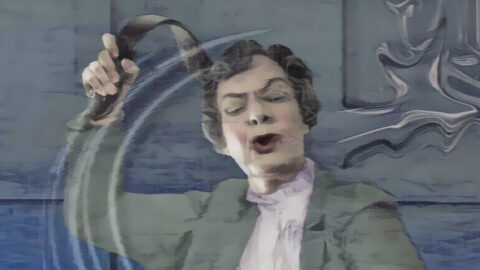
The martinet, by contrast, is a lighter, multi-tailed whip, typically featuring a rigid handle and several thin leather lashes. Its origins are French, and the name itself is said to derive from Jean Martinet, an 18th-century French Lieutenant Colonel renowned for his strictness and discipline. The term ‘martinet’ has since become synonymous with any overly strict person. According to some historical anecdotes—perhaps more legend than fact—Colonel Martinet, while commanding a French military academy, sought a disciplinary implement that would necessitate bare-bottomed punishment for his officer cadets, thus ensuring both humiliation and deterrence. Whether or not this is true, it certainly adds a colourful layer to the martinet’s reputation. (pause)
The traditional French martinet, often handmade by elderly women in rural regions like Morvan, was relatively light and not particularly effective through thick clothing. Its impact was most keenly felt on bare skin, especially the sensitive backs of legs, where it produced a sensation akin to a sharp slap—stinging and prickly, but not deeply painful. In French households, the martinet was a common sight, often hung in the kitchen or hallway as a silent reminder of the consequences of misbehaviour. While heavier versions existed, particularly in the adult market or in military contexts, the classic schoolroom martinet was reserved for younger children and was rarely used with excessive force. (pause)
I once came across a photograph of a martinet-style whip with thicker, more substantial tails, purportedly from the German army. Though I never encountered such an implement in person, I did see similar items marketed to adults. The key difference between these multi-tailed implements and single-tailed ones like the cane lies in the distribution of force. With a cane, the pain is concentrated along a narrow line, resulting in a sharp, intense sting. With a martinet or tawse, the force is spread across a wider area, producing a more diffuse, less severe sensation. This distinction is crucial in understanding why some implements were preferred in certain settings—schools, courts, or homes—depending on the desired balance between deterrence and injury. (pause)
In my own reflections, I’ve always considered the tawse to be less effective on the buttocks than on the hands. The reason lies in the friction between the rough underside of the leather and the skin, particularly when applied to the palm. The sensation is more akin to that of the slipper—a common household implement in Britain—delivering a broad, stinging pain rather than the sharp, focused agony of the cane. Interestingly, a narrow tawse can be more severe than a wider one, as the force is concentrated over a smaller area. This counterintuitive fact was well known to those on the receiving end, and stories of narrow, well-worn tawses passed down through generations of teachers are not uncommon. (pause)
The implements of discipline—be they slipper, tawse, or martinet—are more than mere objects. They are artifacts of a bygone era, each with its own history, cultural significance, and emotional resonance. In the council houses of 1960s Lancashire, the slipper might have rested quietly on an armchair, a silent witness to the daily struggles and small victories of family life. In the classrooms of Paris or the courts of Edinburgh, the martinet and tawse served as instruments of authority, shaping the memories and characters of those who encountered them. (pause)
Today, these objects evoke a complex mix of nostalgia, fear, and fascination. They remind us of a time when discipline was both public and personal, when the boundaries between home, school, and society were enforced with leather and wood. Whether we remember them with fondness or relief, they remain a part of our collective childhood memories—a Sunday lesson in the art of growing up.