I spent my childhood in the 1960s, attending school from 1967 until the mid-1970s. In those days, corporal punishment was as much a part of school life as the morning assembly. Some teachers wielded their authority with a rather liberal hand, while others were more restrained.
I was never subjected to the classic over-the-knee spanking, but I was no stranger to a brisk smack, both at school and at home. These were not the dramatic affairs one might imagine, but rather swift, businesslike swipes—often to the backs of the legs, sometimes to the bottom. At junior school, it was customary to be seized by the arm and administered four or five sharp smacks for what would now be considered the most minor of transgressions. The sting was real, especially on bare legs, but tears were rare.
Yet, I confess, I was always curious about the over-the-knee variety. The notion of being held firmly, unable to wriggle away, and soundly smacked upon the bottom occupied a persistent corner of my imagination. It was not merely the pain, but the peculiar indignity and helplessness of the position that fascinated me.
I would find myself daydreaming about such matters, observing my mother at home, the female teachers at school, and even the mothers of my friends. Any woman of authority became, in my mind, a potential dispenser of discipline. My thoughts never strayed to men in this regard.
In time, my attention settled upon one particular lady. She and her husband operated the newsagent’s shop on our estate—a modest parade of shops that served as the social hub of our community. We children, with the irreverence of youth, referred to them as Mr and Mrs Sweets, though I never learned their true surname.
Their shop was a veritable treasure trove: newspapers, magazines, sweets, cigarettes, and all manner of useful odds and ends—string, stamps, adhesive tape, matches. It was always bustling, and everyone knew everyone else.
Mr Sweets managed the newspapers and the early morning paper rounds, while Mrs Sweets presided over the afternoon trade.
After school and on weekends, the children of the estate would descend upon the shop, eager to spend their pocket money. I was among them from the earliest age.
Behind the counter, shelves stretched to the ceiling, laden with jars of old-fashioned sweets. We boys found endless amusement in requesting jars from the highest shelves, obliging Mrs Sweets to fetch the step ladder. Each time she returned a jar, another boy would request a different one, and up she would go again, feigning exasperation and threatening us with all manner of spanking-related punishments. Her threats were always delivered with a twinkle in her eye.
As I grew older, I began to notice that Mrs Sweets possessed rather attractive legs, always clad, I hoped, in black stockings—though they were likely tights. She favoured a light blue blouse, a black skirt, and sensible black shoes. When she mounted the steps, we were afforded a generous view, which only fuelled my adolescent fantasies.
Part of her charm lay in her temperament. She addressed everyone as “love,” “handsome,” or “cheeky,” and encouraged playful banter with all her customers. Her constant threats to “sort us out,” “smack our bottoms,” or “turn us over her knee” became the highlight of my visits. She even extended these threats to the older men, who received them with good humour. Of course, nothing ever came of them; it was simply her way.
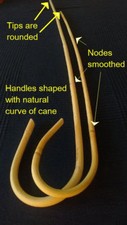
By the time I reached secondary school, hand-smacking had fallen out of favour, replaced by detentions and, for the most serious offences, the cane. I endured a few detentions but managed to avoid the cane, which held no appeal for me. Those who received it bore a certain look of grim resignation. The punishment was usually a stroke or two on each hand, never on the bottom, and I never heard of anyone being caned elsewhere.
At home, the occasional passing smack persisted, but these too faded with time. Threats were made, but rarely enacted. My interest in such matters became purely the stuff of fantasy.
At thirteen, one was permitted to become a paperboy. Eager for the opportunity, I placed my name on Mr Sweets’ list well before my birthday. I made a point of engaging Mrs Sweets in conversation whenever possible, attempting, in my own awkward way, to master the art of flirtation—though I suspect every boy on the estate was doing the same.
One afternoon, while purchasing a comic, I assisted Mrs Sweets in tidying up after a stack of boxes toppled over. She was most appreciative, and after a brief, fluster-inducing exchange, she offered me a position helping behind the scenes. My duties included sorting stock and bringing boxes to the shop front, freeing Mrs Sweets to attend to customers. It was, for me, a dream come true.
I felt remarkably grown-up in my new role, and the proximity to Mrs Sweets allowed me ample opportunity to admire her legs. She was taller than I had realised, and I relished every moment spent in her company.
One afternoon stands out in my memory as the beginning of a most thrilling period. I was kneeling behind the counter, replenishing the stock of matchboxes and notepads, when Mrs Sweets approached. She stood so close that, as I reached for a box, my arm brushed against her leg. The sensation was electric—a moment of pure, unadulterated excitement.
On another occasion, I happened to be behind the counter as Mrs Sweets ascended the ladder. Though I did not glimpse the elusive stocking top, I saw more of her leg than ever before, which was, for a boy of my age, a source of considerable delight.
As the weeks passed, our rapport grew. I became bolder in my flirtation, and Mrs Sweets responded in kind. The next significant event occurred when she squeezed past me behind the counter, the space being rather limited. “Move along!” she said playfully, punctuating her words with a light pat on my bottom. That gentle touch sent a thrill through me.
I soon realised that standing in her way increased my chances of receiving such a pat. It became almost routine in the storeroom for Mrs Sweets to deliver a playful tap as she passed. Sometimes she would say, “Move along!” other times she would say nothing at all.
I wished to encourage this behaviour, but lacked the sophistication to do so. One evening, after closing, I was tidying the stockroom when Mrs Sweets returned from a lively exchange with an older customer, during which she had threatened him with a smack. This was not unusual.
Upon re-entering the stockroom, she delivered a firmer smack than usual and inquired, half-laughing, “Now, where are we with this lot?” I was busy counting boxes of crisps.
Unable to contain my curiosity, I asked why she was always threatening to smack her customers. She explained, with a smile, that it was all in good fun and kept the customers cheerful.
Emboldened, I asked, “Have you ever actually smacked any of the boys who come into the shop?”
Her reply was both thrilling and terrifying: “Not yet! But if I ever do, I know exactly who will be first!” My knees nearly gave way. “Who?” I asked, scarcely daring to hope. “You!” she declared, pointing at me with mock severity before breaking into a smile.
Caught up in the excitement, I summoned my courage and said, “Go on, then, I dare you! You are always saying it—prove it!”
She bustled about, replying, “If I did, and I must say I am tempted, you would run straight to your parents, and I should lose