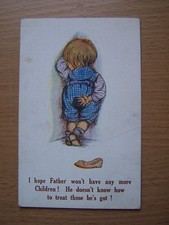
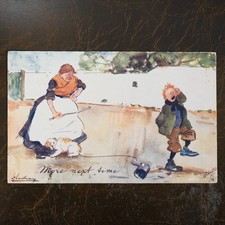
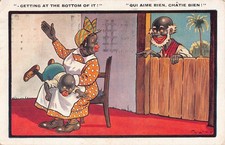
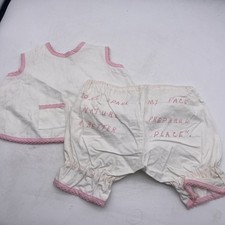
In a discussion on juvenile vandalism, several members of Newark Town Council called for the restoration of corporal punishment in schools and the home. One councillor remarked that the financial burden borne by employers and householders in repairing acts of damage reflected a broader failure in the upbringing of children.
Councillor Leslie Carswell, a schoolmaster, declared: “I hope the time will come when a more enlightened democracy revises the law to restore birching and overturns what some misguided idealists have already done.”
The debate over corporal punishment continues to arouse strong feelings. One parent, speaking in support of physical discipline, stated that moderate spanking, administered without cruelty, could be an effective means of correcting behaviour. She observed that such punishments had been common in her own upbringing and maintained that they had caused no lasting harm. Recalling her schooldays, she noted that parents were once prepared to support teachers in maintaining discipline, even to the extent of authorising corporal punishment when necessary.
Elsewhere, controversy has arisen following reports that a neuroscientist advocated lessons in the use of profanity for school pupils. A correspondent writing to The Sunday Times remarked that during his years at state schools, the use of foul language was regarded as an offence punishable by caning rather than something to be discussed in the classroom. He added, with some humour, that stern correction at home for such language had often been followed by muttered expletives which, at least in his opinion, appeared to lessen the discomfort.
The writer, from Sheffield, gave no indication of the period in which these events occurred. Nevertheless, the continued public discussion of corporal punishment, decades after its abolition in many schools, demonstrates the enduring interest the subject holds for ordinary citizens.
Further attention has recently been directed towards disciplinary practices following reports in The Daily Telegraph that two pupils at Millfield School had been suspended amid allegations that younger boys were struck with either a cricket bat or a belt as part of an initiation ritual. According to reports, boys in Year 10, generally aged 14, were allegedly offered the choice between two strokes over their undergarments or one upon the bare buttocks.
One parent withdrew her son from the school after he had been there for only a week. While some observers regarded the matter as an example of bullying and inappropriate conduct, others argued that reactions to such incidents reflected changing public sensitivities towards school discipline and initiation rites.
Commentators from abroad observed that in the United States such conduct would almost certainly be regarded as hazing and could lead to criminal proceedings, together with extensive investigations into the extent of the practice. It was argued that such behaviour would provoke a severe response in most developed countries.
Others insisted that initiation rituals of this kind had no place in a modern school and suggested that the decision not to expel the offending pupils may have reflected the financial pressures faced by boarding schools dependent upon tuition fees.
In a lighter vein, one contributor lamented the changing character of the modern city centre, complaining of traffic restrictions, pedestrian precincts, and the growing prevalence of hurried crowds absorbed in telephone conversations. He recalled with nostalgia earlier excursions into town and anecdotes concerning school traditions and youthful mischief.
Reference was also made to the former Rodney School, where the late headmistress Joan Thomas was reputed to have maintained strict discipline with the cane. Anecdotes surrounding her tenure have become part of the folklore attached to older forms of school discipline, though such methods now belong largely to another era.
Finally, one correspondent noted, with weary amusement, that proposals in France concerning restrictions on parental smacking seemed to reappear in public debate with remarkable regularity.