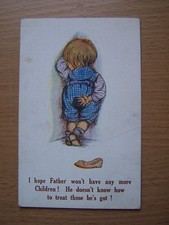
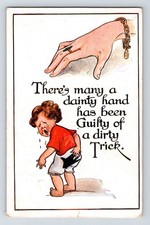
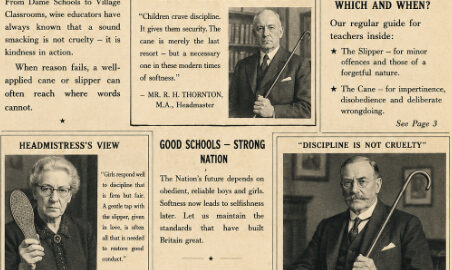
In a measure that has provoked considerable public discussion, the French Parliament is expected to approve legislation on Tuesday prohibiting the corporal punishment of children. The proposal, regarded by many observers as largely symbolic, comes in a nation where support for physical discipline within the family remains widespread.
According to the French Childhood Foundation, approximately 85 per cent of parents in France acknowledge having struck their children as a form of discipline.
The legislation, already approved by the National Assembly in November, is anticipated to pass the Senate with little difficulty, despite objections from certain conservative and nationalist members who contend that such laws represent an unwarranted intrusion by the state into domestic affairs.
Although French criminal law already prohibits violence against children, a legal provision dating from the nineteenth century has long permitted parents a degree of latitude in disciplining their children through what has been termed “ordinary everyday violence”, comparable to the British legal concept of “reasonable chastisement”.
A similar debate has arisen in Scotland, where proposals to prohibit corporal punishment advanced after the Scottish Parliament’s Equalities Committee approved the measure by five votes to two. The decision enabled the legislation to clear its initial parliamentary stage despite opinion surveys indicating substantial public opposition.
Should the measure become law, Scotland would become the first part of the United Kingdom to criminalise the smacking of children. The proposal has received support from the Scottish Government and members of nearly all political parties represented at Holyrood, with the exception of the Conservative Party.
The legislation would abolish the long-standing legal defence of “reasonable chastisement” in Scots law, under which parents may employ physical punishment in reprimanding a child.
Meanwhile, renewed attention has been directed towards Maidwell Hall School following the publication of Charles Spencer’s memoir, A Very Private School, released on 14 March. In the volume, Lord Spencer reportedly describes his unhappiness during his years at the school. Commentators have expressed interest in comparing his reflections on corporal punishment with earlier observations made by William Sitwell and Andrew Motion.
The book’s publisher, HarperCollins, has classified the memoir not only under “Memoir” and “Independent Schools” but also under categories concerning child abuse and survival from injustice, although Lord Spencer has not alleged abuse beyond the issue of corporal punishment itself.
Further controversy has surrounded remarks attributed to former footballer Paul Stewart in connection with inappropriate conduct by a schoolmaster during school outings. The allegations, though anecdotal, have contributed to wider public concern regarding standards of behaviour and discipline within educational institutions.
One commentator, reflecting upon French political traditions, observed that the French public has historically shown a marked reluctance to surrender long-established rights without vigorous protest. He argued that French legislators often seek compromise measures designed to satisfy reformers while avoiding widespread public resentment.
As an example, he cited earlier French attempts to legislate against parental smacking in 2016. Although widely reported abroad as an outright prohibition, the measure was subsequently invalidated by France’s Constitutional Council on procedural grounds, a development that received comparatively little international attention.
The debate over corporal punishment continues to divide opinion across Europe. Advocates of prohibition maintain that physical punishment is incompatible with modern standards of child welfare, while opponents contend that governments should not interfere unnecessarily in the private responsibilities of parents. Critics of further legislation in Britain have also questioned whether Parliament ought to devote its attention to such matters at a time of more pressing national concerns.