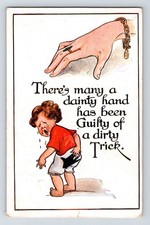
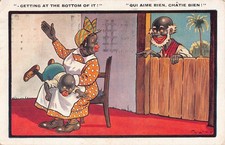
During the 1960s and 1970s, many childhood games reflected the customs and discipline commonly found in family life and schools of the period. Children often imitated the adult world in their play, incorporating familiar themes of authority, rules, and punishment into harmless make-believe activities.
One recollection from that era concerns neighbourhood games played among friends during primary school years. At the age of six or seven, a boy and a neighbouring girl invented imaginative adventures in which one pretended to capture the other, with playful reprimands forming part of the game. Such activities were viewed at the time as ordinary childhood role-play rather than anything unusual.
Later, at around ten years of age, the same boy and a school friend established a small “club” governed by a set of invented rules. Breaches of these rules resulted in mock punishments, administered in the spirit of youthful competition and amusement. Their after-school hours were often occupied by these elaborate rituals of discipline and consequence, reflecting the structured environment in which many children of that generation were raised.
Another friendship from the period involved long summer afternoons spent in local parks and open spaces. The children’s games again mirrored the social expectations of the day, including the notion of punishment for mischief or disobedience. Such episodes were remembered not as serious acts, but as part of the rough-and-tumble world of childhood companionship common at the time.
Those who grew up during the post-war decades frequently recall similar experiences. Games of “school,” “family,” and “teachers and pupils” were widespread, often reproducing the forms of discipline children observed in homes and classrooms. For many youngsters, such play was simply an imitation of everyday life as they understood it.
Participants generally regarded these activities as innocent role-play among friends, undertaken without malice and within the accepted social norms of the period. Behaviour that might today be interpreted differently was, in those years, often viewed merely as part of ordinary childhood interaction and imagination.