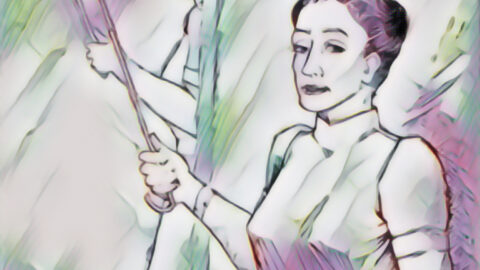
(gap: 2s) Once upon a time, in a row of neat little pebble-dashed houses in Preston, there lived a kind but firm mother and her two children—a lively boy named Peter and his thoughtful older sister, Susan. Their home, though modest, was always spick and span, with polished brass on the front door, a garden of marigolds and daisies, and the gentle scent of baking bread drifting from the kitchen window. The living room was filled with the soft tick-tock of a carriage clock, sagging but comfortable armchairs, and a battered upright piano where Susan sometimes played cheerful tunes on rainy afternoons.
(short pause) Mother, in her faded floral pinny and slippers, was the heart of the household. She worked tirelessly, dusting the mantelpiece lined with sepia family photographs, mending socks by the firelight, and keeping the kettle singing on the hob. She was gentle and loving, but she believed in good manners and honest behaviour, and she expected her children to do their best in all things.
(pause) Peter and Susan were usually well-behaved, but like all children, they sometimes forgot themselves. There were days when Peter would chase his sister through the garden, muddying his knees and tearing his jumper, or when Susan would lose her temper and snap at her brother over a game of Ludo. On such occasions, Mother’s eyes would grow serious, and her voice would become quiet and firm.
(short pause) If either child had been especially naughty—perhaps telling a fib, or quarrelling too loudly—Mother would not scold in anger. Instead, she would send the culprit upstairs to their small, sunlit bedroom, with its patchwork bedding and peeling wallpaper, to sit quietly and think about what they had done. The waiting was always the hardest part. Peter would sit on the edge of his bed, swinging his legs and staring at the faded poster of The Beatles, while Susan would twist her handkerchief and listen to the distant hum of the radio below. In those moments, the house seemed to hold its breath, and the children’s hearts would thump with a mixture of worry and regret.
(pause) When the time came, Mother would climb the stairs, her slippers making a gentle shuffling sound on the worn carpet. She would enter the room, her face calm but determined, and sit upon the bed. She would call the child to her side and, in a gentle but steady voice, explain why their behaviour was wrong and how it had made her sad. Her words were never harsh, but they carried the weight of love and hope for better choices.
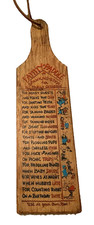
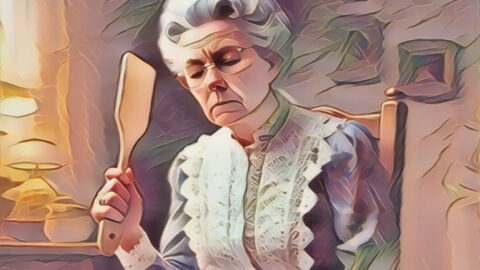
(short pause) After her gentle lecture, Mother would say, “Now, you must take your punishment, so you will remember to do better next time.” The child would be asked to bend over her knee, and Mother would take up her old wooden spoon, which was kept especially for such occasions. The ritual was always the same, and the room would grow very quiet, save for the faint ticking of the clock and the soft rustle of the curtains.
(pause) The child’s heart would beat loudly as they bent over, hands gripping the patchwork quilt. Mother’s hand was steady, her face kind but resolute. She would raise the wooden spoon, and there would be a moment of stillness—a breath held, a hush in the air—before the first sharp smack landed with a crisp, unmistakable sound. The wooden spoon made a brisk, echoing crack, and the child would gasp, feeling the sting bloom across their bottom. Sometimes a little sob would escape, or a tear would slip down a cheek, but Mother’s voice would gently prompt, “Count, please.” And so, through sniffles and watery eyes, the child would count aloud: “One… two… three…” Each smack was measured and firm, never hurried, and between each one, the room seemed to hold its breath. By the fourth or fifth, the child’s voice might tremble, but Mother’s hand remained steady, her face kind but resolute. At last, after the sixth and final smack, the sound would fade, leaving only the child’s quiet crying and the soft ticking of the clock.
(short pause) The smacks stung, and the child would often cry, but Mother would always remind them, “I do this because I love you, and I want you to grow up to be good and kind.” After the punishment, Mother would hold the child close and comfort them, wiping away their tears with her apron and whispering gentle words of reassurance. The child would feel safe and loved, knowing that Mother’s heart was always full of forgiveness.
(pause) The child would then say, “I am sorry, Mother. I shall try to be good.” Mother would smile and say, “That is all I ask, my dear.” And with a warm hug, all was forgiven, and the day could begin anew. The children would run downstairs, cheeks still damp, but spirits lifted, and soon the house would ring with laughter once more.
(short pause) Life in the little house was filled with simple joys. On sunny days, Peter and Susan would help Mother hang washing on the line, or weed the flowerbeds in the back garden. They would play hopscotch on the pavement, or read stories together by the fire on chilly evenings. Sometimes, Mother would bake scones, and the children would help stir the batter, licking the spoon and giggling at the flour on their noses.
(pause) Sometimes, it was Susan who was sent upstairs, and sometimes it was Peter. But always, the lesson was the same: naughty behaviour brings consequences, but forgiveness and love follow when one is truly sorry. The children learned that it was much better to be honest, kind, and obedient, for then the house was filled with laughter and happiness, and there was no need for the wooden spoon.
(short pause) As the seasons passed, Peter and Susan grew in wisdom and kindness. They learned to help one another, to share their toys and secrets, and to comfort each other when troubles came. They knew that Mother’s firm hand was guided by love, and that her greatest wish was for them to grow up to be good and gentle people.
(pause) And so, in that little house in Preston, with its neat lawns and faded curtains, the children grew up knowing right from wrong, and they remembered always that Mother’s love was the best lesson of all.