Although I never received the cane while at primary school, nor experienced school corporal punishment from a male teacher, I can clearly remember which punishment affected me most deeply. Looking back, one particular incident involving a ruler stands out above all others, both for the physical pain it caused and for the emotional impact it had at the time.
At my primary school, the cane was reserved almost exclusively for serious offences and could only be administered by the headmaster. Most day-to-day discipline was handled by classroom teachers. In the infant years, teachers commonly used their hands to smack a child as punishment, while in the junior years some teachers would use either a slipper or a ruler. These were considered routine disciplinary tools and were used for a wide range of offences, from poor work to misbehaviour.
The most severe punishment I ever received with a ruler arose from a situation that began with a lie. One morning I arrived at school at least half an hour after lessons had started. I was visibly distressed, with tear-stained cheeks and clearly upset. Unfortunately, instead of explaining the real reason for my lateness, I gave my teacher the impression that a close relative was seriously ill.
The teacher asking the questions was not our regular class teacher. During that particular year, our normal teacher had suffered an accident, and a succession of temporary replacements had taken over the class. Faced with her questions and already emotional, I found myself allowing a completely false story to develop.
Because the school was deeply religious, prayer played a significant role in daily life. We prayed for all manner of concerns, large and small, and naturally my teacher invited the entire class to pray for my supposedly sick relative. As the prayers were said around me, panic began to set in.
As a child, I took religion very seriously. I genuinely believed in divine judgement, heaven and hell. The thought that I had lied to a teacher was bad enough, but now I felt responsible for an entire class offering prayers based on a story that was not true. The guilt became overwhelming. I could no longer concentrate on lessons, and eventually the truth emerged.
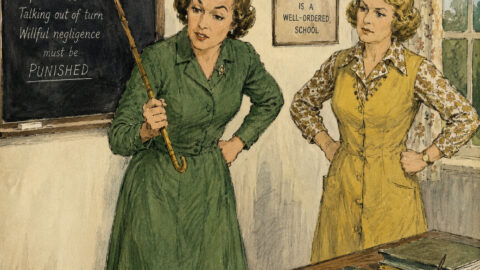
The teacher’s reaction was swift and severe. Understandably angry at having been deceived, she called me to the front of the classroom and reprimanded me in front of my classmates. After the scolding, she punished me physically. First she struck one hand repeatedly with a ruler, then the other.
This was not my first encounter with the ruler. Previously, I had received ruler punishments for incomplete homework, careless mistakes, poor test results, and other everyday classroom failings. Those earlier punishments had been relatively routine. This occasion was entirely different. The teacher’s anger was obvious, and the blows were delivered with much greater force than anything I had experienced before. My hands were left throbbing, and I remember the punishment as being exceptionally painful.
In hindsight, I accepted that my actions had caused the situation. At the time, however, the combination of public humiliation, guilt, fear, and physical punishment made the experience unforgettable.
I was also punished with a slipper on a few occasions for various acts of childish misbehaviour. While those punishments were unpleasant, none of them matched the intensity of that particular ruler punishment. For that reason, if asked to compare the two, I would have to say that the ruler was far more painful in my experience.
My first experience of the cane came later. I received three strokes across the hand, and the pain was considerable. In fact, I found caning on the hand significantly more painful than caning on the seat. This creates an interesting comparison because the same instrument could produce very different levels of pain depending on where it was applied.
When comparing the cane and the slipper, the answer is not straightforward. Some canings were surprisingly mild despite their reputation as serious punishments, while certain slipper punishments could be far more severe. Much depended on the individual teacher, the circumstances surrounding the offence, and the mood in which the punishment was administered. Even the same teacher could vary greatly from one occasion to another.
My experience of the ruler was relatively limited. By secondary school, only a handful of teachers still used it, and it often served more as a symbolic threat than a genuinely painful punishment. During my infant school years, the more common punishment was a smack on the leg. The ruler became part of my experience during my first year in junior school, although my time there was brief because my family moved across town.
At my next junior school, the ruler was used more frequently. However, pupils spent the entire year with a single class teacher, meaning experiences varied considerably depending on which teacher a child happened to have. It is entirely possible that some teachers used the ruler much more harshly than mine did. If so, I was fortunate not to find myself in their classrooms.
Looking back as an adult, what remains most striking is not simply the physical pain of these punishments but the way they were intertwined with emotions such as guilt, embarrassment, fear, and authority. The ruler punishment I received for lying has remained vivid in my memory not because it was the only punishment I received, but because of the circumstances that led to it and the powerful feelings that accompanied it.