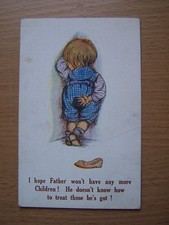
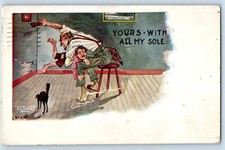
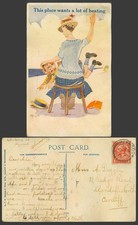
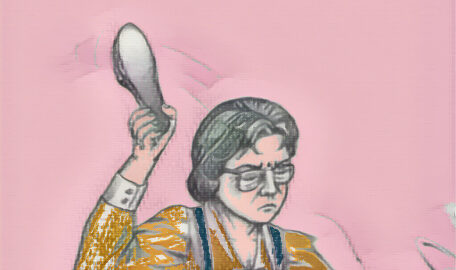
(gap: 2s) Looking back at the landscape of discipline in English schools, especially during the post-war decades, it’s striking how much of it was shaped by the hands—quite literally—of female teachers. For many of us who grew up in the 1950s and 60s, the image of a stern, no-nonsense woman wielding a slipper or delivering a sharp smack to the thigh is etched into memory. The stories passed around the playground were often about “Miss So-and-so” and her infamous right hand, and there was even a rumour that the most dedicated practitioners would soak their spanking hand in vinegar at home to toughen the skin. Whether or not that was true, the mere idea was enough to make us wince.
(short pause) Of course, there were always exceptions. Some boys and girls found themselves on the receiving end of a male teacher’s cane or strap, and I recall several stories—shared in letters and conversations over the years—of strict headmasters or PE teachers who took discipline into their own hands. In fact, I hope that those who haven’t yet shared their experiences will write in and add to this collective memory, perhaps even challenging my impression that female teachers were the main disciplinarians in primary schools.
(pause) But when you look at the numbers, the pattern is clear. In primary schools, especially in the north of England, it was overwhelmingly the women who administered corporal punishment. This was partly a matter of staffing—many primary schools had mostly female teachers, especially after the war when so many men were away or had moved on to other professions. The slipper, the ruler, the open hand—these were the tools of the trade, and they were used with a brisk efficiency that left a lasting impression, both physically and emotionally.
(pause) Moving up to secondary school, the dynamic shifted a bit. Here, discipline was more often meted out by teachers of the same sex as the pupil. Boys were usually caned or slippered by male teachers, while girls were punished by women. But, as always, there were exceptions. Some girls, especially in mixed schools, found themselves facing the cane from a male teacher, and some boys were slippered or strapped by female staff. I remember reading about a school in Walsall where both a brother and sister were punished for the same misdeed: the boy bent over for the tawse across his bottom, while his sister received it across her hands. These stories were not uncommon, especially in Scotland, where the tawse—a thick leather strap—was the instrument of choice, and both boys and girls felt its sting, sometimes from teachers of the opposite sex.
(pause) During the Second World War, the shortage of male teachers led to a surge in temporary female staff, and with them came a continuation—and sometimes an intensification—of traditional disciplinary methods. The cane and the strap were still in regular use, especially for older pupils, with the school leaving age set at just 14. Local Education Authorities sometimes issued guidelines: in some counties, girls were to be punished only on the hands, while boys could be caned on the bottom. In Leicestershire, for example, the rules specified that boys should be caned, but only the slipper was to be used on girls—and almost always on the bottom. Yet, as with so many things, the reality on the ground often depended on the temperament and beliefs of individual teachers.
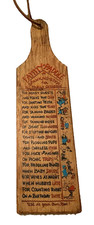
(pause) Shifting the focus to home life, the rules were even less clear. There were no official guidelines for how parents should discipline their children, and practices varied widely from family to family. In many working-class households, mothers were the primary disciplinarians, especially since many women stayed at home while their husbands worked long hours or were away overnight. The slipper, the wooden spoon, or simply a firm hand—these were familiar implements, and the rituals of punishment could be private or public, over clothes or on bare skin, depending on the family’s customs and the seriousness of the offence.
(pause) Anecdotes abound of mothers who kept a slipper in plain sight as a silent warning, or who would pause in the middle of tidying the living room to deliver a swift reprimand. Some children remember the sense of dread that came with hearing their full name called out, or the ritual of being sent to fetch the slipper themselves. Others recall the odd sense of comfort that came from the predictability of these punishments—a strange kind of order in a world that could otherwise feel chaotic.
(pause) It’s important to remember, too, that attitudes toward corporal punishment have changed dramatically over the decades. What was once seen as a normal part of childhood—almost a rite of passage—is now viewed very differently. Yet, for those of us who grew up in those pebble-dashed council houses, with the radio playing quietly in the background and the slipper never far from reach, these memories remain vivid. They are part of the fabric of our upbringing, woven into the stories we tell about ourselves and our families, and about the England of our childhood.