The orderly march to Brighton was eventually replaced by journeys to the North Brighton Drill Hall at a time when R. Nicholl and K.K. Garnock were the school’s only Senior Cadets. One former student later recalled: “We would purchase a packet of ‘My Darling’ cigarettes and smoke them on the way to and from the Drill Hall.” Such conduct would no doubt have met with stern disapproval had Dickinson become aware of it.
One former pupil remembered that prefects possessed the authority to impose Saturday morning detentions and corporal punishment, although he did not recall older boys abusing their authority over younger students. Disciplinary measures required the approval of both the prefects’ meeting and the Headmaster, whose cane was ultimately necessary for such punishments to be carried out.
With the death of I.M. MacGregor in 1967, Haileybury lost both a driving force behind the Keysborough project and a distinguished teacher of English. Known universally as “Jock,” a sobriquet inspired by his broad Scottish accent, rugged appearance, and dry wit, MacGregor was an enthusiastic scholar of English literature, with a particular admiration for Chaucer and Shakespeare.
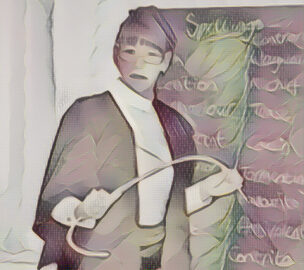
Inclined at times towards theatrical eccentricity, he was known to proclaim in thunderous tones: “I shall tear you limb from limb and scatter your brains across the room,” before striking his desk with a 36-inch ruler so forcefully that it occasionally splintered. For pupils not easily intimidated, MacGregor also kept a heavy leather tawse, which served as an alternative to the Headmaster’s more conventional use of the cane.
Michael Aikman, Headmaster, later reflected upon public perceptions of school discipline. When a newspaper article described Haileybury’s traditional educational methods under the provocative, though misleading, headline “Cane Makes Them Able,” the school experienced an unexpected increase in enquiries from prospective parents. While Haileybury had retained the cane as a disciplinary deterrent, Aikman emphasised that his annual reports focused less upon corporal punishment and more upon what he regarded as the gradual weakening of academic curricula and declining respect for traditional subjects within State education. He believed these developments were prompting many parents to seek alternatives such as Haileybury.
At Carey Grammar School, Headmaster Harold Steele maintained a strict approach to discipline. School concluded at 3.45 p.m., except for boys serving detention, then regarded as the ordinary punishment for minor offences. Steele, however, did not hesitate to administer the cane in cases he considered serious. Persistent laziness, in his judgement, constituted a particularly grave failing and warranted severe punishment.
One former student recalled the construction of the tuckshop and a covered concrete area where boys played French cricket on wet days. During one such game, he accidentally struck a ball through a window, for which he was later punished by Steele with the cane that the Headmaster kept behind his bookshelves for precisely such occasions.
During the tenure of Headmaster V.F.O. Francis, disciplinary matters became a source of increasing concern among staff. In the second term, Mark Stump informed Francis that many teachers had lost confidence in his leadership and feared damage to the school’s reputation. Stump accused the Headmaster of neglecting classes and failing to complete examination marking in time for reports to be issued promptly. He further argued that standards of discipline and the general spirit of the school were deteriorating, and urged Francis to convene a staff meeting to address these concerns.
At the beginning of the year, Francis had granted masters authority to administer corporal punishment, believing that teachers must possess the means to enforce discipline themselves. Yet his own conduct in disciplinary matters often puzzled the staff. At times he appeared excessively harsh; at others, inexplicably lenient. Towards the end of October, for example, he expelled two boys for theft and strongly condemned what he described as a deplorable lack of responsibility towards private property within the school. Nevertheless, many staff members, and Stump in particular, increasingly doubted whether the Headmaster would support them in maintaining discipline at a time when even generally responsible boys were becoming more unruly.
Although Dr Moore was surprised by the extent of staff dissatisfaction, he had already received indications that difficulties existed. Shortly beforehand, a delegation of parents had expressed dissatisfaction with the Headmaster’s methods of discipline. Their complaint was paradoxical: they believed that discipline at Carey was generally insufficient, yet considered Francis unduly severe whenever he did assert his authority.
At Caulfield Grammar School, accounts of earlier decades likewise reflected the prevailing reliance upon corporal punishment. Under the leadership of Reverend Ernest Judd Barnett, disciplinary measures were sometimes unconventional. One former pupil recalled an incident in which he and another boy arrived at school bearing black eyes after a fight. Barnett summoned them after classes, carrying several leather straps. Standing the boys back to back, he strapped them together for half an hour before releasing them with the remark: “You should get along better in future.”
During the early years of Francis Henry Joseph Archer’s career as Headmaster, it was observed that there were effectively only two teaching aids in common use: “the blackboard and chalk, and the cane.”
Archer himself later remarked: “In a modern school, the boy is no longer a passive vessel into which a fixed quantity of knowledge is poured, nor is he a rebellious and wayward creature to be flogged into submission.”
Bruce Clyde Lumsden later reflected upon the disciplinary climate that prevailed in many schools of the era, both State and independent. Discipline was rigid and heavily dependent upon corporal punishment. Most masters carried some form of strap or cane, and pupils themselves accepted such treatment as normal. A teacher who refrained from corporal punishment was often regarded either as eccentric or weak. Lumsden, who came from a background shaped by gentleness, fairness, and consideration for others, found himself deeply troubled by these expectations. Yet he also recognised that, within the prevailing culture of the time, resistance to such methods risked undermining a master’s authority and position within the school.