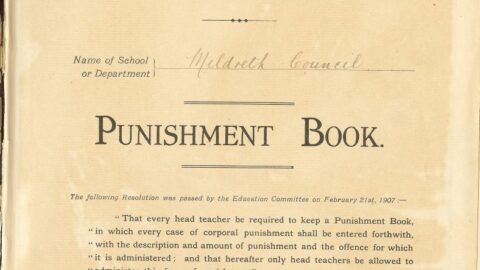
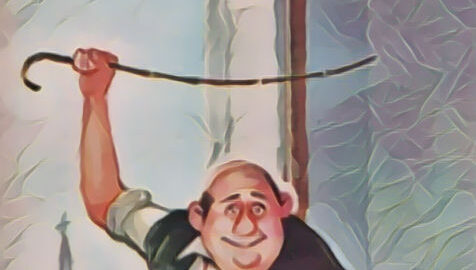
“Brother Camillus, a likeable man, had experienced problems in controlling the sizeable junior secondary classes. His mistake was in trying to have jokes and fun in classes full of rather insensitive adolescents who took the opportunity to release pent-up energy with noise and unruly behaviour. Brother Camillus would respond with the strap, become very unpopular, and then try to reassure the class with more good humour. The cycle would then begin again.”
“There was the intriguing “Major” Bill Jordan, reputedly an ex-secret service man who had worked behind enemy lines during the war. In his short time at St Bede’s he taught middle-school English with fastidious attention to detail and extreme annoyance at the excessive use of corporal punishment around the school. On one occasion he burst into the room next door and grabbed the strap from a teacher he believed was over-doing it. Relations between the “Major” and several staff members became strained over the strap issue.”
“In class a form of educational Darwinism emerged in junior and middle secondary areas. Bright boys survived and did well as they captured teacher attention, but, in those massive numbers, many boys floundered along, anxious to secure a minimal qualification at Form 3 level so they could leave. Teachers’ nerves frayed and cracked, so the strap was over-used causing resentment and consequent anti-social behaviour in some cases.”
Haileybury College (named after the school of the same name in Britain). This history is ‘Haileybury College: The First 100 Years’ by Don Chambers, published in 1992.
Mr Charles Rendall, Headmaster: “With recurring illness, good humour became less evident. Eric Marshall observed that ‘to differ from him was to sin against the Holy Ghost’. Several students remember Rendall most for the type of thorough canings for which ‘The Old Man’ of England’s Haileybury was noted.
An occasional Old Boy has described Rendall as sadistic, but that is unfair in the context of school norms in that era. Rendall appears usually to have kept the cane for serious offences, but to have done a thorough job. However, his ‘moodiness’ sometimes brought allegations of injustice, and R.G. Cumbrae Stewart could never forgive Rendall for a severe caning imposed, without heed to pleas of innocence, for another’s offence.
Others maintained that Rendall could pin a boy’s head between his big knees while he repeatedly caned the posterior. One teacher never forgot his revulsion at having to be present during canings, probably in case of parental complaint. Such behaviour today would be sadistic.
In the British Public Schools, training in the unflinching acceptance of pain was part of the education of men being immured to suffering and hardship in the empire’s service.
“There were English precedents for Rendall’s reputation as a disciplinarian. Dr. Bradby, aided by ‘The Old Man’ and housemasters like Ash had the onerous task of restoring discipline at England’s Haileybury College shortly before Rendall attended. The cane was used effectively to restore Haileybury’s reputation.”
“When young Dick Durance began school at seven years of age he quickly became devoted to Miss Moore, his form mistress, but:
‘When 1923 dawned, I was a rather dirty boy of 9, covered in ink and loathed by the mistress (a Miss Jackson) who used to make us put our hands on our heads and then hit them with a ruler.’”