One ex-boarder remembers a friend trying to pass a note to a day student requesting the latter to buy him a packet of cigarettes after school. McCristal intercepted the note and the lad received a strapping and certainly no cigarettes. None of the Old Collegians remembered McCristal’s discipline as being unfair in any way. All recall that he was consistent and strict.”
“In school he was strict and his discipline included the use of the strap. Ex-students say that he used it for serious matters only, and that his discipline was fair.”
“It is difficult to find criticisms of McCristal. All reports of him, and those who remember him, say the same things about him – cultured, kind, scholarly and tolerant. Only one ex-student said he used the strap too much.”
St Bede’s:
Brother Julian, Headmaster: “In each class there was always a bright student who somehow translated Julian’s incomprehensible instructions and was able to keep him at bay by answering the hard questions. But the day would come (frequently) when the bright boy would be away, or would make a mistake, and the Julian would hand the keys of his office to the messenger boy, usually his favourite boarder, and the class would know the fear of expectation. “Go and get Sammy”, he would say, and the boy would return with a four-foot cane which Julian used on the group of quaking Latin students who had been ordered to the front of the room for missing some finer point in the language.
Boys returned to their desk with fingers on fire with pain and faced whit with the effort of holding back the tears. Some tears did flow and even the tough boys sometimes writhed noticeably as the cane did its work. A favourite remedy was to put the offended fingers on the cold bolts which held the seat on the desk; another was to play handball incessantly to toughen the fingers; and yet another group placed their faith in assorted applications, such as resin, which were supposed to deaden the pain. Julian’s lessons may have been hard to understand but they were never dull.
On one occasion, he and a Mordialloc boy called “Gabby” Gray had a fist fight up and down the aisle between the desks while the class cowered in their seats not knowing whom to barrack for. When Gray finally retreated, Julian informed him that he was expelled, so the boy packed his bag and left with a parting shot at Julian as he went out the door, “I was leaving next week, anyway.” Even at the time members of the class thought it was a crude incident, especially when the principal of the school was seen to be acting as a bully, no matter what Gray had done.
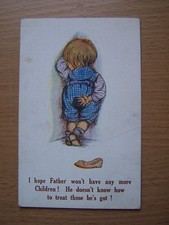
Corporal punishment had been used sparingly in the first few years of St Bede’s. The seniors in their tiny classes were treated as responsible “near adults” and a friendly relationship between teacher and pupil developed. George Laube, who had attended De La Salle Malvern in 1937, recalled that the atmosphere at St Bede’s was much more relaxed than at Malvern where the strap was frequently used. As St Bede’s moved into the 1940’s corporal punishment increased significantly.
Even the Brothers who taught well, and were liked by their students, used the strap or the ruler turned on its edge. The reasons for this were that classes grew larger and more difficult to handle, staff changes brought Brothers who were less attuned to the friendly spirit of the pioneering years, and people in most schools then saw corporal punishment as an indispensable part of education, especially that of boys. The fact that it was frequently used on members of the class who could not understand their work, or who had limited ability, is hard to explain or to excuse.
The classroom of the 1940’s was often a dreary place for the student. Time passed on tortoise legs as endless periods of algebra or “Mort d’Arthur” filled the day. In those war-time classroom the distractions had to be manufactured from the few possibilities available. Before ball-points, the school-boy used a pen with a steel nib attached to a wooden stem which was usually chewed to a pulp by the ruminating scholar.
The nib, when its prongs had separated too much for writing purposes, could be attached to a paper dart and, with perseverance, this could be made to stick upside down in the ceiling by vigorous throwing when the teacher was distracted or out of the room. When Brothers changed classrooms at the end of periods, opportunities would arise for the pea-shooter expert with his pocketful of wheat, or the “lacker band” brigade who could sting the back of a boy’s neck with a paper pellet from three rows away. The Brothers’ surprise entry often produced plenty of fodder for the wielded strap.”
“There were mean-spirited boys who would insert wads of blotting paper into their classmates’ inkwells so that the dipped pen would emerge with an inky blot that flopped out onto a page of neat work, ruining it, and earning the owner a bad mark, or the cuts, or both.”
“Occasionally a “smart aleck” would produce a steel ball-bearing and endeavour to split up the “glassies” and “agates” in the ring. If he was a small kid, the players would demand immediate relief under the “no ball bearings” rule, and expel him from the game. If he was one of the big kids there was no relief, except that of risking an uneven fist fight, and possible doses of the strap if the Brothers intervened.”