Having dealt with the ‘Six Great Schools’, I’m now moving onto their more recent companions. In 1958, the Associated Public Schools of Victoria was enlarged with five more schools invited to join the six. These five schools were therefore (in the eyes of many) raised to a preeminence of position, and tradition, to be considered among the best boys schools in the state.
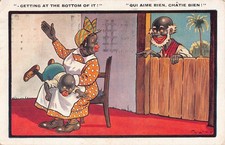
The first one I have looked at is St Kevin’s College, the second Catholic school admitted to the APS. It’s a Christian Brother’s School, and its history does contain some mention of corporal punishment. In particular, there’s a corporal punishment themed cartoon that appeared in a major Melbourne newspaper during the 1960s when Scotch College and St Kevin’s College were fighting to prevent the Melbourne Metropolitan Board of Works from requisitioning sections of their sports grounds to build a freeway. I will scan this and upload it somewhere if I can find a suitable place for it.
The history is ‘St Kevin’s College: 1918-1993’ by Chris McConville.
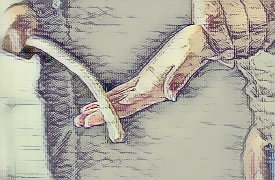
“Brother Paul Sebastian Mulkerns, for example, an Irishman and an asthmatic, seemed unsettled in both Australia and Ireland and moved several times between the two places. Mulkerns was an enthusiastic and an occasionally violent disciplinarian (North Melbourne students recollected that he taught often with a wooden rod in his hands).”
“They were to discover an even more aloof figure in Brother Saul, Principal from 1947 to 1949. J.A. Saul arrived at St Kevin’s with a commitment to improving study habits in the school. It was apparently Saul’s rule to make all senior boys sit with a book in hand at lunchtime, preparing for exams as they ate. Eric Stevenson, years later, remembered his first encounter with Saul.
Eric was intrigued by a schoolground game apparently invented by the boys to fill in time on the cramped Orrong Rd yard. This game ‘throwball’, as Eric remembered it, took place each lunchtime at the back of the college. Trying to get a grip on the intricacies of the game, Eric was found around the sheds when he ought not to have been there, and received six cuts from Saul. Such was his introduction to St Kevin’s and to ‘Socker’ Saul.”
“Another brother who ruled with a firm hand stuck in the memories of several students. Brother English was remembered by some boys as sitting at the front of their classes, his sleeves rolled up and his strap positioned prominently on the desk.”
“On the staff for fewer years than Peter Hall but recalled vividly by former students was Paddy Wright. Paddy had come to St Kevin’s after teaching at Trinity Grammar School. He immediately struck his colleagues as a dedicated teacher and managed to communicate his enthusiasm to students through, or perhaps in spite of, his often eccentric techniques. Students faced the return of essays from Paddy with some trepidation. His method of communicating displeasure at a piece of work was to draw a tombstone at the top of the essay. A returned essay with the dreaded tombstone symbol meant that the author was headed for punishment through the strap.
Paddy would then proceed through the class carrying a chocolate box. Those listed for corporal punishment would be invited to take a chocolate and on opening the box would find Paddy’s strap, neatly coiled and ready for action. Funnily enough, recalled several former students, boys somehow accepted his use of the strap when they were angered if other teachers resorted to physical punishment.”
St Bede’s College, Mentone, Victoria, Australia. Well, most of them are.
The book is ‘St. Bede’s College and its McCristal origins 1896-1982’ by Leo Gamble, published by St Bede’s in 1982.
St Bede’s is considered to be the successor school to an earlier one called Mentone College, often referred to as McCristal College after its founder and headmaster. St Bede’s started off using the same buildings as Mentone College, and a lot of Mentone College boys sent their sons to St Bede’s.
The first eight chapters of the school history are devoted to Mentone College, and some of the quotes come from there. There’s also discussion of the history of education in the area around Mentone – it’s considered interesting because there are so many schools in that small area (5 large secondary schools today). One quote, referring to Meeres school relates to that (it was the first school in the area.
Mentone College had a close link to Xavier whose history’s I have already quoted from – Thomas McCristal, founder of Mentone College, had been a student at Xavier in its second year of operation, and was one of Xavier’s first laymasters. He deliberately modeled his school on Xavier.
Meeres’ School: “It appears that after the kindly and cultured Meeres couple went back to England, the school was run by a Mr Chambers whose delight seemed to be in thrashing the pupils savagely with canes chosen from his extra large collection.”
Mentone College:
“The story of one new pupil illustrates this. One February, a boy of twelve from a grazing property in the Riverina stepped out of the cab for his first day at Mentone College. Turning around, he saw the blue of Port Phillip Bay a couple of hundred yards away through the trees. His curiosity ran riot as he sprinted over the road to the cliffs to gaze on the wonder of the sea for the first time. When he eventually got back to school McCristal gave him “the cuts” for being out of bounds without permission!”
“Another ex-student recalled an incident where he and a friend dropped behind the main body of walkers near Mordialloc one Sunday. He and his friend went into a shop on Beach Road and bought a small packet of Capstan cigarettes which they smoked in the scrub along the beachfront. Then they raced along the beach to catch up with the rest of the hikers, only to discover that McCristal had put the whole party on the train at Edithvale and gone back to Mentone. The pair had no money for the train fare and had to trudge back to school along the beach. When they arrived back, hours later, McCristal was waiting to administer a severe punishment with the strap and send them to bed without any evening meal.
It was a serious offence for a boarder to be out of bounds, even on a hike! One of the offenders, as well as another member of the hike, recalled the incident sixty years later. There was a happier end to the story, however. Later that night Mrs McCristal came into the dormitory and put down a tray of hot cocoa and buns for the pair who had been sent to bed in disgrace.”
“There had to be a fairly strict set of rules because the advertisements promised that boys would be treated like members of the principal’s family; and the McCristal discipline was consistent and strict. Any boy found out of bounds was strapped and had privileges including meals, withdrawn. Bird-nesting, a delight of adventurous lads, was strictly forbidden and offenders were strapped.