In recent years, the topic of childhood discipline has resurfaced in the public eye, often in the context of high-profile court cases and celebrity memoirs. During the widely publicized legal battle in America between Johnny Depp and Amber Heard, for example, the court heard testimony from Depp’s sister, who was called as a character witness. She painted a vivid picture of their strict and sometimes harsh upbringing, describing how their mother would discipline them by “cutting a switch”—literally going outside to select a thin, flexible branch from a tree or bush, which she would then use to beat them. This method, once common in many households, was intended to instill obedience and respect, but it often left emotional and physical scars that lingered long after childhood.
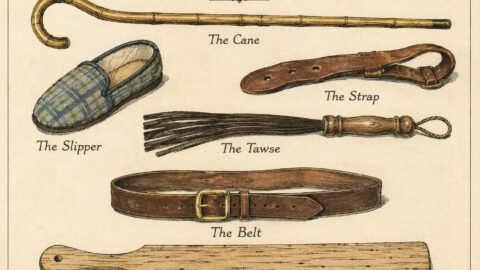
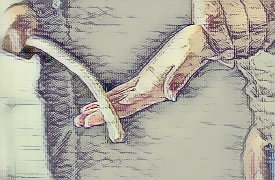
(short pause) The legacy of corporal punishment is not unique to one family or country. Actor Damian Lewis, best known for his role in Band of Brothers, has spoken candidly about his own experiences with harsh discipline during his formative years. Lewis attended Ashdown House, a traditional English prep school in Sussex, which also counts Boris Johnson among its alumni (though the two did not overlap). As a boarder, Lewis was subjected to the school’s strict rules and frequent punishments. He recalls being caned regularly for relatively minor infractions—talking after lights out, sneaking into the girls’ dormitories, or simply failing to follow the rigid routines of boarding school life. The cane, a thin rod of rattan, was wielded by teachers as a tool of correction, and the threat of its sting was ever-present.
(pause) The use of physical punishment was not limited to schools. Ghisaine Maxwell, whose name has appeared in headlines around the world, grew up in a household where discipline was enforced with an array of implements. She and her siblings were beaten by their father, the notorious media tycoon Robert Maxwell, with whatever was at hand—hairbrushes, leather straps, slippers, and even a riding crop. The children were sometimes forced to choose which object would be used, a ritual that added a psychological dimension to the punishment. This practice, while shocking by today’s standards, was once seen by some as a normal part of parenting, especially in families where authority was absolute and unquestioned.
(short pause) The culture of corporal punishment extended into the British education system as well. Neil Kinnock, the former leader of the Labour Party, attended the Lewis School for Boys, a grammar school in Pengam, south Wales. In his final year, Kinnock and a group of friends decided to play a prank on their history teacher by taking his Austin A30 car and wedging it between two pine trees at the edge of the rugby field. The prank was discovered, and the consequences were swift and severe.
(pause) When the headmaster learned of the incident, he was incensed. He summoned all seven boys involved—including some who had previously only visited his office to receive awards—and lined them up outside his study. The boys waited anxiously, knowing what was to come: the dreaded cane. Next to Kinnock stood Neil Stradling, visibly trembling with fear. Sensing his friend’s distress, Kinnock whispered, “Hey Strad, you go last. By the time the headmaster gets to you, he’ll be exhausted and might not even bother.” Stradling, desperate for any reprieve, agreed.
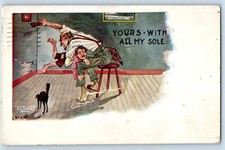
(short pause) One by one, the boys were called in. The sound of the cane—whack, whack, whack—echoed through the corridor as each boy received his punishment and emerged, grimacing. When it was Kinnock’s turn, he entered the study and bent over a slanted stool, its legs deliberately shortened to give the headmaster better leverage. Kinnock received six sharp strokes, each one a reminder of the school’s uncompromising discipline.
(pause) Then it was Stradling’s turn. As Kinnock lingered in the room, Stradling approached the stool—but instead of bending over, he sat down on it, perhaps out of confusion or defiance. The sight was so absurd that Kinnock burst into uncontrollable laughter, collapsing to his knees with tears streaming down his face. The headmaster, enraged by this display, struck Kinnock across the back and shoulders and bellowed, “Get out! Get out of my sight, both of you.” In the end, Stradling escaped without a single stroke, a small victory in an otherwise painful ordeal.
(pause) Years later, Kinnock reflected on these experiences with a mixture of humor and bitterness. When Tony Blair finally led Labour to victory, Kinnock noted that the new government never addressed the legacy of abusive headmasters who had made so many children’s lives miserable. He joked that if justice had been served, the jails would have been filled with these men—and he would have been first in line to seek revenge.
(short pause) The scars of corporal punishment were not confined to the elite or the provinces. Broadcaster Richard Madeley, writing in the Daily Telegraph, recounted his own memories of attending the Coopers’ Company, an all-boys’ grammar school in London’s East End. The school, he recalled, was rough, dirty, and poorly staffed, with a reputation for violence and neglect.
(pause) At Coopers’, corporal punishment was a routine part of school life. The music master, of all people, was responsible for administering the cane. Madeley remembers the day he was summoned for punishment. As he waited, the English teacher—who was rumored to be having an affair with the music master—entered the room to watch. Madeley never specifies what offense led to his caning, but he recalls the strange, charged atmosphere: “There was some quasi-sexual thing going on. Even at that age, I could tell they were both a bit excited.” The experience left him unsettled, a reminder that the power dynamics of punishment could be deeply troubling.
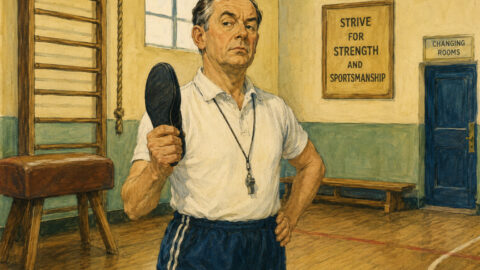
(short pause) The school also employed a “very odd” games master, whose methods were even more disturbing. He insisted that boys not wear underpants under their rugby shorts, and to enforce this rule, he would pull the waistband of each boy’s shorts to check as they left the changing room. Madeley reflects, “Behavior that today would have people in prison for sexual assault.” The normalization of such invasions of privacy and bodily autonomy speaks volumes about the culture of the time.
(pause) In just one anecdote, we see a music master in charge of caning and a games master checking boys’ shorts. While it might make sense for one person to administer caning for consistency, you’d expect the head or deputy to do it—not the music master. Perhaps he volunteered. As for the games master, he could have simply supervised the changing room, but clearly preferred his own method.
(pause) Fortunately for Madeley, his family eventually moved to Brentwood, and he transferred to Shenfield High School—a mixed, co-educational middle school with a completely different, more positive ethos. The contrast was stark: at Shenfield, discipline was firm but fair, and the atmosphere was one of encouragement rather than fear. One can only sympathize with the decent boys left behind at Coopers, who continued to endure the old regime.
(long pause) These stories, drawn from different backgrounds and eras, reveal a common thread: the normalization of physical punishment in childhood, whether at home or at school. While some look back with humor or nostalgia, others remember only pain and humiliation. As society continues to reckon with the legacy of these practices, it’s worth asking what lessons we want to pass on to future generations—and how we can ensure that discipline never becomes an excuse for cruelty.