When we look at today’s celebrities—whether they’re world-famous athletes, actors, or musicians—it’s easy to forget that, once upon a time, they were ordinary children, growing up in ordinary homes, facing the same rules and routines as everyone else. Their childhoods were shaped by the world around them, just like ours.
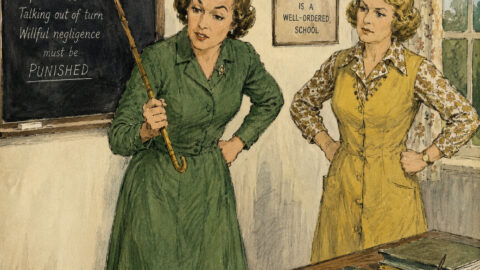
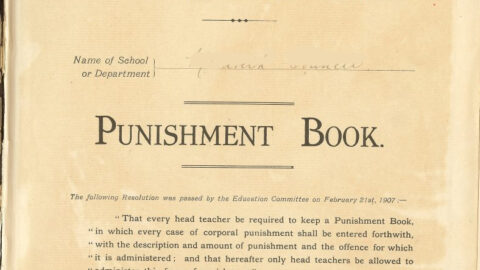
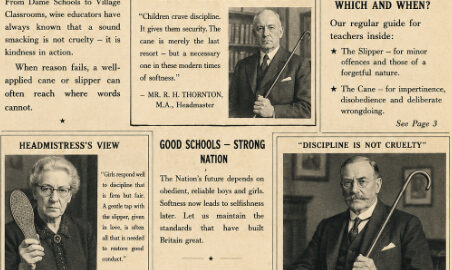
I grew up in the West Country during the 1950s and 60s, a time when the air was thick with the scent of coal fires and the sound of children’s laughter echoing down narrow streets. Back then, discipline was a fact of life, both at home and at school. Corporal punishment—what we called “CP”—wasn’t just accepted, it was expected. At my senior school, the cane and the plimsoll, a sturdy gym shoe, were the main tools of discipline. I remember the sting of both. Some teachers had their own methods—a sharp rap with a ruler, a slap with a wooden board duster, or even a quick flick of chalk for talking out of turn. These punishments hurt, but they were nothing compared to a real caning or slippering, which left your hands or backside tingling for hours.
At home, things weren’t much different. Most parents believed in “spare the rod, spoil the child.” My own mother kept a battered slipper by the fireplace—a silent warning to us all. I can still picture her, pinny tied tight, hair in curlers, keeping a watchful eye as we played in the garden. If we stepped out of line, the threat of “the slipper” was enough to make us think twice. I remember one Sunday afternoon, my brother and I got into a scuffle over a toy car. The next thing we knew, Mum was at the door, slipper in hand, her voice stern but her eyes full of love. The punishment was swift, but the lesson stuck with us.
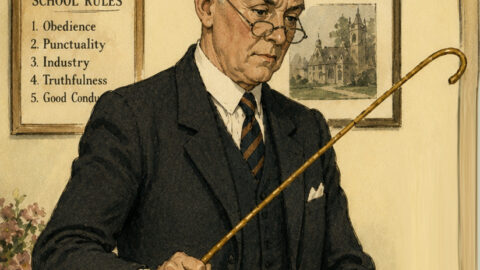
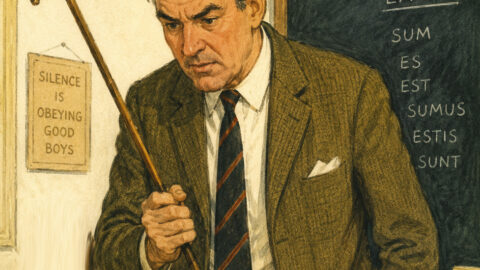
School was its own world, with its own rules. In the classroom, discipline was strict and swift. I recall the hush that would fall when the headmaster entered, cane in hand, his footsteps echoing on the polished floorboards. Boys and girls alike stood in line, hands outstretched, waiting for the sharp crack of the cane. It was a ritual, almost, and everyone knew the rules. In the 1950s and 60s, this was the norm across Britain. Even the Beatles—John, Paul, and George—weren’t spared. I’ve been reading a detailed book about their early lives, and it’s clear that they, too, faced the cane at school more than once. The book describes canings on the hands, and Paul even got the plimsoll a few times. It’s strange to imagine these future legends, wincing at the same punishments as the rest of us.
Liverpool, where the Beatles grew up, was known for its tough schools and even tougher teachers. Stories abound of canings and slipperings, not just for the boys, but sometimes for the girls as well. Cilla Black, another Liverpool star, was caned at her school too. I remember reading about her in the old NME and Melody Maker magazines—though those papers rarely went into much detail. Still, the stories stuck with us, whispered in playgrounds and passed down through generations.
Cilla was 23 in 1966, which means she left school in 1958, right at the height of corporal punishment’s popularity. Boys were punished more often, but girls weren’t immune. Most girls got the cane across the hands, especially in secondary school. In primary school, it was more common to get a slap on the back of the legs or the bottom. The slipper, or plimsoll, was used for all sorts of mischief—from talking in class to more serious offenses. I remember a friend of mine, Susan, who got the slipper for sneaking sweets into assembly. She cried, but the next day, she was back to her old tricks, a little wiser and a lot more careful.
Some people today believe girls were never slippered at school, but that’s not true. While it was less common, it did happen. In my own school days, I never heard of a girl being slippered, but I knew plenty who got the cane on the hand. There were even rare cases—like the Lynne Simmons case and reports from the Rodney School—where girls were caned on the bottom. Of course, there were always stories about unofficial punishments that crossed the line, but those were the exceptions, and often ended up in the local papers as cases of assault.
In Scotland, things were a bit different. The tawse—a thick leather strap—was the main tool of discipline, used on the hands of both boys and girls. My cousin went to school in Glasgow and told me stories of lining up in the corridor, palms out, waiting for the sting of the tawse. In earlier times, it was sometimes used on the bottom, but by the 1950s and 60s, that was rare.
Looking back, it’s easy to see how these experiences shaped us. The fear of punishment kept most of us in line, but it also taught us resilience. I remember the nervous chatter in the cloakroom before assembly, the whispered warnings about which teachers had the heaviest hand, and the relief when you escaped with just a scolding. Even at home, the threat of a spanking was enough to make you think twice about staying out after dark. I had friends who dreaded being late, not knowing if they’d get a telling off or something more. It was a different world, one where discipline was part of daily life.
As for the Beatles and Cilla Black, their stories remind us that even the brightest stars started out as ordinary kids, facing the same rules and routines as the rest of us. Some tales about their school punishments may be exaggerated—like the idea of Cilla bending over for four strokes of the cane—but there’s no doubt they grew up in a world where discipline was strict and expectations were high. In 1966, most UK schools still used corporal punishment, and most parents accepted it. Only a few objected, and many of them had experienced it themselves as children.
Today, it’s hard to imagine a world where a slipper or a cane was as much a part of childhood as hopscotch or conkers. But for those of us who grew up in the 50s and 60s, it was simply the way things were. We learned our lessons, sometimes the hard way, and carried those memories with us into adulthood. And when we see the Beatles on stage, or hear Cilla’s voice on the radio, we remember that behind the fame and the music were children just like us—shaped by the times, the rules, and the lessons of a very different era.