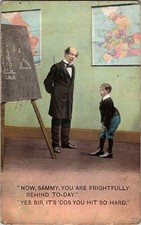
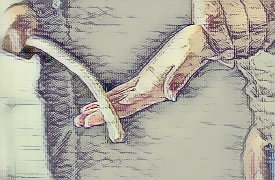
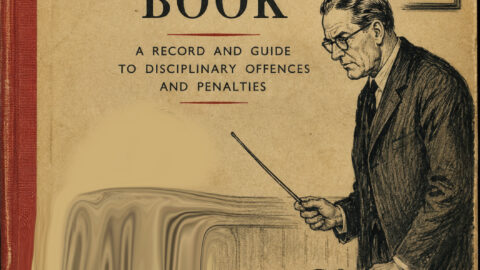
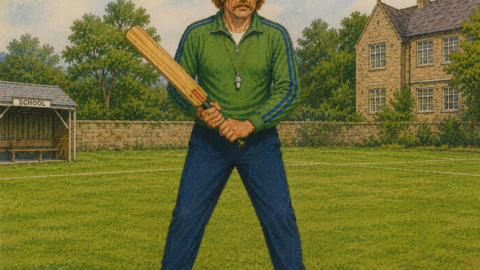
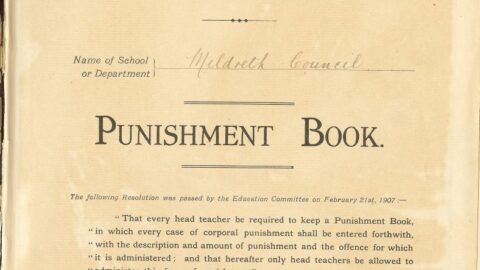
(gap: 2s) I heard Russell Crowe—‘The Gladiator’ himself—on the E! Channel, reminiscing about being “whacked on the arse by a sadist” at school in New Zealand. His crime? Not knowing the words to the school song. (short pause) It’s strange how these stories echo across generations and continents.
Mel Gibson, too, attended secondary school in Melbourne, Australia. He recalled how the boys would compete to see who could rack up the most strokes of the tawse on their hands in a week. He usually won. (pause) There was a kind of grim pride in surviving the ordeal, a badge of honour among the boys.
Estelle Skornik—the pretty young French actress known in the UK for those Renault Clio adverts—once admitted in a magazine interview, “School was like a prison to me, and I couldn’t wait to leave. I was a shy girl, I had a real lack of confidence, and school seemed to make me worse. My teacher was very strict. She once left our classroom for a few minutes so I went to the front and started imitating her—and she came back and caught me. She put me over her knee, pulled my knickers down, and smacked me in front of the whole class. It was very humiliating.” (pause)
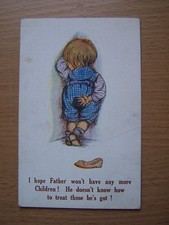
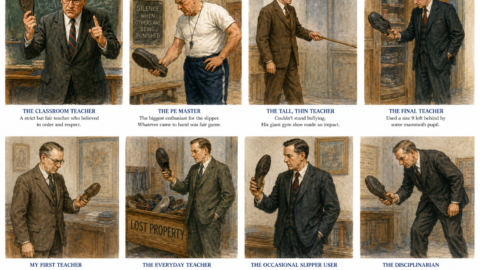
These stories aren’t just relics of the past. They’re woven into the fabric of so many childhoods, famous or not. (short pause) I remember my own mother’s slipper—always visible, always a silent threat. It sat on the armchair like a warning, a symbol of discipline and care in equal measure.
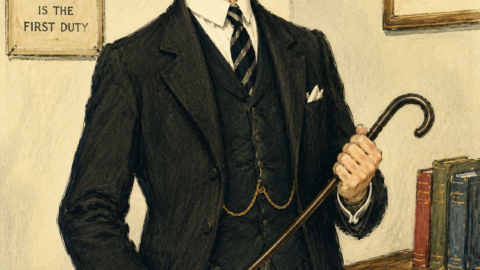
Rio Ferdinand was born in 1978. I believe the cane was banned in 1987 or so, so it would be surprising if he was caned at school. I’d be interested to know where you heard that. (pause) There cannot be many current footballers who could have been caned at school, but Teddy Sherringham has admitted he was slippered, and also caned on his hands. Ex-footballers Tony Cottee, Kevin Keegan, and Bryan Robson were all caned on the backside, and Vinnie Jones got the slipper.
I remember the TV presenter Nick Owen saying that he was given the cane at school, and that it “took the wind right out of my sails!” I didn’t know about the other players you mentioned, though they’re obviously of the right generation. I’d love to hear any other names you might have.
My guess is that most players of that generation (with the exception of squeaky-clean Lineker, of course) would have been regular recipients of either the cane or slipper. Don’t know how we find out, but if we do, let’s post names and details here.
More footballers who admitted in their biographies that they were caned at school are Ian Rush and Ian Wright. Also, in a Man Utd magazine questionnaire, Dennis Irwin said he was caned a couple of times by some strict Catholic brothers.
(short pause) It’s not just footballers, of course. The stories come from all walks of life. I remember reading about Stephen Fry, who described his schooldays as a “battlefield of humiliation and pain.” He once recounted being caned for the most trivial of offences—talking in the corridor, or forgetting his Latin homework. (pause) He said the anticipation was often worse than the punishment itself.
Even the world of music isn’t immune. Paul McCartney once joked in an interview that he and George Harrison were both “regulars” for the cane at the Liverpool Institute. “It was just what happened,” he said. “You’d get caught talking, or not paying attention, and next thing you know, you’re bending over the desk.” (pause)
In my own school, the slipper was the weapon of choice. It was always the same battered old thing—cracked leather, sole worn thin. The ritual was almost theatrical: the teacher would fetch it from the cupboard, the class would fall silent, and the unlucky recipient would shuffle to the front. (pause) I can still remember the sting, but more than that, I remember the hush that followed, the sense that order had been restored.
Some teachers wielded their authority with a heavy hand, others with a wink and a warning. There was Mr. Jenkins, who believed in “six of the best” for any infraction, and Mrs. Taylor, who preferred to lecture you until you wished she’d just got it over with. (pause) Looking back, it’s hard to say which was worse.
I’ve heard stories from friends who went to boarding school—tales of prefects with too much power, of lines written out a hundred times, of cold showers and early morning runs as punishment. (pause) One friend told me about a headmaster who kept a collection of canes, each with a name: “The Whistler,” “The Stinger,” “The Persuader.” The names alone were enough to keep most boys in line.
And yet, for all the fear and humiliation, there was a strange camaraderie in it. We’d compare marks, swap stories, laugh about it years later. (pause) It was part of growing up, part of the landscape of childhood—at least, for our generation.
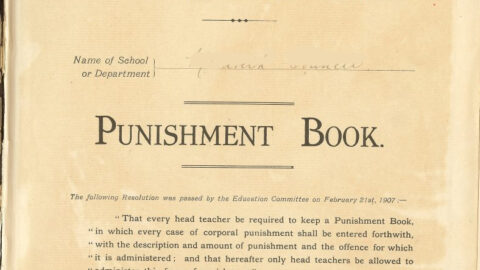
These days, of course, things are different. Corporal punishment is banned in most schools, and the slipper sits gathering dust, a relic of another era. (pause) But the memories linger—sometimes sharp, sometimes softened by time.
I wonder what today’s children will remember. Detentions, perhaps, or stern emails home. Maybe the threat of losing their phone for a week. (pause) Discipline changes, but the lessons—about respect, about boundaries, about growing up—remain.
If you have stories of your own—celebrity or otherwise—I’d love to hear them. The slipper, the cane, the tawse: they’re more than just objects. They’re symbols of a time, a place, a way of life that’s fading into memory. (long pause)
And yet, every so often, when I see an old slipper on a dresser, or hear the distant echo of a school bell, I’m transported back. To neat lawns and pebble-dashed houses, to the hum of a Ford Anglia, to the quiet authority of a mother in her pinny—watching, waiting, slipper in hand.