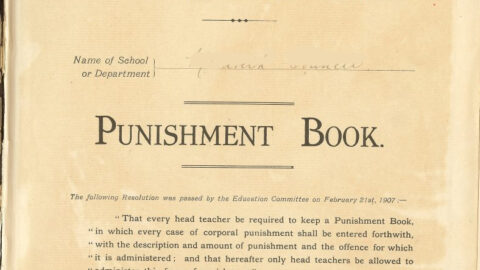
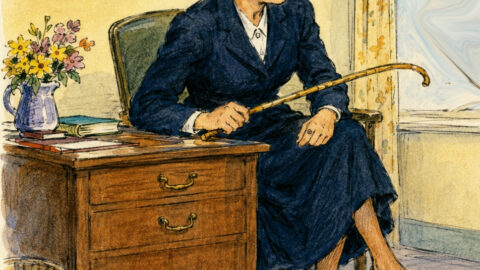
During the 1950s and 1960s, attitudes toward corporal punishment in British schools and homes varied considerably according to region, type of school, family background, and prevailing local custom. Personal recollections from former pupils illustrate both the commonplace nature of such discipline at the time and the wide diversity in how it was administered.
One former pupil recalled that in his own childhood he never encountered male teachers administering corporal punishment to girls, nor was he particularly aware of girls receiving such punishment at school during those years. At his infant school, attended between the ages of five and seven, all members of staff were women, and punishments generally consisted of slaps to the backs of the legs for both boys and girls alike. He later became aware that in some senior schools girls might receive the cane across the hands, though the local girls’ secondary school was staffed entirely by women.
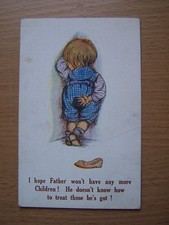
Within the home, corporal punishment was also common in many families, although practices differed widely. The same writer remembered being smacked by his mother until approximately the age of eleven, after which an uncle occasionally punished him with a slipper on his mother’s behalf when his behaviour had been particularly poor. Despite the unpleasantness of the experience, he later reflected that he had understood even at the time why he was being punished.
Another contributor observed that personal experience alone could not provide a complete picture of school discipline in post-war England. Educational practice differed substantially between local authorities, independent and state schools, boarding and day schools, and according to parental expectations and the outlook of individual head teachers.
Both writers had attended all-boys secondary schools and therefore had no direct experience of girls being disciplined by male teachers. One recalled that his own school contained no female teaching staff whatsoever, and thus he never witnessed boys receiving corporal punishment from women either. Nevertheless, he believed that both practices did occur in significant numbers throughout England, citing numerous accounts from a variety of sources which, taken together, were too substantial to dismiss.
He further argued that evidence from abroad — particularly from countries where corporal punishment survived into the age of mobile telephones and clandestine recordings — demonstrated that disciplinary practices involving all combinations of teacher and pupil gender were by no means unusual internationally.
The question of corporal punishment within the family prompted more mixed feelings. While one writer accepted that school discipline had once reflected the practical realities of large classes, limited assistance, and broad parental approval, he expressed considerable discomfort with the idea of parents administering formalised beatings at home. In his view, children were entitled to unconditional care and protection from their parents, and corporal punishment sat uneasily beside that responsibility.
Teachers, he argued, occupied a different role. Their duty was not primarily emotional nurture but the maintenance of discipline and education. In the circumstances of mid-twentieth-century schooling, corporal punishment was widely regarded as an effective means of preserving order and ensuring that lessons could proceed uninterrupted. Although he no longer considered such methods appropriate in modern education, he believed they must be understood within their historical context.
One detailed recollection came from a former pupil at a primary school in Willesden, Middlesex, attended between 1954 and 1961. The school consisted of eight classes, each with its own class teacher, under the supervision of a headmistress. Most teachers were women, though there were also a small number of male staff.
According to this account, corporal punishment was employed regularly by the majority of teachers for offences ranging from disobedience to talking during lessons. A particular memory concerned a New Zealand-born teacher, Miss Ward, who taught the first term of junior school when pupils were seven or eight years old. Boys who misbehaved were instructed to stand at the front of the classroom and bend over a chair while the teacher administered a single stroke with a white gym shoe kept in her desk drawer. The punishment was immediate, public, and regarded as entirely routine.
Some boys cried quietly afterwards, while others prided themselves on enduring the punishment without complaint. At the time, it apparently attracted little comment that the punishment was administered by a woman.
On one memorable occasion, however, Miss Ward punished a girl in the same manner. For many pupils, it was the first time they had realised that girls could also receive corporal punishment at school. The incident made a strong impression upon the class, though the girl herself later treated the episode with good humour and even a measure of pride.
Another former pupil recalled receiving only a single punishment during junior school: several slaps to the backs of the legs after repeating an act of misconduct for which he had already been warned earlier in the day. Yet he remembered the subsequent week of detention during break times as more distressing than the physical punishment itself.
He also remembered an isolated incident in which a generally well-behaved boy received two strokes of the cane across the hands from a male teacher widely regarded as kind and fair-minded. The punishment struck the pupils as excessive and unjustified, and remained memorable precisely because it was so out of character for both teacher and pupil alike.
Several accounts suggested that girls as well as boys experienced corporal punishment both at school and at home during this period. Many parents not only accepted but actively supported the use of the cane, slipper, or strap in schools throughout the 1950s and 1960s.
Particular attention was drawn to preparatory and boarding schools, where disciplinary traditions were often especially severe. One recollection concerned a young girl at St Gabriel’s Preparatory School in Lytham St Annes in 1962 who reportedly received a caning on the bare buttocks at approximately six years of age. The writer suggested that such incidents reflected the comparatively relaxed attitudes then prevailing toward the punishment of younger children.
Another school mentioned was Ribbleton Hall Secondary School in Preston, where an assortment of implements — including the cane, gym shoe, rubber tubing, and even a T-square — were reportedly employed for disciplinary purposes. Such recollections illustrate the remarkable variety of methods once regarded as acceptable within British education.
Discussion of private education also revealed differing experiences. One writer, educated in the state system, recalled learning about preparatory and public schools largely through books and comics of the period. Later acquaintances who had attended prestigious independent schools confirmed that the cane remained a familiar feature of disciplinary life there.
By contrast, his wife, who attended a convent school during the 1960s, maintained that corporal punishment was never used on either boarders or day pupils. A memoir concerning girls’ boarding schools between 1939 and 1979 contained only a single reference to such punishment: three girls who had run away from school were eventually returned and caned. One of them later displayed the marks to her classmates the following day. In later life, she reportedly became a titled lady.
Taken together, these recollections paint a complex portrait of a vanished educational culture. Corporal punishment was once woven deeply into the fabric of British school life, though its application varied enormously according to institution, circumstance, and individual temperament. To modern sensibilities many of these practices appear harsh or even shocking, yet for much of the twentieth century they were widely regarded as an ordinary and legitimate part of childhood discipline.