In a number of recollections concerning school discipline, it appears that many female pupils were subjected to corporal punishment, most commonly by means of the cane and, on occasion, the slipper. With one notable exception — an incident involving a female teacher administering punishment with a wooden spoon across a pupil’s legs — nearly all of the recorded punishments were carried out by male members of staff. The schools in question were mixed institutions, and this raises an interesting question as to whether female teachers generally refrained from administering corporal punishment, preferring instead to leave such matters to their male colleagues, or whether only a small number of particularly strict male teachers accounted for the majority of punishments in otherwise moderate schools.
One especially unusual account emerged from Moorside Secondary School in Swinton, where a former pupil alleged that a girl had been caned before the entire school assembly. Public corporal punishment of female pupils was, even by the standards of the day, regarded as highly uncommon. While isolated reports of such incidents occasionally surfaced in local newspapers, the public chastisement of girls in front of their peers appears to have been largely avoided in England during the post-war period.
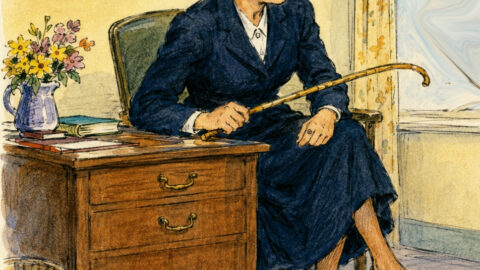
The former pupil, identified as Megan, who attended the school between 1964 and 1968, recalled being caned by a female teacher during assembly after pushing another girl’s head into a lavatory. Although she did not specify where the punishment was administered, it was generally assumed by contemporaries that such punishments were delivered across the hand. Accounts from other former pupils suggested that the same teacher also employed a strap, ruler and slipper in maintaining discipline, all reportedly used upon the hand.
At Lostock Secondary School in Stretford, evidence gathered from former pupils indicates that both boys and girls were caned, and occasionally slippered, by male teachers from at least the mid-1960s through to the early 1980s. The punishments were administered by several male staff members, including the headmaster and a former professional footballer who later became a teacher. Most recollections suggest that punishments were usually delivered across the hand, although there were occasional references to slippering upon the buttocks.
One former pupil recalled being punished by a games master after showing disrespect to a female teacher, a detail which suggests that female staff may have referred disciplinary matters involving girls to male colleagues. Whether this practice reflected school policy, the attitudes of individual teachers, or simply the prevailing conventions of the era remains uncertain.
Another former pupil recounted an incident involving a female domestic science teacher who threatened her with a wooden spoon after she mocked a classroom demonstration. During the ensuing commotion, another girl was accidentally struck on the thigh, resulting in bruising. Such anecdotes illustrate the comparatively informal and, at times, improvised nature of discipline in schools of the period.
Discussion of these incidents has also highlighted the wider question of how corporal punishment differed according to gender. Many observers have noted that punishments administered to girls were more frequently delivered upon the hand, particularly in Scotland, where the tawse was commonly used. Reports of girls being caned upon the buttocks were considerably rarer and remain difficult to verify conclusively. Some former pupils suggested that girls required to receive such punishments were first instructed to change into physical education clothing, thereby avoiding any perceived impropriety associated with adjusting ordinary clothing.
Former pupils and researchers alike have observed that women who experienced corporal punishment at school often appear less willing than men to discuss such experiences publicly, particularly where punishments involved greater humiliation. This reluctance may partly explain the comparative scarcity of detailed accounts involving girls.
At Poundswick High School in Manchester, one former pupil remembered being slippered before the “lower school” after retaliating against boys who had teased her. While the exact nature of the punishment was not specified, some contemporaries believed that younger female pupils were more likely to be slippered upon the buttocks than older girls, for whom punishment upon the hand was considered more appropriate.
The recollections also reveal the considerable variation in disciplinary practices between schools and even among individual teachers. Some female teachers appear to have avoided corporal punishment entirely, while others employed a range of implements. Likewise, certain male teachers acquired reputations for severity, whereas other staff members were rarely mentioned in connection with punishment at all.
Taken together, these accounts offer a revealing insight into the disciplinary culture of British schools during the mid-20th century — a period in which corporal punishment remained widely accepted, though applied according to conventions of gender, age and local custom that were often unwritten and inconsistently observed.