To understand how corporal punishment has been regulated in different places and at different periods, it is first necessary to understand the hierarchy of laws and administrative authority.
The Hierarchy of Laws
Respect for the hierarchy of laws is fundamental to the rule of law, as it determines how different levels of authority operate in practice. Broadly speaking, the principal levels consist of a constitution or founding document; statutes enacted by Parliament; regulations; and administrative procedures.
The terminology, structure, and degree of control vary between jurisdictions.
The Constitution
A constitution establishes the essential character and sovereignty of a nation and defines the rights and responsibilities of its citizens. As such, it constitutes the supreme law of the land.
It also establishes the structure of government, and all other laws must conform to it.
Statutes and Legislation
Statutes are enacted by the legislative branch of government and regulate the many matters requiring oversight in a modern democratic state.
Such legislation must conform to both the constitution and international law. Statutes may be amended only through the same legislative process by which they were first enacted, and they are enforced by the relevant authorities of the state.
Common Law and Case Law
Common law is created by judicial decisions rather than by legislatures and does not, strictly speaking, form a separate level within the hierarchy of laws.
It consists of court judgments interpreting statutory language, safeguarding principles of natural justice, filling gaps in legislation, or addressing unforeseen situations not explicitly covered by statute.
New legislation may override or replace common law. This occurred in several jurisdictions where school corporal punishment had previously been permitted under long-established common-law principles.
Regulations and Statutory Instruments
Regulations are a form of delegated legislation, developed by ministers, government departments, or independent commissions in order to administer their statutory responsibilities.
They must conform to the constitution, international law, and the governing statute. Regulations are enforceable in much the same way as statutory law and provide detailed guidance on the administration of legal principles.
A breach of a regulation may itself constitute an offence.
Procedures
A procedure is a description of the steps required to complete a particular process.
Procedures are generally written by administrative bodies to ensure that laws and regulations are applied consistently and fairly. Compliance is usually secured as a condition for completing a process or receiving a benefit, rather than through punishment.
Codes of Conduct
Codes of conduct are written sets of rules or standards governing the behaviour of particular groups.
Their enforceability depends upon whether they are regarded as “soft law” or “hard law”. Codes not enacted by a legislative body generally rely upon voluntary compliance.
Guidelines, Instructions, and Policies
Terms such as “guidelines” and “instructions” are often imprecise and may create ambiguity, particularly concerning enforceability.
Policies are broad statements of principle or intention regarding priorities and conduct. They should not be confused with formal elements within the hierarchy of law.
A schoolteacher, for example, is subject to the authority of the headmaster, the conditions of employment, the policies of the school governors, and the rules or directives issued by local and national education authorities.
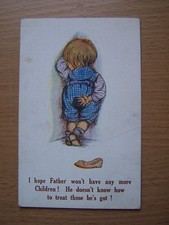
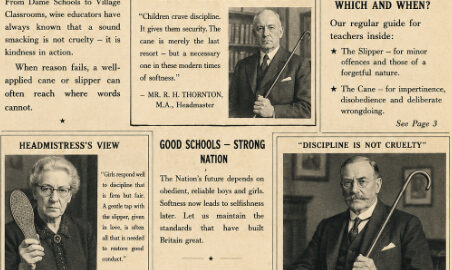
The schools attended by many people in the mid-twentieth century appear to have operated in much the same fashion. Numerous classroom punishments were administered informally and almost certainly went unrecorded. In many instances a plimsoll shoe was used before the assembled class, in a manner not unlike the forms of physical chastisement still employed in some homes at the time.
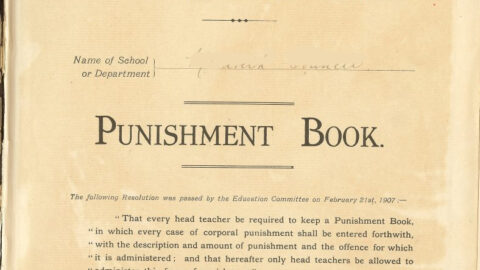
Punishment record books, introduced in later years, appear to have served partly as a safeguard against accusations of excessive punishment. The details recorded, however, were often extremely brief. School log books from the early twentieth century contain references to the cane, and such records were reportedly kept securely and made available only under exceptional circumstances.
The formal caning administered by a headmaster differed considerably from informal punishments such as slippering or spanking. A cane applied firmly across the buttocks was generally reserved for more serious offences. Many people who attended such schools remarked that this form of punishment was rarely, if ever, used by parents in the home.
Canings by the headmaster or deputy headmaster were commonly conducted in private. In many schools the secretary’s office adjoined the headmaster’s study, and it was generally assumed that she would have been aware when punishments were taking place. Occasionally, however, two boys involved in the same misconduct might be punished in one another’s presence.
Some pupils wondered whether schoolmasters employed the cane upon their own children at home. Since canes could once be purchased in ordinary ironmongers’ shops, it is likely that such practices did occur, particularly in earlier decades.
For many former pupils, knowledge of corporal punishment related almost entirely to boys’ schools. Reports of girls being caned or slippered existed, though such practices were less widely discussed.
Punishment Books and Educational Reform
The industrial expansion of the Victorian era created a need for a literate and numerate workforce, leading to compulsory education and to many of the school structures later generations experienced.
Schools had to be constructed, teachers trained, and curricula established. Efficiency and economy were major concerns. Standardisation became essential if large educational systems were to function cohesively.
Education was also shaped by prevailing social assumptions. Boys and girls were frequently prepared for different social roles, reinforcing existing class and gender distinctions. At the same time, social reformers sought to moderate the harsher aspects of institutional discipline.
Compulsory education was not universally welcomed. Some objected to its cost, while others feared that teaching the working classes to read might expose them to radical political ideas. Parents often resented the loss of child labour, particularly during harvest seasons. Children accustomed to freedom in the countryside or city streets frequently found prolonged classroom instruction monotonous and restrictive.
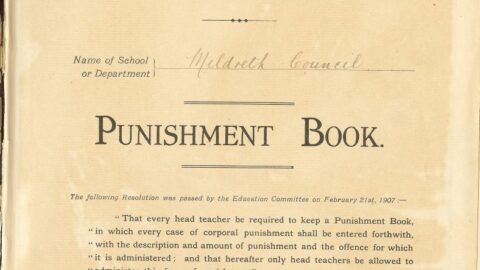
Punishment books were introduced largely in response to concerns raised by reformers. Since headmasters were generally the only persons formally authorised to administer serious corporal punishment, requiring them to record such punishments was intended to discourage excess and abuse.
Inspectors routinely examined these records to ensure that schools were being properly managed. In larger schools headmasters often delegated disciplinary authority to senior staff. Minor punishments, however, were frequently regarded as too trivial to require formal recording.
There was often considerable disagreement between teachers and pupils as to what constituted a “minor” punishment. As with many regulations, maximum limits could gradually become accepted practice.
Teachers were not alone in disliking the recording of corporal punishment. Many pupils themselves preferred that incidents not be permanently documented, lest they later come to the attention of parents, future schools, or prospective employers.
Senior administrators, governors, and judges of the period had themselves usually experienced corporal punishment during their own education. Consequently, they often viewed complaints concerning bruising or welts with little sympathy and tended to place greater importance upon maintaining discipline and order. Courts generally supported teachers except in the most extreme circumstances.
The social distinctions between men and women during the nineteenth and early twentieth centuries were considerably greater than they are today. Many girls were expected to marry and raise families, while boys were prepared to become wage earners. Employment opportunities for women, particularly among the middle classes, were often limited, and advancement in professional life could be difficult even for well-educated women.
Parental discipline and school discipline were frequently similar in character, though school punishments in the nineteenth century could be considerably more severe than those ordinarily imposed within the home. Even in the 1950s and 1960s, some schools continued to administer severe canings which exceeded anything most parents would have contemplated.
Before the introduction of formal punishment books, many schools—particularly smaller village schools—kept daily log books recording a wide variety of matters affecting school life. These records were available to governors and managers as a means of monitoring the condition and conduct of the school.
Perceptions of what is normal are inevitably shaped by personal experience, as well as by books, films, and popular culture.
The model of the nuclear family—with the father employed outside the home and the mother devoted exclusively to domestic responsibilities—appears in retrospect to have been less universal than is sometimes imagined. Though strongly associated with Victorian middle-class ideals, family arrangements varied greatly according to class, occupation, and locality.
A surviving punishment book from Somersham School in Cambridgeshire, covering the period from January 1951 to April 1952, provides an illuminating example of disciplinary practice in a small village school. Formal corporal punishment appears to have been comparatively infrequent, with most entries recording only a single stroke of the cane. Notably, the register included both boys and girls.
In a small school community, repeat appearances in such records would almost certainly have been conspicuous. A single stroke of the cane, particularly when applied to the hand, may at the time have been regarded as a relatively mild punishment, especially in an era when many parents still employed physical discipline at home.
One former pupil recalled an experience from his secondary school years that illustrates both the atmosphere of such institutions and the fascination that official punishment records sometimes exerted upon adolescents.
Formal canings at his school were administered by the deputy headmaster in his office and were presumably entered into the punishment book. Informal punishments using plimsolls or rulers were common and almost certainly went unrecorded.
During his mid-teenage years he participated in an arts project housed in a separate studio building on the school grounds. Because pupils involved in the project were occasionally granted access outside normal hours, he was entrusted with a key.
One Sunday morning, finding himself alone after a misunderstanding with a fellow student, he wandered through the otherwise deserted school. The building was old, and footsteps echoed loudly through its corridors.
He discovered, to his surprise, that the deputy headmaster’s office had been left unlocked owing to the loss of a key. Curious, he entered and searched unsuccessfully for the punishment book, though he did discover the school cane itself. Looking back many years later, he reflected that, had he found the record book, he might well have attempted to remove it altogether.