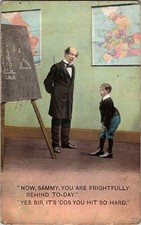
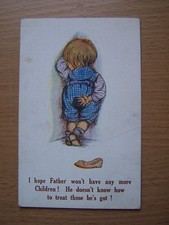
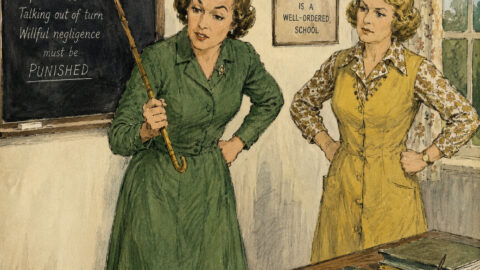
The late 1940s and early 1950s now seem like a different moral universe. Modern Britain tends to interpret childhood through the language of psychology, neurodiversity, safeguarding, and emotional wellbeing. Mid-century Britain, by contrast, operated with a far simpler — and far harsher — framework. Children were generally expected to conform. If they did not, adults assumed the fault lay not with the institution but with the child.
At school, differences among pupils were rarely ignored, but they were interpreted through a distinctly moral lens. A child was not “neurodivergent,” “socially anxious,” or “behaviourally dysregulated.” He was either “well behaved,” “awkward,” “lazy,” “naughty,” “odd,” or “difficult.” The remedies followed accordingly.
Those judged disruptive were punished until they either conformed or became sufficiently adept at concealing whatever traits had attracted attention in the first place. Corporal punishment was accepted as an entirely ordinary corrective measure, woven into the fabric of daily school life. Yet quieter children who simply seemed unusual often received a different kind of treatment — gentler perhaps, though still unmistakably coercive. The objective remained the same: normalisation.
I belonged firmly to the latter category. Teachers considered me polite and academically capable, but somehow not quite right in the social sense. There was a persistent sense that one needed “guiding.” The assumption was that, with sufficient encouragement and subtle pressure, one could eventually be nudged into acceptable conformity.
Even handedness became part of this process. Left-handed writing was still regarded in many schools as undesirable, untidy, or faintly improper. I was routinely detained during playtimes and made to practise writing with my right hand instead. Looking back, there is something almost symbolic about it: a small but telling example of post-war Britain’s instinctive distrust of deviation from the norm. At the time, however, it hardly troubled me. Since I had little interest in playground interaction anyway, missing playtime was scarcely a punishment at all.
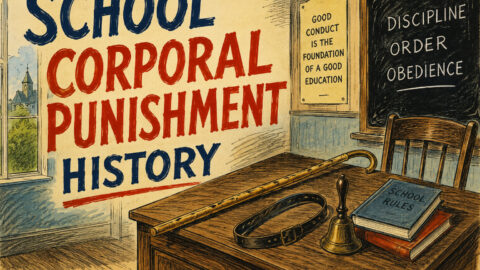
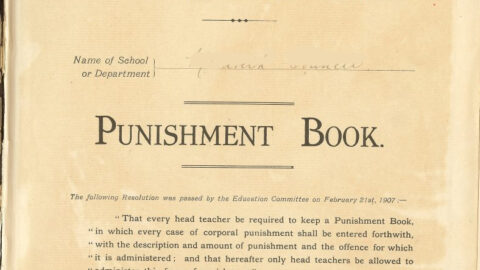
This broader culture of conformity forms an important backdrop when examining the disciplinary practices of the period, particularly the increasingly mythologised world of school caning and corporal punishment. Modern discussions often reduce the subject to caricature: sadistic teachers on one side, helpless victims on the other. Reality was usually more complex. Corporal punishment functioned not merely as physical pain but as ritual, theatre, hierarchy, and psychological conditioning.
Take the case of Janet Dines, for instance. A surviving photograph from the late 1970s, showing her receiving a leaving presentation at Northwich County Grammar School for Girls, presents someone who appears physically slight, almost delicate. Yet recollections of her disciplinary reputation suggest a far more formidable presence than appearance alone would imply.
This contradiction highlights something often overlooked in discussions of corporal punishment: effectiveness did not necessarily depend upon brute physical strength. Technique, confidence, authority, timing, and psychological presence all mattered enormously. A physically imposing teacher might deliver an unimpressive punishment, while a smaller individual with precision and authority could leave a far stronger impression.
There is also reason to believe that athleticism played a role. Dines had reportedly been an accomplished cricketer, and cricket — especially bowling — relies heavily upon timing, rhythm, leverage, and wrist control. One can easily imagine how those same physical mechanics might transfer to disciplinary technique. Former pupils frequently described her as tall and thin, which would naturally increase both reach and momentum.
Such observations may sound uncomfortably analytical today, but they reveal something important about how corporal punishment was perceived at the time. Pupils often discussed teachers almost as one might discuss athletes, examining styles, techniques, reputations, and comparative severity. Certain teachers acquired near-legendary status within school folklore.
Dilys Martin was one such figure. While researching schools across Greater Manchester and Lancashire, her name surfaced repeatedly in recollections from former pupils. What makes these accounts particularly interesting is not simply the punishments themselves, but the consistency with which they emphasise ritualised methods and dramatic presentation.
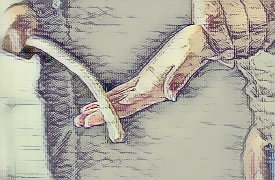
Among the most striking descriptions is the so-called “run-up” technique — teachers physically stepping back, gathering momentum, and charging forward before administering a stroke. Whether this genuinely increased the severity of punishment is open to debate. Physically speaking, the effect may have been marginal. Psychologically, however, it must have been extraordinarily intimidating.
The timing of these accounts raises another intriguing possibility. The late 1960s and 1970s saw a number of films and television productions depicting highly stylised public-school discipline. Lindsay Anderson’s if… is perhaps the most famous example, presenting caning as ritualistic spectacle within the elite boarding-school environment. One wonders whether such portrayals created a form of cultural cross-pollination. Did teachers in ordinary state schools consciously or unconsciously imitate disciplinary performances associated with elite institutions?
It is certainly possible in some cases, though evidence suggests Martin herself may have employed such methods before those cinematic depictions became widely known.
The phenomenon was not confined to one teacher or one school. Accounts from Bolton describe a P.E. teacher known as Ms Short employing similarly dramatic techniques throughout the 1970s. Her preferred implement was apparently a gym slipper, though one extraordinary recollection mentions the use of Bunsen burner tubing. Witnesses described her performing run-ups and even “hop, skip and jump” approaches before striking.
One former pupil vividly remembered:
“All you boys drooled over Miss Short. Us girls knew a different side during gym lessons. She had a slipper and would set off running from twenty feet away, swinging her arm as she charged in before walloping it across a girl’s backside.”
Descriptions like this are fascinating because they blur the boundary between punishment and performance. The theatricality seems almost inseparable from the act itself. The anticipation, humiliation, and spectacle may have mattered more than the physical impact.
Indeed, many recollections from the era suggest that intimidation was carefully cultivated. Teachers sometimes wore academic gowns during punishments, despite rarely wearing them during ordinary classroom teaching. Some stories even mention mortar boards or high heels. From a practical standpoint, such attire would only hinder movement. Symbolically, however, it transformed punishment into ceremony.
A child summoned for punishment would enter a room already charged with atmosphere: formal clothing, solemn expressions, carefully arranged implements. The setting communicated authority long before any blow was delivered. Fear magnified everything.
I remember experiencing something similar myself during my first appearance before a prefects’ disciplinary hearing. A cane rested prominently on the table throughout proceedings. In reality, nobody would actually be caned that day because appeals delayed punishments until later in the week, and as a first offender I was unlikely to receive more than a warning anyway. But none of that mattered psychologically. The cane’s mere presence dominated the room. It created tension, seriousness, and dread.
This may ultimately explain the strange embellishments associated with corporal punishment: the run-ups, theatrical swings, gowns, elevated positions, and dramatic pauses. Whether they increased pain physically is almost beside the point. Their real power lay in anticipation and fear.
In hindsight, these practices reveal much about the culture that produced them. Post-war Britain prized discipline, hierarchy, endurance, and conformity. Schools reflected those values intensely. Punishment was not simply about correcting behaviour; it was about reinforcing authority and maintaining social order.
Today such methods seem alien, even absurd. Yet for those who experienced them, they formed part of an educational world that was internally coherent, widely accepted, and deeply ritualised. That is perhaps what makes these recollections so compelling now. They offer not merely stories of punishment, but glimpses into a vanished culture — one where authority relied as much upon theatre and symbolism as upon force itself.