For many children who attended school during the mid-twentieth century, corporal punishment was an accepted part of school life. Different schools, and indeed different teachers, employed different methods of discipline, ranging from rulers across the hands to slipperings and canings. Looking back, former pupils often remember not only the physical pain but also the emotions that accompanied these punishments—fear, embarrassment, anticipation, and sometimes resentment.
During my years at primary school, I experienced both the cane and the slipper on numerous occasions. The cane was usually administered across the hands, sometimes in front of the class and sometimes privately by the deputy headmistress. Both male and female teachers used it, and I quickly learned that although the slipper was unpleasant, the cane was in a completely different category when it came to pain.
The slipper was generally applied to the seat of the trousers and, while it could sting sharply, the discomfort tended to fade fairly quickly. The cane, by contrast, left a much more lasting impression. Every stroke seemed to penetrate deeper, producing a sharp, lingering pain that could remain for hours afterwards. If given a choice between a class slippering and a caning, I would have accepted the slipper every time.
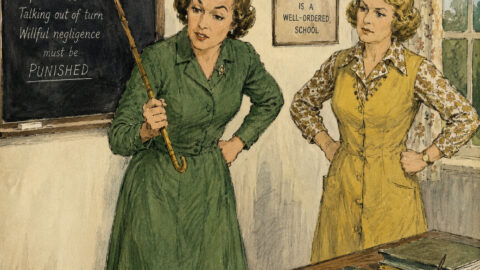
Reflecting on those experiences, I found it difficult to decide which canings were the most severe. The male teachers generally struck harder, relying on force and strength. The female teachers, however, often displayed remarkable accuracy. They seemed able to place the stroke precisely where it would have maximum effect, and their control over the cane was often formidable.
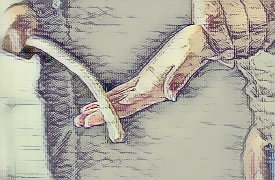
One person stands out above all others in my memory: the deputy headmistress. She possessed a remarkable ability to build tension before the punishment even began. The walk to her office was daunting enough, but once there she would often deliver a stern lecture, making it abundantly clear why the punishment was being administered. She would then flex the cane several times, allowing the sound and sight of it to heighten the sense of dread. Sometimes she would lightly tap the hand before delivering the actual stroke, prolonging the anticipation.
When the cane finally fell, it was usually devastatingly effective. She often aimed directly across the fingertips, ensuring that the pain spread through the entire hand rather than remaining confined to one area. She also appeared to use a slight flicking motion just before impact, which somehow intensified the sting. Whether this was deliberate technique or simply her style of caning, it certainly seemed to increase the punishment’s effectiveness.
Although private canings were often more painful, punishments administered in front of classmates carried a different burden. Standing before the class and receiving the cane was deeply embarrassing. Every eye in the room was focused on the recipient, and the humiliation could sometimes linger longer than the physical pain itself. The private punishments lacked that public embarrassment, but they were often delivered with greater intensity.
Others who attended primary schools during the same era recall somewhat different experiences. In some schools the cane was never used on younger pupils. Instead, discipline consisted mainly of rulers across the hands, slaps to the legs, or occasional slipperings administered by the headmaster.
One former pupil remembers a particularly vivid incident from infant school involving a female teacher who punished him by smacking his bare thigh. Decades later, the memory remains crystal clear. While the exact details of many other school experiences have faded with time, that single punishment has remained firmly lodged in his memory. The event made such an impression that many years later he found himself examining aerial photographs of the now-demolished school site, trying to identify the precise spot where the incident had occurred.
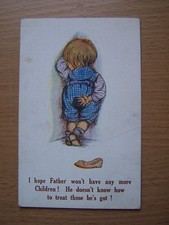
Interestingly, the same individual later received the slipper in junior school from a male teacher. The punishment was administered over a desk in front of the class, yet despite the public nature of the event, he can scarcely remember the details. The number of strokes has long been forgotten, and the physical pain appears to have been minimal. What remained memorable was not the punishment itself but the fact that the gym shoe used belonged to a fellow pupil, who subsequently took great delight in reminding him of this whenever an opportunity arose.
In other schools, punishments followed a graduated scale. Minor offences might result in a slap on the legs or a ruler across the hands. More serious or repeated misbehaviour could lead to a visit to the headmaster, where the slipper awaited. Such occasions were relatively rare and carried an added sense of gravity precisely because they were so uncommon.
One former pupil recalled that slaps to the legs were certainly painful, while the ruler across the hands was often regarded as little more than a token punishment. The headmaster’s slipper, however, was something altogether different. Although administered infrequently, it carried both physical force and psychological weight. Yet even he acknowledged that comparing punishments solely by the amount of pain they caused oversimplifies the experience. The severity of a punishment often depended on a combination of factors: who administered it, where it took place, whether classmates were present, the anticipation beforehand, and the emotional impact afterwards.
These memories illustrate how corporal punishment was experienced differently by different pupils. Some remember the physical pain above all else; others recall the embarrassment, fear, or sense of injustice. Certain punishments have faded almost entirely from memory, while others remain vivid many decades later. What is striking is not merely the variety of punishments used, but the lasting impression they left on those who experienced them, long after the school buildings themselves have disappeared.