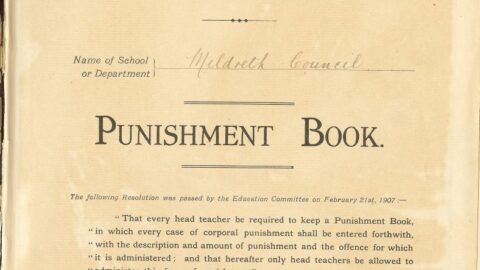
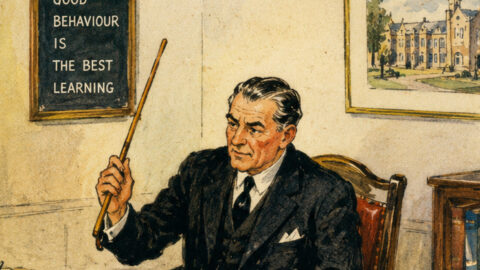
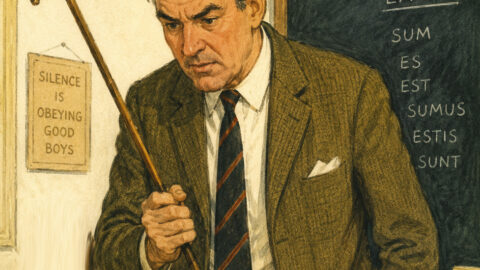
There are some people who collect stamps, others who treasure old postcards or family photographs. My own rather unusual interest lies in something altogether different – the school punishment books of years gone by.
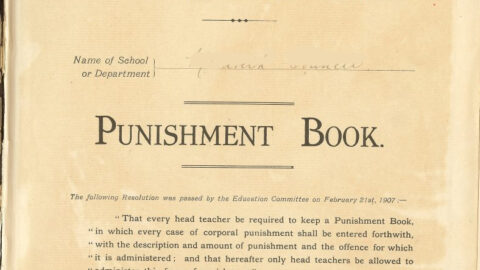
For many years I have been fascinated by these remarkable records, which offer a unique glimpse into school life in Britain and Australia during an era when corporal punishment was regarded as a perfectly ordinary part of education. Over time I have been fortunate enough to acquire several original punishment books, some complete and others only partially preserved. Each one tells its own story, recording not only the names of pupils and their offences but also revealing the attitudes and discipline of the period.
What I find most interesting is the way these books allow us to study the patterns of discipline. Certain pupils appear only once, while others feature repeatedly. It is intriguing to compare the offences committed, the punishments given and whether repeat offenders received harsher treatment. Sometimes two boys committed virtually identical misdemeanours yet received entirely different punishments, raising questions about the discretion exercised by individual headmasters.
The records also reveal differences between schools. Some relied almost exclusively on the cane, while others preferred the slipper or a ruler. In some schools punishment was administered across the hands, in others across the seat of the trousers, and occasionally both methods were employed. These details provide a fascinating insight into educational practice at the time.
For this reason I am always keen to add to my collection. I know that several readers possess copies of old punishment books, and I would be delighted to exchange copies privately and in confidence with anyone willing to do so. If you are interested, please send me an email, marking the subject line PUNISHMENT BOOKS in capital letters. That way your message is much less likely to disappear amongst the mountain of spam that arrives each week.
These records are, after all, valuable historical documents. They preserve an aspect of educational history that has now disappeared entirely.
Looking back, I suspect very few people today would seriously argue for the return of school corporal punishment. Society has changed enormously, and methods of discipline have changed with it. Yet many people who attended school during the 1940s, 50s and 60s do not necessarily condemn the system under which they were educated.
It is often said that “the past is another country”. Schools reflected the values of their time, and physical punishment was widely accepted by parents, teachers and pupils alike. Whether we approve of those practices today is another matter altogether.
My own views have changed considerably over the years. When I first became interested in the history of school discipline, I believed there were occasions when corporal punishment still had a place. Gradually, however, I came to the conclusion that it belongs firmly in the past. Modern education rightly seeks different ways of maintaining order, and I would not support its return to British schools.
Even so, studying its history remains endlessly fascinating.
One interesting aspect of these old records is that they tell only part of the story. Punishment books generally recorded only the most serious punishments, usually canings administered by the headmaster. Lesser punishments often went completely unrecorded.
The slipper, for example, was commonly regarded as a routine disciplinary measure and frequently escaped official documentation altogether. A boy might receive several slipperings during a term without a single entry appearing in the punishment book. Consequently, anyone relying solely on those records would gain a misleading impression of how often corporal punishment was actually used.
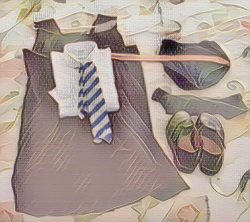
Former pupils often recalled slipperings being administered after games lessons while they were still wearing lightweight PE shorts. Such punishments could be extremely painful despite never appearing in the official records. Teachers varied enormously in the force they used. Some delivered a few measured strokes, while others were remembered for their particularly vigorous approach.
By contrast, the cane was reserved for more serious offences and was almost always entered into the punishment book. Ironically, boys who returned to class after a caning sometimes tried to appear unaffected, putting on a brave face before their classmates. Those who had been slippered often found it much harder to conceal their discomfort.
The public nature of punishment also played an important role in school discipline. In many schools a caning might be administered before a small audience of prefects or teachers, or occasionally in front of a classroom. For many pupils, the embarrassment was remembered far more vividly than the physical pain itself. Former headmasters often remarked that the humiliation associated with public punishment was considered by schools of the time to be an important deterrent.
Some former pupils have recalled that the most uncomfortable experience was not the punishment itself but receiving it while a parent was present. In those circumstances, the emotional impact could far outweigh the physical one.
School log books often provide an even richer source of information than punishment books. Unlike the formal punishment register, which was inspected by education authorities, the log book served as the school’s daily diary. Headmasters frequently noted disciplinary incidents, including slipperings that never appeared elsewhere.
Individual teachers also kept their own private records. In one PE department, each boy had an index card recording every slippering he received. The card noted the teacher responsible, the reason for the punishment, the date, the number of strokes administered and even what the boy happened to be wearing at the time. Such records reveal just how systematic school discipline could be.
Former teachers also recalled occasions when discipline extended beyond the school gates. During the 1950s it was not uncommon for schools to deal with misbehaviour that occurred on the journey home or elsewhere in the local community if complaints were made by residents. By modern standards this seems remarkable, yet at the time few people questioned the school’s authority in such matters.
Boarding schools often operated slightly differently. At one English boarding school during the 1960s, only the headmaster was permitted to use the cane, while ordinary masters relied upon the slipper or other readily available implements. Because only the headmaster’s canings appeared in the punishment book, historians examining those records today would gain only a partial picture of discipline within the school.
Whether one approves or disapproves of corporal punishment, these surviving records remain important historical documents. They tell us not only about discipline but about changing attitudes towards childhood, authority and education.
The punishment book is more than a register of offences and penalties. It is a window into a very different Britain, reminding us just how much schools—and society itself—have changed over the past half-century.