One of the things that is often forgotten when we look back at our schooldays is that the education system was very different from the one we know today. For many years, children left school at the age of fourteen. Later, the leaving age was raised to fifteen, and only afterwards to sixteen. As a result, many of the questions that arise today about older pupils and school discipline simply did not exist in quite the same way.
It also seems to me that children mature differently today. Speaking purely in terms of physical development, and certainly not in any inappropriate sense, a fourteen-year-old girl today often appears far more physically mature than a girl of the same age would have done in the 1950s. Of course, that is only my own observation, but it may help explain why attitudes towards discipline have altered so dramatically over the years.
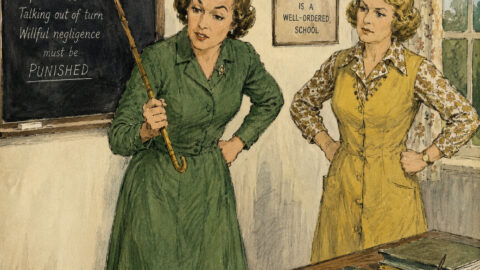
By the 1950s, many secondary schools had begun to recognise the importance of having a senior female member of staff responsible for the welfare and discipline of the girls. Where the headmistress was not a woman, it became increasingly common for a female deputy headmistress or Senior Mistress to be appointed. Much of her responsibility centred upon maintaining standards of behaviour among the girls and dealing with disciplinary matters in a firm but appropriate manner.
Looking back now, I cannot imagine a senior school girl being hand-smacked by a female teacher. In my opinion, hand spanking belonged firmly in the home and was something associated with very young children, usually before they even started school. It was a far more personal and intimate form of punishment than anything one would normally expect to find in a school environment.
By contrast, corporal punishment in schools had become far more formalised. During the late 1950s and into the 1960s, educational authorities became increasingly aware that punishments needed to be administered in ways that could never be misunderstood. In 1960, the Head Teachers’ Association advised headmistresses and senior staff to exercise the greatest care whenever corporal punishment was administered, whether to girls or boys. There had to be no possibility whatsoever that a teacher’s motives could be questioned.
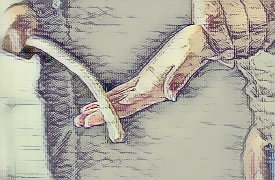
As a result, there was a gradual move away from punishments administered to the seat of the body, even over clothing. Increasingly, schools preferred the cane across the hands, as it was considered more impersonal and less open to misinterpretation. Whatever one’s views on corporal punishment itself, the emphasis was now very much on ensuring that any punishment was carried out with complete propriety and without the slightest suggestion of embarrassment or impropriety.
Corporal punishment itself was carefully regulated in many schools. A girl might receive a specified number of strokes with the cane for serious offences such as persistent disobedience, truancy, bullying or repeated breaches of school rules. The punishment would usually be administered by the headmistress or a senior female member of staff, often in the presence of another female teacher as a witness. The number of strokes was recorded, and strict procedures were followed. Although painful, the intention was that the punishment should be swift, formal and detached, rather than emotional or humiliating.
I also believe that children’s reactions to physical punishment have changed over the years. During the 1940s, a quick smack on the bottom of a nine-year-old by a parent might well have been accepted with little more than a few tears or even none at all. Today, the same punishment would almost certainly produce a much stronger emotional response. Whether this reflects changing attitudes, different parenting styles, or simply greater sensitivity, it is difficult to say.
What I do know is that I cannot imagine any female headmistress of today placing a sixteen-year-old girl across her knee for a spanking, whether over clothing or otherwise. Even imagining such a situation feels completely unacceptable by modern standards. Society has moved on, and expectations about appropriate boundaries between teachers and pupils have changed beyond recognition.
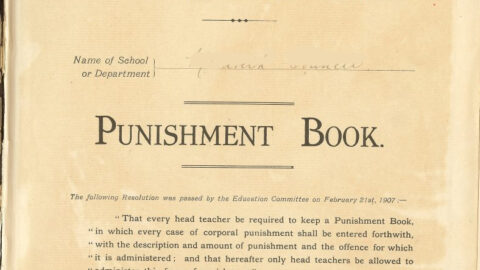
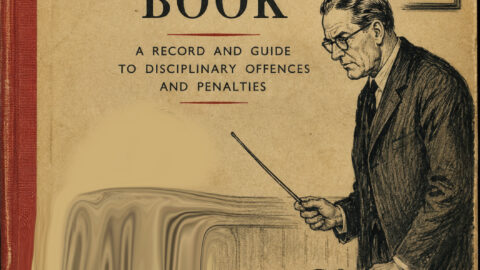
One incident from my own schooldays has remained with me ever since. Because I was something of a teacher’s favourite, another well-behaved pupil and I were occasionally asked to tidy the large stationery cupboard. Old records and archive material were stored there, and one afternoon we discovered several punishment books dating back many years.
Curiosity soon gave way to shock.
Each page contained carefully written entries recording every punishment that had been administered. The girl’s name, her age, the offence she had committed, the punishment imposed, the number of strokes given and the part of the body upon which they had been administered were all meticulously recorded. Reading those entries was quite sobering.
One particular entry stood out. It simply read: “Two strokes and smacking.”
What struck me even more was that several girls’ names appeared repeatedly throughout the books. Clearly, repeated corporal punishment had failed to change their behaviour. It made me wonder how effective such punishments really were if the same pupils found themselves returning again and again to the punishment book.
We assumed that, apart from the single recorded instance of a smacking, all the other entries referred to canings. It did make me wonder, however, whether slipperings, where they were used, would also have been entered into the punishment book, or whether they were sometimes regarded differently. Perhaps someone who worked in schools during those years might know the answer.