Looking back on my school days, it is extraordinary how different attitudes towards discipline were from those we hold today. What would now be considered unacceptable was, at the time, regarded as an ordinary part of school life. Parents expected schools to maintain order, and few questioned the methods that were used to do so.
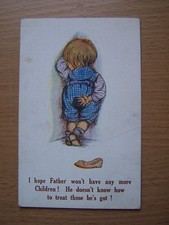
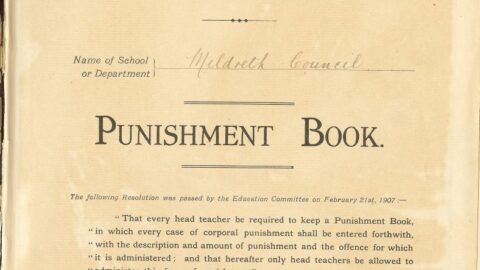
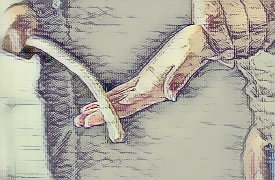
One thing I remember particularly well was the school slipper. Surprisingly, slipperings were not normally entered into the official punishment book because they were not considered serious enough to warrant a formal record. Only canings were usually recorded. This meant that many extremely hard slipperings passed without any official documentation, leaving little evidence of just how frequently they occurred.
Some of the female teachers could administer a remarkably severe slippering. In the gymnasium, where boys were often dressed only in thin PE shorts, the punishment could be especially painful. I vividly remember occasions when a teacher would step back several paces before delivering each stroke with considerable force. Although six strokes was often quoted as the standard punishment, it was by no means unusual for more to be given if the teacher felt the offence deserved it.
The effect was obvious. Boys would return from these punishments with their faces glowing crimson, desperately trying to maintain their composure. Many bit their lips or blinked rapidly in an effort to stop themselves crying. Some succeeded, while others struggled to hide their tears. There was little sympathy from classmates, as everyone knew that tomorrow it might easily be someone else’s turn.
Curiously, this often contrasted with boys who had received the cane. Because canings were officially recorded, there was an air of greater formality surrounding them. Yet I often saw boys return to the classroom wearing a rather smug smile, behaving as though the punishment had hardly affected them. As a younger pupil, this puzzled me enormously. I had always assumed that the cane must be far more painful than the slipper.
Only later, when I reached senior school, did I discover the truth. The cane was indeed the more severe punishment, particularly when it was administered before the rest of the class. In those circumstances, the physical pain was accompanied by the embarrassment of standing before one’s classmates, knowing that every eye was watching. Many boys later admitted that the humiliation was often remembered longer than the pain itself.
This led me to believe that public punishments were generally more effective than private ones. The presence of even a small audience seemed to have a powerful influence on behaviour. A punishment witnessed by classmates carried with it an element of shame that often ensured the offence was never repeated. Indeed, it seemed possible that fewer strokes were needed when the punishment was administered publicly, because the lesson extended beyond the individual to everyone who observed it.
One friend told me that the most humiliating experience of his school years occurred when the headmistress punished him while his mother was present. Although she said very little, simply standing nearby throughout the punishment made the experience unforgettable. He often remarked that it was not the physical pain he remembered most vividly, but the embarrassment of being disciplined in front of a parent.
The official punishment books themselves reveal surprisingly little about everyday school discipline. After infant school, they generally recorded only canings. Earlier infant school records occasionally mention children being smacked, although this might have been done with a ruler rather than by hand.
A far more revealing source of information was often the school’s log book. Headmistresses frequently noted occasions when they had administered the slipper, even though these entries were intended as internal records rather than official reports. Unlike the punishment book, which had to be inspected and signed by the education authority, the log book remained largely for the school’s own use.
Many female teachers also kept personal records. In one PE department that I knew well, every boy had an individual record card. Each entry carefully listed the date of the punishment, the teacher who had administered it, the reason for the offence, the number of strokes given, and even what the boy had been wearing at the time. Looking back, it was a remarkably detailed system of record-keeping for punishments that officially scarcely existed.
Over the years I have collected many memories of slipperings and of boys who later received the cane in the headmistress’s office. There are enough stories to fill several volumes, although I would not wish to monopolise the subject.
One particular incident, however, has always remained in my mind. Around 1955, a local woman came to the school to complain that two eleven-year-old boys had been throwing mud at her washing. She knew their names, and in those days schools commonly dealt with children’s behaviour even when it occurred outside school hours.
The two boys were sent for and freely admitted what they had done. The headmistress listened quietly before informing them that each would receive three strokes of the cane across the seat of the trousers.
The complainant had been invited into the office for tea while the matter was discussed. Once the decision had been made, the headmistress politely suggested that she might prefer to leave before the punishment was carried out. To everyone’s surprise, she declined. Calmly sipping her tea, she explained that she had seen many boys punished during her lifetime and saw no reason to leave now.
The headmistress explained that the cane was normally applied directly to the bare buttocks rather than over clothing. Even this made no difference. The woman remained seated without the slightest sign of discomfort or embarrassment.
The punishment proceeded exactly as described. Each boy was required to receive the prescribed strokes while the woman watched in complete silence. Throughout the entire episode she neither flinched nor commented. Once the punishment had finished, she simply thanked the headmistress, stood up, and quietly left the office.
Years later, during the 1960s, another mother found herself in a similar situation but reacted very differently. She made it clear that she did not wish to witness the punishment and left before it began. She believed the boys would be caned over their trousers, although in reality the punishment was administered over their underpants instead.
These recollections belong to a very different age. Whether one agrees with such methods or not, corporal punishment formed an accepted part of school discipline for generations. It reflected the attitudes of its time, when firmness, obedience and respect for authority were considered essential qualities in a child’s upbringing. Today, those practices have disappeared, leaving behind only the memories of those who experienced them.