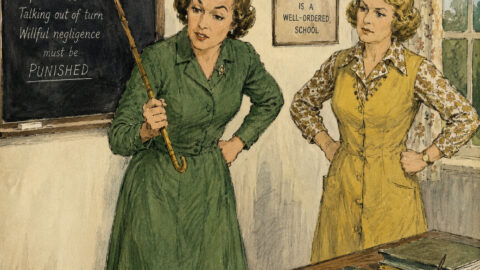
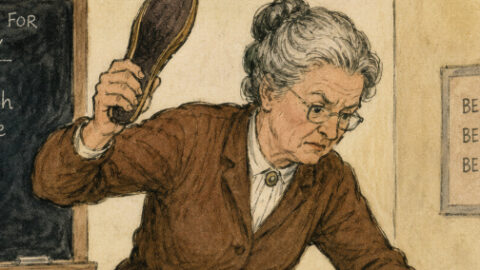
Estelle Skornik, the well-known young French actress from the Renault Clio TV commercials in the UK, once shared in a magazine interview that school felt like a prison to her. She said she was shy, lacked confidence, and that school only made things worse. Her teacher was very strict. One day, when the teacher left the classroom for a few minutes, Estelle went to the front and started imitating her. The teacher returned, caught her, and punished her by putting her over her knee, pulling down her knickers, and spanking her in front of the whole class. Estelle described this as very humiliating.
Estelle talked about this experience when she was 17, in an interview with The Mirror on June 6, 1988. She was remembering something that happened about ten years earlier, and the memory was still vivid. It might have been a private school, but she was surprised that such things happened in Paris at that time.
Stories like Estelle’s are not uncommon. Many people, when asked about their school days, recall moments of embarrassment, fear, or even pain. The classroom, meant to be a place of learning and growth, could sometimes feel more like a battleground. Discipline, especially in the past, was often harsh and public, leaving lasting impressions on young minds.
I haven’t read Laurence Olivier’s biography, but in Ian Gibson’s book “The English Vice – Beating, Sex and Shame in Victorian England and After,” there’s a letter from Olivier to the Observer. He wrote: “The first time a schoolmaster ordered me to take my trousers down, I knew it wasn’t because he doubted he could punish me with them up. Theatre is about teaching the human heart to know itself, and sometimes, when needed, to study and recognize the strange connection between sexuality, bodily functions, and cruelty.”
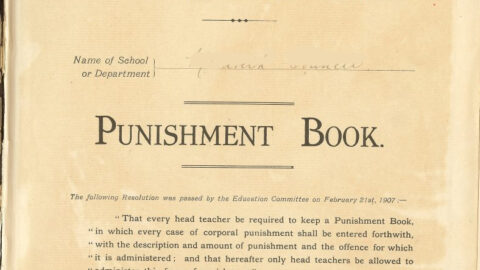
The Victorian era, in particular, was notorious for its strict approach to discipline. Corporal punishment was not just accepted, but expected. Teachers wielded canes, straps, and slippers with authority, believing that pain would instill respect and obedience. For many, the fear of punishment overshadowed the joy of learning.
Former Home Secretary Alan Johnson told Radio 4 that he was caned on the hand in primary school, and on the bottom at Sloane Grammar School in Chelsea. His “crimes” included being late, wearing red socks, and having long hair. He said all of these were caneable offences, though he didn’t agree with caning on the hand. He has called caning barbaric before, but didn’t say that in this interview.
In the same programme, Alan Johnson also shared some interesting thoughts about how left-wing liberalism in the 1960s and 70s affected the quality of education.
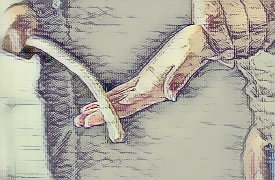
The school discussed in Alan Johnson’s series, though he didn’t attend it, was called Archbishop Michael Ramsey Comprehensive at one point. On its website, a contributor named Peter John asked, “Did any of you ever get the cane, slipper, or belt at Ramsey? What years? How many times? What for? Was it on the hand or the bottom?” He even posted photos showing a strap, tawse, and cane being used on hands and the sole of a plimsoll. Despite these hints, none of the four replies admitted to being punished that way.
In contrast, some former students recall discipline as a rite of passage, a shared experience that bonded classmates together. There are stories of boys comparing cane marks in the playground, or laughing about the creative excuses they invented to avoid punishment. For some, the memory of discipline is tinged with nostalgia, a symbol of a bygone era.
Yet, for others, the scars—emotional or physical—run deeper. The humiliation of being singled out, the sting of the cane, or the shame of public punishment could linger for years. Psychologists have since debated the long-term effects of such discipline, with many arguing that it fostered resentment and anxiety rather than respect.
In France, as in the UK, attitudes toward school discipline have shifted dramatically over the decades. What was once routine is now widely condemned. Laws have changed, and corporal punishment is banned in most European countries. Teachers are encouraged to use positive reinforcement and restorative practices instead.
Still, the memories persist. In online forums and memoirs, adults share stories of strict teachers, dreaded punishments, and the small acts of rebellion that made school bearable. Some recall the terror of hearing their name called, the walk to the front of the class, and the collective silence as punishment was delivered.
Others remember the teachers who showed kindness, who understood that discipline could be firm without being cruel. These teachers left a different kind of mark—one of encouragement and support, helping shy or troubled students find their confidence.
Looking back, childhood memories of school are a patchwork of fear, laughter, shame, and pride. The lessons learned went far beyond the curriculum. They shaped character, resilience, and sometimes, a lifelong questioning of authority.
Today, as we reflect on these stories, we see how much has changed—and how much remains the same. The debate over discipline, respect, and the best way to nurture young minds continues. But perhaps the most important lesson is the one we carry with us: the power of memory, and the ways our earliest experiences shape who we become.