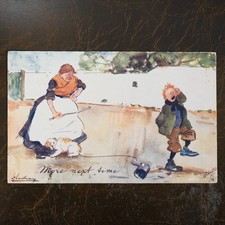
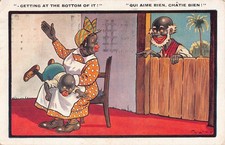
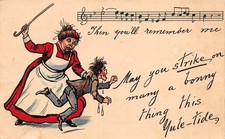
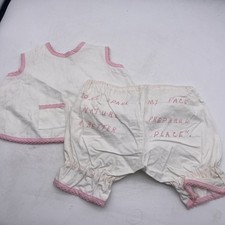
John Smith, aged 60, was told by a court that he had placed his wife, Kim, across his knee and struck her repeatedly following a domestic disagreement concerning financial matters. Magistrates heard that he forced her face down upon a sofa before administering several blows. He later informed police officers that, in his view, she had “deserved” the punishment, alleging that she had shown him “disrespect”.
Earl Spencer Reflects on Preparatory School Years
Charles Spencer, younger brother of Diana, Princess of Wales, has remarked that he wished he had attended a state school rather than the Northamptonshire preparatory school he described as a “hard” environment in which to live and study.
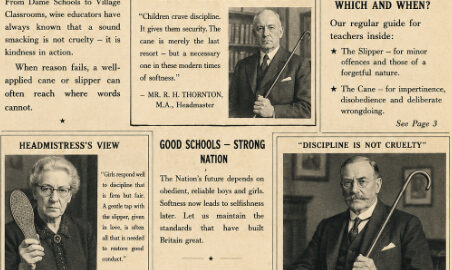
He stated that boys regarded as “stupid or lazy” were subjected to severe corporal punishment on a weekly basis, including canings administered upon the bare buttocks. He did not disclose whether he himself had experienced such treatment.
In a separate article, food writer William Sitwell referred to the memoir In The Blood by former Poet Laureate Andrew Motion. In the book, Motion describes Maidwell Hall as resembling “a prison run by sadistic sociopaths”. He alleged that the then headmaster, Oliver Wyatt, appeared to take pleasure in beating pupils, and that almost any offence could result in a caning administered to the buttocks.
Some schools appear inclined to make disciplinary matters unnecessarily burdensome. While standards of dress are undoubtedly important, it might reasonably be argued that ensuring pupils attend school punctually, properly prepared for lessons, and suitably attired for study should take precedence over disputes concerning footwear which, although not strictly in accordance with regulations, may nevertheless be practical, modest, and appropriate for everyday use within a school environment.
The school in question reportedly offered pupils wearing non-regulation shoes the opportunity to borrow footwear purchased by the school until suitable replacements could be obtained. Such a proposal may strike many observers as somewhat impractical, particularly given the attitudes and sensitivities commonly associated with adolescence.
The executive principal, understandably eager to improve standards at a once-troubled school, appears keen for teachers to devote more time to instruction and less to enforcing uniform regulations. It may, however, be wiser for staff to concentrate principally upon teaching and academic progress rather than scrutinising pupils’ footwear, especially when such items are scarcely visible beneath trousers and are unlikely to disrupt the educational process.
Only if pupils began arriving in genuinely extravagant or inappropriate attire might serious concern be justified. Until then, it would perhaps be preferable not to manufacture unnecessary disputes over comparatively minor matters.
At school I was once instructed to remove my earrings, an order which caused me considerable annoyance. Regulations permitted only the original studs or sleepers worn after ear piercing. Necklaces were allowed solely if they bore a cross, and rings were prohibited entirely.
During the earlier years these rules were generally observed, though by the fourth and fifth years enforcement had become noticeably less strict. I was particularly fond of rings and frequently wore several on each hand. I do not recall ever being reprimanded specifically for them, even on one occasion when I received a sharp blow across the hand.
Earrings, however, were inspected from time to time. On one occasion during my fifth year, following assembly, a teacher conducted an inspection. Rather than the approved studs, I was wearing small horseshoe-shaped earrings. To my astonishment, I was directed back into the hall alongside several other pupils similarly deemed in breach of regulations. We were required to remove the offending items immediately.
I found the matter petty and excessive, yet complied without protest, partly because my boyfriend was present in the hall in his capacity as Head Boy and I had no wish to create a disturbance.
The teacher concerned also taught one of my weekly classes. Still irritated by the earlier incident, I resolved upon a childish act of defiance and arrived at her lesson wearing the largest and most conspicuous earrings I could find. I deliberately swept my hair back so they could not be overlooked, and throughout the lesson exaggerated my movements so that the earrings swung dramatically as I spoke.
The teacher, however, made no comment whatsoever. As an experienced educator, she evidently recognised the behaviour for what it was: the passing rebellion of an immature fifteen-year-old. Wisely, she refused to interrupt the lesson by engaging in an unnecessary confrontation.
With regard to leather uniforms, had such attire been introduced at my own school I would almost certainly have objected on conscientious grounds. I had been a vegetarian since approximately the age of ten and at that time refused not only to eat meat but also to wear animal products.
Although I no longer object to leather clothing, I still abstain from meat. Indeed, I now appreciate the practical value of leather garments, particularly in offering protection under difficult conditions.
From the available photographs, the uniforms in question do appear to have been made from genuine leather, which seems a curious material from which to fashion school attire. There may perhaps have been some connection with local industry that influenced the decision. Even so, the choice remains unusual.
One must also question the practicality of requiring pupils to wear such garments throughout the school day. Leather is heavy, uncomfortable over long periods, and requires specialist cleaning and maintenance. Even minor repairs can prove inconvenient and expensive. Despite its durability, it hardly seems the ideal fabric for everyday school wear.
On the other hand, should corporal punishment have been administered without requiring pupils to adjust their clothing, leather garments may at least have afforded a modest degree of protection against the sting of the cane.
My attempt to provoke the teacher with exaggerated earrings was directed specifically at one particular head of year. After the third year I had little further involvement with her, save for one notable disagreement when she attempted to persuade me to select, as an O-level subject, the only academic discipline at which I excelled. I stubbornly refused. It was a trivial and rather foolish act of defiance, yet at the time it felt important to me and perhaps illustrates how strict disciplinary systems can sometimes produce unintended resentment in unrelated matters.
The leather school uniform under discussion appears indeed to have been genuine and remained in use throughout the 1970s and into the 1980s. It may not have been compulsory, though photographic evidence suggests that it enjoyed a degree of popularity among female pupils. It is more difficult to judge its use among boys, who were often photographed instead in Combined Cadet Force uniforms. I have never encountered another British school offering such an option, and it may well have been a unique, if somewhat eccentric, feature of the period.