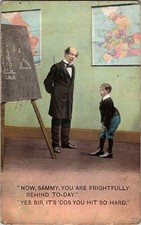
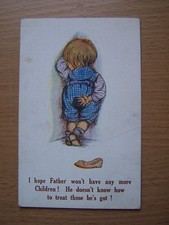
Among boys at traditional schools where corporal punishment was commonplace, receiving the cane often carried a curious social status. While punishment was intended as a deterrent, many boys regarded repeated appearances in the headmaster’s office as a badge of honour. The boy who had been caned several times could acquire a reputation for toughness, defiance, or independence. Enduring the pain without visible distress was often admired by peers and could elevate a boy’s standing within the school hierarchy.
What is less often discussed is how such boys were viewed by the girls in the school.
Did girls see frequently caned boys as rebellious figures with a certain bad-boy appeal? Were they viewed as daring and exciting, willing to challenge authority in ways that many others would not? Or were they regarded simply as troublemakers who lacked self-discipline and common sense?
The answer was probably far from straightforward. Different girls would undoubtedly have held different opinions, just as boys themselves did. Some may have been impressed by a reputation for toughness and nonconformity, particularly if a boy displayed confidence and charisma. Others may have regarded repeated punishment as evidence of immaturity or poor judgement.
For boys, there was often a natural curiosity surrounding any girl who had received corporal punishment. Such incidents were rare in many schools and therefore attracted considerable attention. A boy hearing that a girl had been slippered or otherwise punished might become eager to learn more about the circumstances, partly out of curiosity and partly because the event challenged conventional assumptions about girls’ behaviour and discipline. The mystery surrounding such cases often made them subjects of intense speculation.
Whether girls experienced a similar fascination with punished boys is harder to know. The male tendency to dwell on the details of school punishments may not have been mirrored to the same extent among girls. Nevertheless, it is entirely possible that some girls found the school’s more notorious offenders intriguing. The boys who regularly found themselves in trouble were often among the school’s most visible personalities, attracting attention through their behaviour and reputation.
At my own high school, corporal punishment was a regular feature of school life and was administered according to a fairly predictable schedule. There were two principal punishment sessions each day. The first took place immediately after morning assembly, while the second was held during the latter part of the lunch break. In addition, urgent cases could result in punishment being administered at other times during the day.
Most canings occurred in the principal’s office. The punishment would either be carried out by the principal himself or by another teacher, with the principal present as an official witness. The process was formal and highly visible within the life of the school, even though the actual punishment took place behind closed doors.
The location of the principal’s office contributed significantly to its visibility. Situated beside the central quadrangle and adjacent to a rose garden, it occupied a prominent position within the school grounds. Large windows faced towards these areas, and although those outside could not usually see the punishment itself, the unmistakable sound of the cane could often be heard.
The sharp crack of each stroke echoed across the nearby grounds, leaving little doubt as to what was taking place inside. Students in the vicinity would often pause momentarily as the sounds carried through the air. On certain parts of the garden, it was even possible to glimpse the upper movement of the cane through the office windows, though never enough to see the punishment directly.
The rose garden, in particular, was a popular lunchtime gathering place for girls. Many would eat their lunches there, converse with friends, and enjoy a degree of separation from the noisier areas of the school. As a result, they were often within earshot of the canings taking place in the principal’s office.
Whether these audible reminders of school discipline provoked curiosity, sympathy, indifference, or even admiration is impossible to say with certainty. Yet they formed part of the shared experience of school life. The sounds of punishment, the reputations of those involved, and the stories that circulated afterwards all contributed to a unique social dynamic in which discipline was not merely a private matter between teacher and pupil, but something that became woven into the wider culture of the school itself.