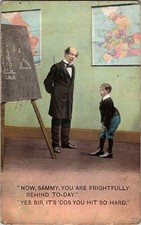
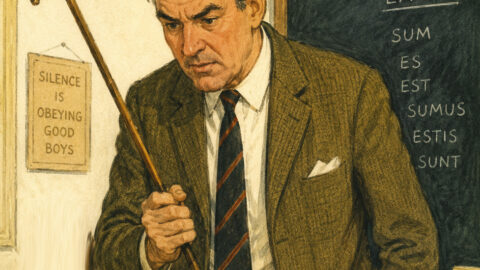
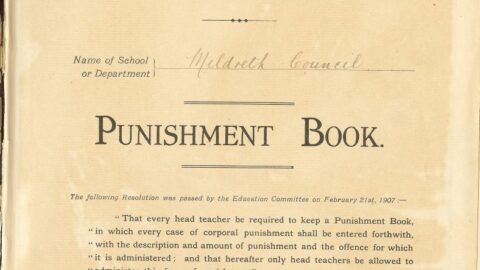
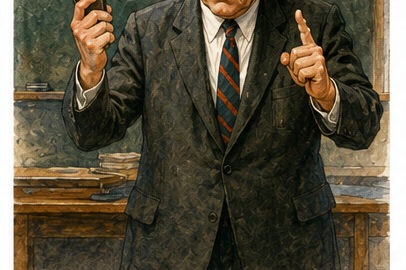
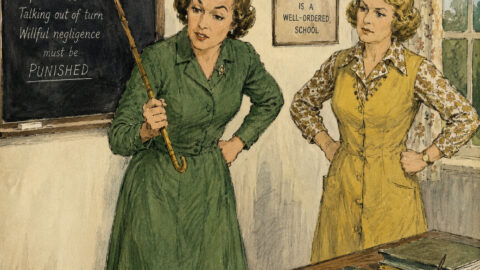
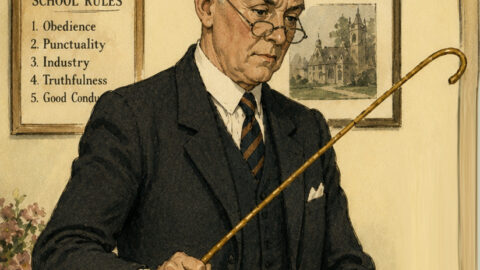
(short pause) School was no escape from discipline. The corridors echoed with the clatter of muddy boots and the nervous whispers of children waiting outside the headmaster’s office. The headmaster, stern in his tweed jacket, wielded a cane with an authority that brooked no argument. In the assembly hall, rows of wooden benches creaked beneath fidgeting children as names were read out, the cane a silent threat that kept order.
(pause) Even the famous were not immune. Prince Philip, Prince Charles, Boy George, John Stapleton, Tony Blair, John Major, Paddy Ashdown—all caned at school. Winston Churchill, birched. Malcolm MacDowell, slippered. The list reads like a roll call of British history, a reminder that the rituals of discipline cut across class and circumstance.
(short pause) Vic Reeves, the comedian, recalls in his book “Me:Moir” the vivid, almost cinematic memory of being slippered at his mixed junior school in the early seventies. The account is colourful, entertaining, and ultimately moving—a testament to how these moments, painful as they were, became woven into the fabric of memory.
(pause) Rupert Everett, too, in his autobiography “Red Carpets and Other Banana Skins,” describes the daily slipperings at his eccentric boarding school. The routine was so ingrained, so much a part of the school’s identity, that it became almost theatrical. Everett, now reprising the Alistair Simm headmistress role in a new St Trinians film, jokes about turning up on set with the appropriate implement—a nod to the enduring legacy of these rituals.
(short pause) Keith Allen, father of pop star Lily Allen and notorious for his role as the Sheriff of Nottingham, spoke candidly in a recent interview with “The Times” about his own canings at Brentwood School in Essex. The headmaster, whose name is etched in memory, would approach with a peculiar hop and skip, cane in hand, transforming the act into a strange, almost ritualistic dance.
(pause) “He actually put a little hop and a skip as he came across his study. And it hurt. Even with the books it hurt. It was a cane and a very whippy one and it would come around the books and hit me on the top of the thigh. Those were the days, eh?” Allen’s words hang in the air, tinged with both nostalgia and disbelief. The reference to ‘books’—perhaps a desperate attempt at protection—remains unexplained, a mystery lost to time.
(short pause) There is debate, even now, about whether the headmaster took pleasure in the act. Andrew Billen, the interviewer and a fellow alumnus, remembers things differently. Was it sadism, or simply the way things were done? The truth, as always, is elusive, buried beneath layers of memory and myth.
(pause) I tend to agree with the theory that these practices, bizarre as they seem now, were almost certainly condoned for lesser offences. The idea of stuffing exercise books down one’s trousers to soften the blow seems lifted from the pages of the Beano, more comic than real. Perhaps several pairs of underpants offered some protection, but the ritual itself was inescapable—a performance in which everyone knew their part.
(short pause) Sting, too, has spoken at length about his experiences. “Six of the best”—such a quaint euphemism for what was, in reality, a brutal ordeal. The process was always the same: after lunch, you were sent up to the main building. The school chapel stood on the left, its air heavy with the lingering scent of incense from Wednesday’s Benediction—a sanctified odour that seemed to bless, or perhaps curse, the proceedings.
(pause) There was always a line of victims, waiting in silence outside the office. The school itself seemed to hold its breath as afternoon classes began. The clock in the hall ticked with agonizing slowness, each second stretching into eternity. The waiting was its own form of torture, a psychological trial that left you feeling condemned before the punishment even began.
(short pause) In those moments, I would project myself into an imagined future—a time when I could look back on these trials with detached amusement, when the pain would be nothing more than a story to tell. “One day, this won’t seem so bad,” I would whisper to myself, clinging to the hope that adulthood would bring perspective, if not relief. Sometimes, the trick worked. Sometimes, it didn’t.
(pause) The office door would creak open, and you never knew if you’d be called first, last, or somewhere in between. There was always the faint hope that something—anything—might intervene: a phone call, a family emergency, even an earthquake. I would imagine rescuing Father Walsh from the rubble, the punishment forgotten in the chaos. But such fantasies rarely came true.
(short pause) When your turn finally came, it was a different kind of heroism that was required. “Take your jacket off and put it over the chair,” the headmaster would say, his voice calm, almost gentle. The study looked out over the playing fields, where boys played football and ran cross-country, oblivious to the drama unfolding inside.
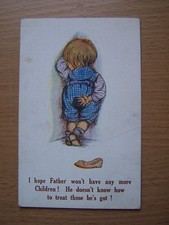
(pause) “Bend over, facing the window.” Sometimes, if you were lucky or clever, you might have an extra pair of underpants beneath your grey flannels. But such precautions were rare, and the idea of an exercise book down your trousers belonged to the realm of comics. The swish of the cane was sudden, the pain sharp and immediate—a cut from a rapier across the cheeks, leaving you breathless and upright in shock.
(short pause) The crucifix by the window seemed to turn away, unwilling to witness the ritual. Was this really being done in his name? The question lingered, unanswered, as the cane rose and fell, each stroke a lesson in obedience and endurance.