Accounts of school discipline from the 1950s through the 1980s reveal a striking variety in both methods and attitudes toward corporal punishment. While some schools adhered to formal rules and standard implements, others appear to have developed their own distinctive — and sometimes highly unconventional — disciplinary cultures.
One particularly intriguing example comes from Breeze Hill Secondary School in Oldham. Former pupils frequently mention the woodwork teacher, Mr Brian Lord, who reportedly administered corporal punishment to boys regularly and, on occasion, to girls as well. Among the many stories attached to him is repeated mention of a curious homemade implement known simply as “the wooden fish.” Although no detailed description has yet surfaced, one former pupil even claimed to have made it during a woodwork lesson. Alongside the fish, Mr Lord was also said to use a slipper. Judging by the recollections of ex-pupils, he was far from a popular figure.
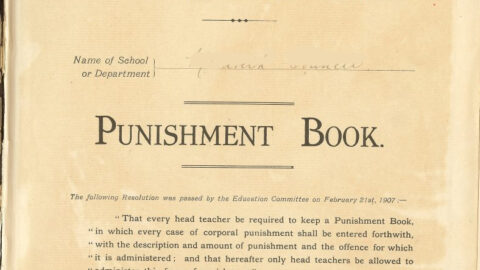
Surviving punishment-book extracts from 1963 and 1978 provide a fascinating glimpse into how discipline remained remarkably consistent across a fifteen-year period. The records do not specify the implements used, but the comments strongly suggest that the strap and slipper were the most common. The books also reveal a clear division in punishment practices: boys were usually punished on the seat, while girls more commonly received punishment across the hands. What stands out is how little the overall system appears to have changed over time.
Research into other schools — including Brookway High, Deane Grammar, Eccles C of E, and Ellesmere Park Secondary — suggests similarly strict disciplinary traditions. Several former pupils recall the bottom being treated as the primary target for punishment, especially for boys, though in some cases girls were also subjected to similar treatment.
One former grammar school pupil, educated between 1957 and 1966, remembered a French teacher who made discipline part of weekly vocabulary tests. Pupils were expected to score at least 15 out of 20. For every incorrect answer below the pass mark, boys received a hard whack across the seat of their trousers. Some boys accumulated three or four strokes at a time, and it was apparently common to see pupils bent over the teacher’s desk during lessons.
Yet these same recollections also emphasize that not all teachers embraced corporal punishment. In many schools, only a small minority used it frequently. Formal canings for serious offences were usually reserved for the headmaster or deputy head, while classroom punishments more often involved rulers, slippers, or plimsolls. One vivid memory describes a metalwork teacher caning a second-year pupil after a dangerous prank involving hot metal. Although the injury caused was minor, the teacher responded immediately and publicly with three severe strokes of the cane. According to the witness, most of the class believed the punishment was deserved, viewing it as a warning about the consequences of reckless behaviour.
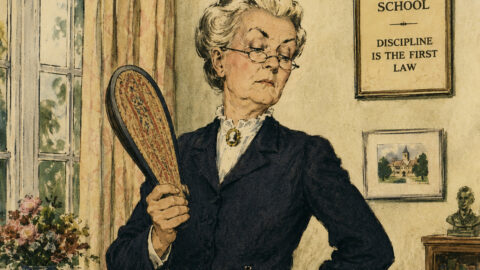
The subject of unconventional implements repeatedly surfaces in former pupils’ accounts. Beyond canes and straps, recollections include wooden paddles, heavy books, rulers, spoons, spatulas, hairbrushes, cricket bats, table-tennis bats, and various homemade devices. Such objects often seem to reflect the personality of individual teachers as much as any official disciplinary policy. In many cases, teachers who improvised with unusual implements were remembered as unpredictable or maverick figures.
Among the more remarkable cases is Brookway High School, where recollections suggest that corporal punishment may have continued right up to — and perhaps even beyond — its legal abolition in state schools during the late 1980s.
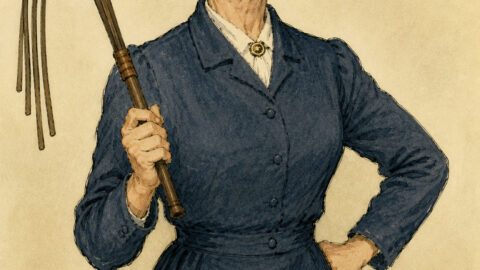
Former pupils consistently describe the headmistress, Miss Winifred Blackburn, as an imposing and intimidating presence. Tall, stern, and remembered for her enormous hands, she became something of a legendary figure among pupils. One former student recalled still “having her handprints” after being smacked in 1988, raising questions about whether such punishments continued after the official ban.
Numerous former pupils independently describe remarkably similar scenes. Miss Blackburn was said to patrol corridors searching for misbehaving pupils who had been sent outside classrooms. Punishments were often carried out publicly: pupils might be brought before the class or disciplined during assembly. Several accounts describe her removing rings or bracelets before delivering repeated smacks across a pupil’s backside, sometimes in front of classmates. One former pupil vividly remembered seeing her approach while standing outside class and rushing back into the classroom in panic, desperate to avoid her attention.
Another recalled being made to bend over before receiving a spanking for using the wrong staircase. The consistency of these stories across different former pupils strongly suggests that such punishments formed part of the school’s culture for many years.
What emerges from all these recollections is a complex picture of school discipline during the period. Some schools relied on formal, highly regulated systems, while others appear to have operated according to the personalities and preferences of individual teachers or headteachers. The contrast between strict institutional discipline and improvised personal methods makes these accounts particularly revealing, offering a vivid insight into a very different educational era.