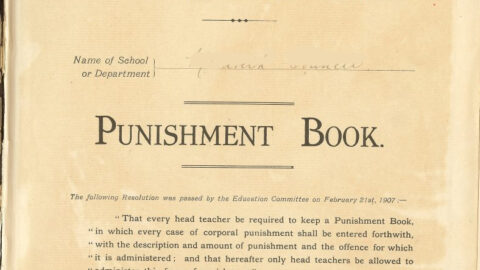
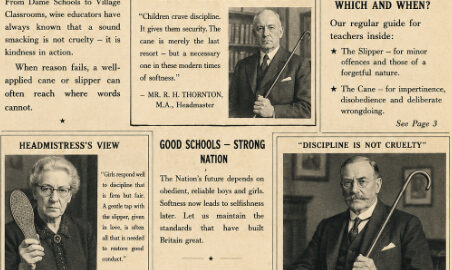
Debate has long persisted regarding whether state schools in England were legally obliged to maintain records of corporal punishment. While it may not have been an explicit statutory requirement in every case, Local Education Authorities (LEAs) commonly expected such records to be kept. The entries in these punishment books were often brief and formulaic, typically recording only the pupil’s name and age, the reason for the punishment, the member of staff administering it, the date, and a minimal description such as “two strokes of the cane.”
It is difficult to determine with certainty whether every LEA imposed this requirement uniformly, though many certainly did. Consequently, it is possible, though perhaps unlikely, that some schools did not maintain a formal punishment register. In one account, a former pupil remarked that punishments “were, I suppose, formally recorded,” suggesting he had no direct knowledge of the existence of such a volume.
A more probable explanation for his inability to locate the punishment book in the First Master’s office is that it was stored elsewhere, perhaps in the office of the school secretary or another administrative department. There were practical reasons for such arrangements. Masters authorised to administer corporal punishment were frequently absent on official business or otherwise unavailable, and their offices were often locked. In some schools spare keys were difficult to obtain, and cleaners or caretakers might be the only individuals with access after school hours.
Many schools also operated under governance rules permitting certain officials, such as the chairman of governors, to inspect punishment records without prior notice. For this reason, it was more practical for the register to be held in a central administrative location where it remained accessible whenever the school was open. Where several members of staff were authorised to administer corporal punishment, a centrally maintained book also ensured consistency of record keeping.
The preservation and accessibility of these records appear to have varied considerably between institutions, and practices were often shaped more by custom than by any universal regulation. Some former pupils and staff have attempted to trace such records many decades later, often in connection with autobiographical or historical research.
One recollection concerns a boy whose mother’s cleaner warned him that his behaviour would eventually lead to a caning at school. She even proposed that one of her daughters, who had recently been punished in that manner, should describe the experience to him. The child, understandably apprehensive, feared not only the account itself but also the strict disposition of the young woman concerned. Yet the matter was never raised again. Looking back many years later, it seemed likely that the older girl had simply been unwilling to admit to such a punishment in front of a much younger child.
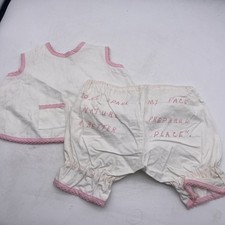
It is believed that, at the senior school in question, girls at the time were caned over their undergarments. With knowledge of the approximate date and the pupil’s full name, the former pupil later wondered whether any surviving punishment book might reveal the circumstances of the incident. Such records, if they still exist, would now be more than seventy years old.
Accounts from former teachers also illustrate the variety of disciplinary practices in British schools. In one boys’ grammar school, classroom teachers were authorised to administer up to two strokes of the strap. More severe cases were referred to the deputy headmaster, who employed the cane across the buttocks.
A young female teacher recalled that she was authorised to use the strap only with younger pupils in Forms One and Two. Older boys, she believed, often preferred punishment at her hands to referral to the deputy headmaster, whose reputation inspired considerable fear.
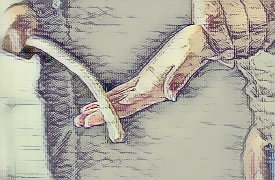
When corporal punishment was to be administered, a pupil would be sent to the office to collect both the strap and the punishment register. Several straps were kept, including lighter implements for younger boys and heavier, split-ended versions for older pupils. Punishments were carried out before the class and entered into the register immediately afterwards. According to this teacher, a single stroke was generally sufficient, and most staff similarly favoured restraint. Two strokes were reserved for more serious offences or for boys who attempted to move their hands during the punishment.
The question of whether all such punishments were formally recorded remains uncertain. At many schools, only punishments administered by senior staff appear to have been entered in official registers, while routine classroom punishments often went undocumented. Yet regulations in some authorities stipulated that every instance of corporal punishment should be recorded. The existence of a single centrally held punishment book may have contributed to inconsistency, as teachers could find it inconvenient to obtain and return the register for relatively minor incidents.
Some schools later consolidated individual classroom records into a central volume, particularly where inspection by diocesan authorities or LEAs was required. In religious schools especially, governors were often expected to review disciplinary records periodically.
Practical difficulties also arose during the administration of the strap. Boys occasionally attempted to withdraw their hands at the last moment, risking injury both to themselves and to the teacher. Scottish schools, where the tawse was widely used, developed methods intended to prevent such evasions. One common approach required the pupil to rest his hand on a desk, thereby reducing the likelihood of sudden movement. Teachers observed that this arrangement not only protected the master but also increased the force of the stroke because of the longer arc travelled by the strap.
Former pupils frequently remarked upon the inconsistency of disciplinary procedures between schools. In some institutions classroom punishments, such as slipperings administered by physical education masters, were commonplace yet never officially recorded. Formal canings by the headmaster, however, were almost invariably entered into the punishment book. Some boys even attempted to read the register upside down while standing before the headmaster’s desk in order to discover in advance how many strokes they were to receive.
Private schools often appear to have operated under rather different assumptions. Such institutions generally resisted external oversight and placed emphasis upon the close personal knowledge masters were expected to have of their pupils. Many parents, particularly fathers, regarded strict corporal discipline as an accepted part of education and character formation, provided that no lasting harm resulted. In that context, elaborate systems of formal recording may have been considered unnecessary.