The final evening of dancing in 1948 took place on 5 November. The Finlaysons arranged a combined class for the occasion, complete with balloons and supper. As it was Guy Fawkes Night, several day boys brought fireworks to the gathering and distributed them among the boarders. What began as harmless amusement soon descended into disorder. One participant later recalled: “I remember throwing fireworks onto the floor and retreating to the other end of the hall while the girls cried out as they exploded.”
Chester Eagle described the scene in similar terms: “The dancing begins. Firecrackers explode. Boys appear briefly in the doorway and then vanish. More fireworks burst upon the floor. Dresses are damaged. Pansy is unable to maintain order. Janet possesses no authority. The disturbances continue for what seems an interminable period.”
Supper was held in another Merton Hall building farther along Anderson Street, where the disorder persisted. Thomas Lyle (OM 1951), then aged fifteen, later wrote of his astonishment and dismay: “One boy ignited a homemade explosive device in the middle of Anderson Street and blasted a hole in the roadway. During supper, several boys concealed fireworks beneath the girls’ chairs while others distracted them. At the time we found the matter amusing. Unfortunately, the polished floor of the supper room was scorched, and several girls’ dresses were burned.”
Miss Dorothy Ross, headmistress of Merton Hall, was incensed and lodged a formal complaint with Sutcliffe. Relations between the two had long been strained, owing in part to her progressive and unconventional views on education. During the following days pupils were questioned, stern lectures on conduct were delivered, and Friday was announced as the day upon which disciplinary measures would be imposed.
Lyle later recalled his apprehension when Sutcliffe convened a formal assembly in the hall. “I was utterly terrified. The headmaster strode onto the stage and struck his umbrella upon the table so forcefully that it broke in two. No one dared laugh. After several minutes of restrained but unmistakable anger, he announced the immediate expulsion of eighteen boys.”
Lyle himself escaped expulsion, though he was among nine boys sentenced to corporal punishment, to be administered by the school captain, Ken James (OM 1948), in the headmaster’s study. Eagle remembered the occasion vividly: “Certain boys, whose names he read aloud, were ordered to report directly to his study for caning. Others were instructed to leave the school immediately, though they would be permitted to return for their final examinations. A third group was told to depart at once and never return. We watched them leave in stunned silence.”
Eagle later described the atmosphere of quiet that settled over the school in the weeks following these events. He believed Sutcliffe’s eventual downfall resulted largely from pressure exerted by parents. Yet the Council had not always remained detached from matters of school discipline. On earlier occasions, appeals by teachers, pupils, or parents had caused it to intervene in decisions taken by headmasters. In this instance, a combination of parental pressure and an opportunity to secure Sutcliffe’s removal prompted the Council to overturn his disciplinary rulings.
Sutcliffe was subsequently compelled to announce both the reversal of his decisions and his own resignation before the assembled school at an informal gathering in the quadrangle beside the chapel steps. Eagle recalled the occasion: “We sensed the moment would be painful, though we were curious to hear what he would say. He informed us that the Council had seen fit to overrule his decisions and that those who had been expelled would return. It was clearly difficult for him, though he never lost composure. When he said, ‘I shall take up another position next year,’ we realised he had resigned.”
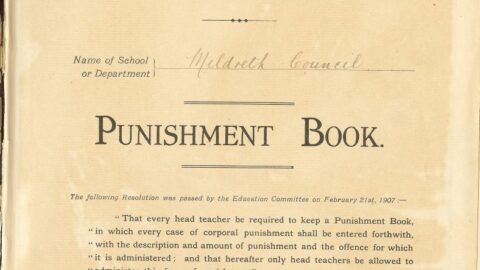
Sir Brian Hone later reflected upon discipline during his own tenure as headmaster: “As was his custom, Hone introduced a measure of restraint into disciplinary practice. If a master wished to impose a Saturday detention—the severest penalty ordinarily available, since Hone had abolished most corporal punishment—the relevant disciplinary card, specifying the offence, had to be signed by both a parent and the boy’s housemaster. Because this procedure discouraged vindictive or frivolous punishments, masters became more judicious in their decisions.”
The following observations are drawn from a 1990 history of Geelong Grammar School.
Mr John Bracebridge Wilson, Headmaster, wrote in the school’s 1863 prospectus: “In conducting the discipline of the school, the Headmaster has always kept before him the following principles: on the part of the masters, strict justice combined with kindness and forbearance; on the part of the boys, truthfulness and obedience. Falsehood in word or deed, and wilful disobedience, are the only offences for which corporal punishment is inflicted, and even then it is seldom necessary.”
The history continues: “Wilson maintained high standards and endeavoured to uphold the principle expressed in his 1863 prospectus: that boys should be encouraged to take pleasure in their studies under masters who themselves delighted in teaching. Unfortunately, qualities that came naturally to a gentle yet authoritative man such as Wilson—a man of transparent sincerity who cared deeply for boys, even the troublesome ones—were beyond the capacities of many colonial schoolmasters. They struggled to maintain order in a school where corporal punishment, detentions, and written punishments were discouraged, and where personal example, rather than mere rhetoric, was regarded as essential.”
“Gradually, however, Wilson was obliged to moderate his ideals and even to employ the tawse in support of weaker masters. He also abandoned his opposition to written punishments and made detentions the most frequently imposed sanction. Perhaps the school had grown too large for the enlightened methods he had successfully practised at the high school. Nevertheless, he remained renowned for his fairness, humanity, and gentleness, qualities that stood in marked contrast to the harsh disciplinary practices common in many schools of the period.”