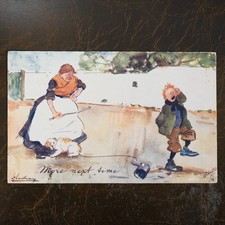
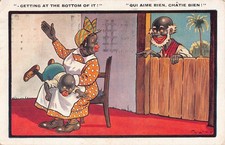
The recollections of former pupils suggest that McCristal administered discipline with firmness, though not with caprice. One former boarder recalled an occasion in which a boy attempted to pass a note to a day student requesting that cigarettes be purchased for him after classes. The note was intercepted by McCristal, and the offender received a caning rather than the cigarettes he had sought. Former students consistently maintained that his punishments were measured and impartial.
“At school he was strict,” one former pupil recalled, “and his discipline included the use of the strap. Former students maintain that it was reserved for serious offences and that his treatment of boys was fair.”
Criticism of McCristal was difficult to find among those who remembered him. Nearly all descriptions of him employed the same terms: cultivated, kind, scholarly, and tolerant. Only a single former student considered his use of corporal punishment excessive.
St Bede’s
Brother Julian, the Headmaster, was remembered as a formidable classroom presence. In each class there was usually one gifted student capable of interpreting Julian’s often obscure instructions and of answering the more difficult questions that arose. Yet when that pupil was absent, or failed in his task, the atmosphere could quickly become tense.
Former students recalled that Julian would send a messenger to fetch a long cane kept in his office. Boys who had failed to master some detail of Latin grammar were summoned to the front of the classroom and punished before their classmates. Many returned to their desks struggling to conceal tears, their hands stinging painfully from the blows. Students devised various means of easing the discomfort, from pressing their fingers against the cold metal fittings of their desks to hardening their hands through endless games of handball.
Despite the severity of such discipline, Julian’s classes were seldom regarded as dull. One former pupil remembered an extraordinary incident in which Julian became involved in a physical altercation with a student known as “Gabby” Gray. The confrontation moved along the classroom aisle while the boys watched in alarm and uncertainty. When the student finally withdrew, Julian declared him expelled. The boy gathered his belongings and departed, remarking that he had intended to leave the following week in any case. Even at the time, many members of the class regarded the incident as unbecoming of a school principal, regardless of the student’s conduct.
In the earliest years of St Bede’s, corporal punishment had reportedly been employed sparingly. Senior boys, taught in very small classes, were often treated as young adults, and cordial relations frequently existed between masters and pupils. George Laube, who had previously attended De La Salle Malvern in 1937, later observed that St Bede’s had initially possessed a much more relaxed atmosphere than his former school, where the strap was used frequently. During the 1940s, however, corporal punishment became markedly more common.
Even Brothers who were respected as capable teachers employed the strap or a ruler applied across the hand. Several reasons were offered for this development: classes became larger and more difficult to manage, changes in staff introduced teachers less sympathetic to the earlier spirit of familiarity, and corporal punishment was then widely regarded as an indispensable feature of boys’ education. Former students reflected with particular unease upon the fact that punishment was often inflicted upon boys who struggled academically or possessed limited ability.
The classroom of the wartime years was frequently described as austere and monotonous. Long hours devoted to algebra or medieval literature seemed to pass with painful slowness. In an era before ballpoint pens, boys wrote with steel nibs attached to wooden holders, which were often chewed absent-mindedly during lessons.
When a nib became too worn for writing, inventive pupils might fasten it to a paper dart and attempt to lodge it in the classroom ceiling while the master’s attention was elsewhere. Between classes there were opportunities for other forms of mischief: boys armed with improvised pea-shooters or elastic bands launched pellets across the room, often provoking swift punishment when discovered by the Brothers upon their return.
There were also boys inclined toward less harmless forms of behaviour. Some would place blotting paper in a classmate’s inkwell so that the next use of the pen produced a large blot of ink, ruining neat work and frequently resulting in punishment for the unfortunate owner of the exercise book.
At play, disputes could arise during games of marbles when older boys introduced steel ball-bearings in an effort to scatter the marbles from the ring. Younger boys sometimes protested under the accepted rules of the game, though complaints were seldom effective against larger and more intimidating opponents. Such quarrels occasionally ended in fist fights and, if discovered, further punishment from the Brothers.