One individual described his first experience of being caned as an adult. He was required to bend over a padded bench while his wrists and ankles were loosely secured. The cane was delivered without any dramatic run-up; there was only a brief swish followed by a sharp crack as it landed across his bare buttocks. The pain that followed was immediate and overwhelming. After the first stroke he was already in shock, yet five more strokes followed despite his protests and pleas. Reflecting on the experience twenty years later, he remarked that his curiosity had been thoroughly satisfied and that he had never sought to repeat the experience.
Another contributor, an American with no personal experience of school caning or slippering, explained his fascination with the traditions of British school discipline, particularly as practiced in independent schools. What interested him was not merely the punishment itself but the ritual surrounding it—the formal expectations, the acceptance of corporal punishment as a disciplinary measure, and the apparent understanding between teacher and pupil regarding its use.
He noted that, given the opportunity to experience an authentic recreation administered by someone genuinely familiar with traditional British school discipline, he would willingly submit to six strokes of the cane simply to understand the experience firsthand.
A recurring theme was the reputation of the cane. One former recipient cautioned against underestimating its severity, observing that a properly administered stroke from a traditional rattan school cane could generate remarkable pain. In his view, anyone volunteering to receive six genuine strokes would find the experience far more challenging than expected.
Several contributors discussed the contradictory descriptions often given of caning. Some recipients describe it as the worst pain they have ever experienced, while others point out that generations of schoolboys endured it and often managed to remain relatively composed. Similarly, accounts of the physical effects vary widely. Some reports describe severe bruising and marks that last for weeks, while others mention little more than temporary red stripes that fade within hours.
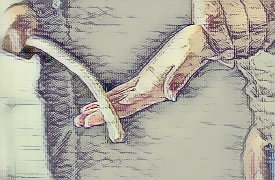
One participant reflected on his own experience of being struck on the bare buttocks with a rigid rod-like implement rather than a rattan cane. The punishment left extensive bruising that worsened over several days before eventually fading. Although painful, he did not find it significantly more painful than other forms of corporal punishment he had experienced. What stood out most was the unusual sensation: initial impact without immediate pain, followed by a delayed but intense burning sensation. He remained curious about how a genuine rattan school cane, used by someone skilled in its application, might differ.
A former recipient who was caned at the age of nineteen recalled the experience very differently. For him, it was unquestionably the most intense pain he had ever felt. He admitted that he was unable to endure it silently and involuntarily cried out after each stroke. The marks initially appeared as six raised welts across his buttocks and later developed into pronounced tramline-like stripes that remained visible for approximately two weeks.
Another contributor offered a more analytical perspective, drawing on experiences from a period when corporal punishment of boys in secondary schools was widely accepted. He emphasized that no two canings were exactly alike. Practices varied between schools, between individual teachers, and even between different pupils. Some teachers were more skilled and more forceful than others, while the canes themselves differed in size, weight, flexibility, and condition.
According to this account, delivering a severe stroke is less a matter of brute strength than of timing and technique. The effective use of the wrist, arm, and body movement can greatly influence the force generated. The physical characteristics of the cane are equally important. He argued that heavier and more flexible canes generally produced more severe results and warned that soaking a cane to increase flexibility could significantly increase both its weight and impact.
The physical build and posture of the recipient also affect the outcome. A large, muscular, well-padded buttocks tends to absorb impact differently from a smaller, bony, or softer one. The position adopted during punishment can alter the effect dramatically. Some postures allow the cane to sink into the target area and raise concentrated welts, while others cause the cane to bend and wrap around the body, spreading the force over a larger area and producing less severe marking.
The discussion eventually broadened into the relationship between punishment, psychology, and adult interests. One individual described developing a fascination with spanking during childhood after witnessing school discipline involving a paddle. Throughout adolescence and adulthood, he found himself preoccupied with fantasies about receiving corporal punishment. However, when he eventually experienced real paddlings as a teenager, he found them painful and humiliating rather than pleasurable.
As an adult, he later entered a consensual relationship in which disciplinary paddling formed part of an agreed dynamic. He observed that although the anticipation could carry an element of excitement, the actual punishment remained genuinely painful and served as an effective deterrent. In his experience, the reality of punishment and the fantasy surrounding it were very different things.
He concluded by noting that people often laugh at or misunderstand such interests. Yet he maintained that genuinely forceful corporal punishment is far from amusing when experienced firsthand. Whatever one’s views on the subject, he argued, a serious paddling or caning is a painful and memorable event rather than a trivial one.