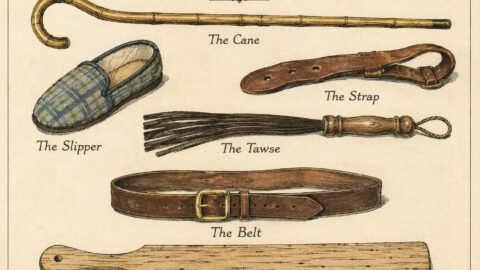
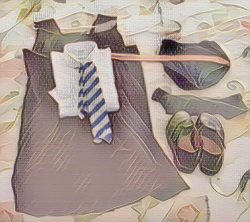
Among the most memorable figures was Mr Deakin, a teacher remembered as much for his unusual appearance as for his disciplinary methods. He regularly wore sandals with socks, but it was not his fashion sense that pupils recalled most vividly. When tempers flared, one sandal would be removed and used as an improvised slipper, delivering swift justice to unfortunate boys. If a pupil proved particularly troublesome, he might even find himself locked in a cupboard for a period to “cool off”—a punishment that would be unthinkable in today’s schools.
Another feared member of staff was Mr Da Lima, whose reputation rested firmly on his mastery of the cane. Unlike many teachers who administered punishment with measured restraint, Mr Da Lima was said to take a run-up before delivering each stroke, adding both drama and dread to the occasion. Pupils who experienced his discipline rarely wished to repeat the experience, and many quickly learned that avoiding trouble was preferable to facing his formidable technique.
Corporal punishment was not confined to serious offences. In some classrooms, it appeared almost routine. One teacher, Mr Best, reportedly believed that coughing during lessons deserved the cane, while Mr Herod punished pupils who failed to achieve at least eight marks out of ten in the weekly Monday morning spelling test. Academic failure, however slight, could therefore result not merely in disappointment but in physical pain.
The atmosphere surrounding corporal punishment was further reinforced when K. Foreman proudly announced that he had been granted official authority to cane pupils. To many boys, this declaration confirmed what they already knew—that the cane remained an accepted and respected instrument of school discipline.
Not every teacher relied upon fear alone. Many were remembered with genuine affection despite the strict standards they maintained.
Mr Papps, always recognisable by the flower in his buttonhole, earned lasting respect as a kind and approachable master. Mr Dixon, the chemistry teacher, and Mr Barrow, who taught biology, were regarded as outstanding educators who inspired genuine enthusiasm for their subjects.
The Physical Education department produced memories of a rather different sort. Mr Thomas once punished an entire class with the slipper after the boys attempted to deceive him. Instead of completing the required two laps around the block, they ran only one before spending the remaining time relaxing in a nearby park, hoping their absence would go unnoticed. Their plan failed, and every member of the class received the slipper for their dishonesty.
Other teachers also left lasting impressions. Mr Whetnall, an Olympic badminton silver medallist, sometimes appeared frustrated that his sporting expertise was not fully appreciated by his pupils. Mr Nash later left teaching altogether to manage the successful 1980s pop group Japan. Mr Preston, remembered fondly by former pupils, retained his passion for music long after leaving the classroom, while Mr Izen, the clarinet teacher, quietly guided many beginners through their first musical lessons.
For one former pupil, corporal punishment became an unfortunate but familiar part of school life. During his years at school he was caned on five separate occasions. The harshest punishment came after he deliberately missed a lunchtime detention. His intention was not to receive the cane—he simply wanted to play football with his friends. The decision proved costly. Summoned to the Headmaster’s office after lunch, he was ordered to bend over and received six sharp strokes of the cane across his backside.
The pain was immediate and severe. Cane marks often remained visible for hours, sometimes days, and sitting comfortably afterwards could be difficult. That evening his younger brother saw the angry red welts left by the punishment and became deeply anxious, knowing that he himself would be starting at the same school the following year.
Strangely, among many schoolboys there existed an unspoken culture surrounding corporal punishment. Although no official competition existed, some pupils quietly boasted about the number of times they had been caned, wearing their punishments almost as badges of honour. It was a curious mixture of bravado and youthful pride, masking the fear that almost everyone felt when summoned to the Headmaster’s office.
Most punishments resulted from attempts to avoid being caught rather than from deliberately seeking trouble. One memorable incident occurred when, encouraged by a group of girls he hoped to impress, the pupil fired a paper pellet across the classroom at a supply teacher. The teacher exploded with anger, wrongly accusing several innocent boys before the culprit finally admitted responsibility. There was little discussion. He was immediately marched to the Headmaster’s office to receive his punishment.
Another episode reflected the harmless rebellion common among teenagers. At the beginning of a new school year, pupils were issued with fresh exercise books. Almost immediately they decorated the covers with the names and logos of their favourite rock groups and football clubs. The following week, a young Social and Moral Education teacher ordered everyone to cover the books properly.
Rather than comply, a small group devised a new plan. They carefully covered their books—not with plain paper, but with even larger photographs of their favourite bands and football teams. It was a deliberate attempt to test the patience and authority of their new teacher, pushing the boundaries to discover just how much they could get away with.