There are some schoolboy mistakes which, although innocent enough in intention, seem almost destined to end in punishment. Looking back over the years, I can see that I made more than one such error, and while I never deliberately set out to earn a beating, the likelihood of doing so was, in hindsight, remarkably high.
It began in my third week at school when we were instructed to cover our exercise books. Proud of my devotion to football, I carefully wrapped mine in the sports pages of a newspaper, taking particular care to circle and highlight the results of my favourite team. I thought it looked splendid. It was only when I arrived at school that I realised my classmates had adopted a far more sensible approach. Their books were neatly covered with plain wallpaper off-cuts, brown paper, or other modest materials. Mine stood out like a beacon.
The following week the exercise books were returned to the class—except mine. Instead, I was summoned to the front of the room, where the master handed it back to me and instructed me to explain to the class exactly what I had done. My embarrassed explanation was greeted with great amusement by my classmates. Matters did not end there. I was then sent to repeat the same explanation before the Headmaster.
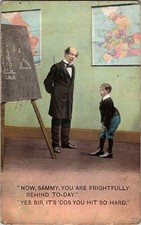
The Headmaster listened patiently before delivering a short lecture. I can still remember his words. “For a bright boy,” he said, “you really can be very foolish.” Whether he actually said “foolish” or “stupid” has faded with time, but what followed has not. He reached for the cane.
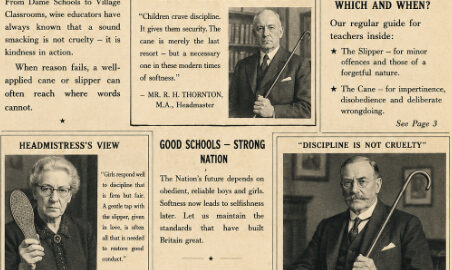
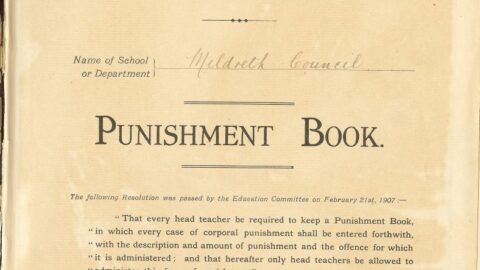
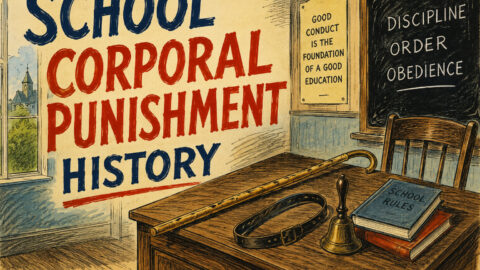
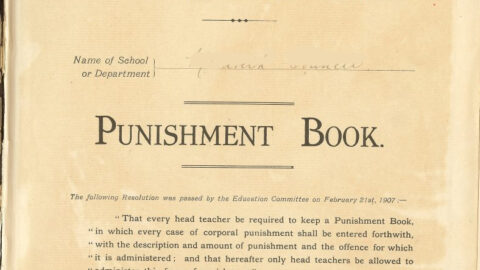
In those days, corporal punishment was accepted as part of school discipline. Yet even then, there existed a clear hierarchy of penalties. The slipper occupied the lower end of the scale; the cane stood at the top. Both caused pain, but they carried very different meanings.
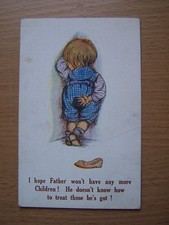
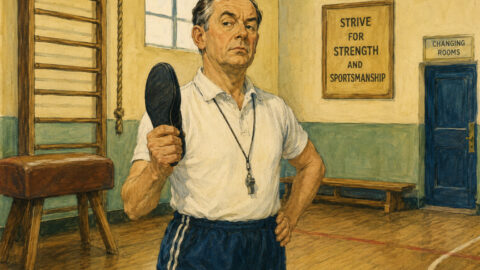
The slipper, usually a gym shoe or plimsoll wielded across the seat of one’s trousers, was often used as a warning rather than a severe punishment. In capable hands it produced a sharp sting and considerable embarrassment, but little lasting discomfort. Boys accepted it almost as an occupational hazard. Indeed, many regarded it as no more than the price of being caught.
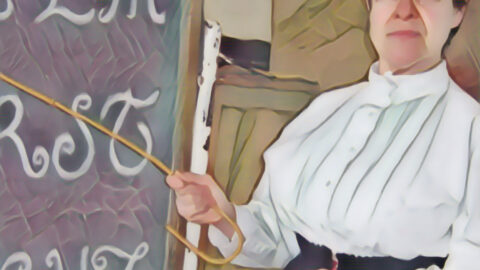
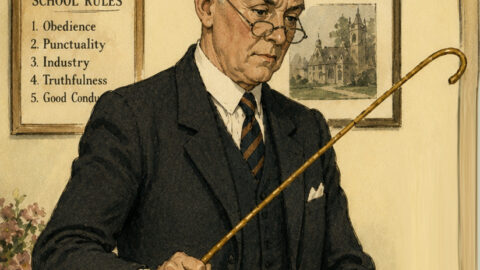
The cane, however, was another matter entirely. Delivered across the hand or, in some schools, across the backside, it demanded respect. The anticipation alone could be worse than the punishment itself. The thin strip of rattan bit deeply into the flesh, leaving raised weals that remained for hours, sometimes days. More than the physical pain, it carried a sense of disgrace. Being sent to the Headmaster for the cane marked a serious offence and was something few boys wished to experience more than once.
At my preparatory school there existed a number of rather foolish challenges. One favourite, particularly during the summer months, was to sneak out of bed at about half-past nine, creep downstairs, run completely around the outside of the school building, and return unnoticed. It was hardly a daring exploit by modern standards, nor was it especially dangerous. Success depended largely upon luck, speed, and which masters happened to be on duty.
The odds were perhaps little better than sixty-forty in one’s favour. If caught, the punishment was automatic—a few strokes of the slipper, usually no more than three or four, administered with almost cheerful good humour. It was understood by everyone involved. The boys accepted the risk, the masters dispensed the punishment, and life carried on. Most of us considered it well worth the gamble.
Years later, while undertaking teaching practice at a traditional grammar school, I found that old customs lingered there too. Remarkably, senior prefects still possessed the authority to administer the slipper. Whether this power was entirely official was never quite clear, but it was certainly exercised.
The school grounds offered two routes to the bus stops at the end of the day. One involved a lengthy walk around the perimeter. The other was a forbidden shortcut across a field and through a convenient gap in the hedge.
Almost every afternoon, a prefect armed with a plimsoll would stand waiting on the far side of that gap. Boys who chose the shortcut did so with full knowledge of the consequences. They would emerge through the hedge, quietly bend over without protest, receive the customary single swipe of the slipper, thank the prefect, and continue on to join the bus queue. It had become part of the school’s unwritten traditions.
The important point was that there existed an element of consent. Those boys knowingly accepted a minor punishment in exchange for saving several minutes’ walking. It was a calculated risk, one few would have contemplated had a visit to the Headmaster and the cane awaited them instead.
I understood that distinction perfectly myself. At my own school I regularly ignored the rules by cutting through an out-of-bounds area. More often than not, I received nothing worse than a stern telling-off, although I always suspected that sooner or later the slipper would be produced.
For several days running one master caught me taking exactly the same shortcut. After warning me repeatedly—and after countless previous offences—his patience finally ran out. Instead of another lecture, he marched me directly to the Associate Headmaster.
This time there was no slipper.
The cane awaited me.
It was a lesson I remembered far longer than the inconvenience of taking the proper path ever would have been.